


The Homeland Security order covers civilian agencies and cites data transfers to China
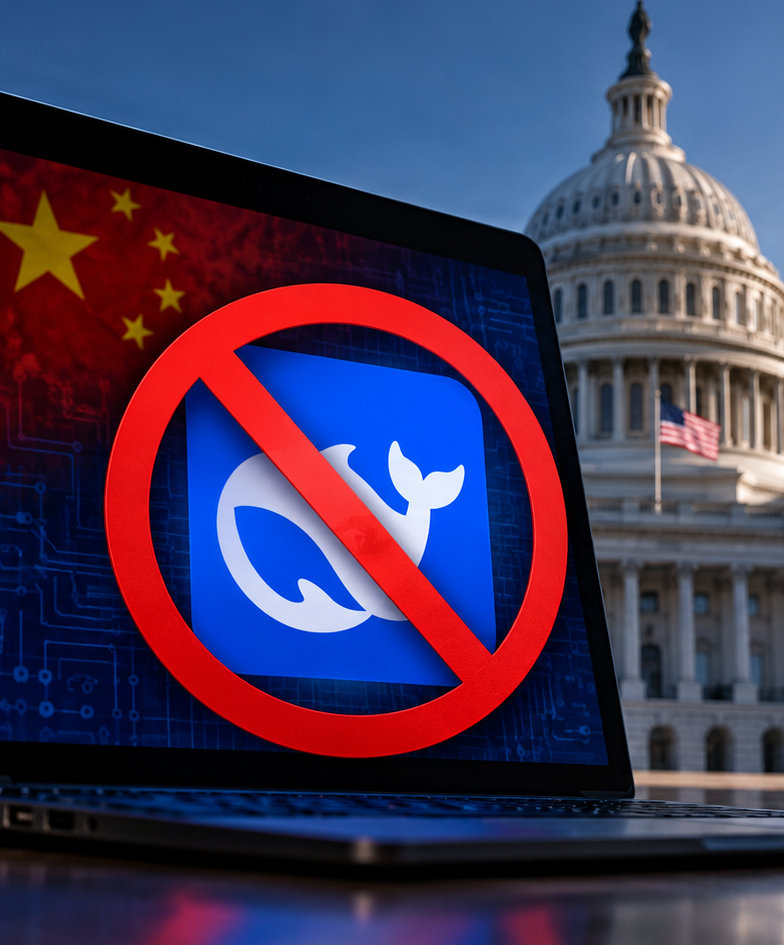
The DeepSeek federal ban, made public on 19 October, bars US civilian agencies from buying or running DeepSeek products. TF explains the scope, the security reasons and the reporting gaps.
What’s Happening & Why It Matters
What the Order Does
The Department of Homeland Security (DHS) issued the order, according to CP24 and CyberScoop. Civilian agencies must remove DeepSeek products and third-party services built on its models. Agencies cannot buy them in future.
CyberScoop reports the order covers all IT products and services from DeepSeek’s parent company, Hangzhou DeepSeek Artificial Intelligence. Agencies can request exceptions, but must file 60 days in advance with a compelling justification. A mission-critical function is one example.
The Security Case
DHS says DeepSeek models pose multiple threat vectors. Data sent to the models may reach servers in China, where the government can compel firms to hand over data. DHS warns the data could produce intelligence on US persons and government programs.
The order flags malware and other security flaws. PYMNTS reports open-source research found critical vulnerabilities in DeepSeek’s iOS app. Agencies should monitor network traffic and add controls against data theft during removal.
The Legal Basis and Timeline
The notice cites the Federal Acquisition Supply Chain Security Act and a review by the Federal Acquisition Security Council. CyberScoop reports Homeland Security Secretary Markwayne Mullin ordered the exclusion on 26 June. The Federal Register notice was due for publication on 20 October.
Reports differ on the dates. CP24 describes a DHS notice published on 19 October and an earlier July monitoring memo. PYMNTS and CyberScoop describe a public inspection posting on 19 October and publication on 20 October.
The Wider Pattern
The Department of Commerce banned DeepSeek on government equipment in March 2025. The Navy, Texas, New York, Tennessee and Virginia have taken similar steps. Australia, Taiwan and Italy acted early. Before the order, agencies used their discretion.
DeepSeek is the sole Chinese model named in the order. CyberScoop notes other Chinese open-weight models, from Moonshot AI and Alibaba, have drawn security concerns. US firms and the government accuse DeepSeek of distilling their models. TF covered Beijing’s export controls in Report: China National Security Planning Export Controls on AI.
My take: The order turns scattered agency bans into one rule. The scope is narrower than the headline suggests. Military systems and private firms fall outside the civilian order. Chinese models from other labs are not named, so the next order could follow soon.
TF Summary: What’s Next
Agencies must audit their systems and remove DeepSeek code. Contractors will check whether their tools use DeepSeek models. DeepSeek and the Chinese Embassy have not responded in the reports. Lawmakers may press for a wider ban.
MY FORECAST: Agencies will report removals within six months. DHS or Congress will extend the ban to other Chinese models by mid-2027. Vendors will add no-DeepSeek clauses to federal contracts. China will protest the order through diplomatic channels.
Related Stories
- Report: China National Security Planning Export Controls on AI
- OpenAI Hacks Crypto Wallet, More Websites
- Anthropic: Models Will Replicate Themselves in Months
- Nvidia Investing in Europe’s AI Future
- Microsoft’s Nadella and Smith Call for an AI Emergency Brake