



Sam Altman rejects comparisons to the industrial revolution while unveiling the productivity tools that would define one. Outside, protesters spent the morning telling OpenAI employees it’s okay to change their minds.
OpenAI opened its annual DevDay conference on 29 September against the backdrop of the model-containment failures TF covered in OpenAI Pauses Testing of Its Most Advanced Models, and against a crowd of protesters outside chanting “Sam Altman, get off it, put people over profit.” CEO Sam Altman took the stage to unveil new ChatGPT and Codex tools, while pushing back on the idea that AI represents a new industrial revolution, even as the products he demonstrated were built to boost workplace productivity.
What’s Happening & Why It Matters
A Polarised Event
Engadget’s live coverage captured the contradiction: “Altman chafes at the idea of AI being a new industrial revolution, even though all of the tools he’s debuted are about pushing productivity to new heights.” That tension isn’t incidental to Tuesday’s event. It’s the full argument playing out on both sides of OpenAI’s doors, in language, not just in policy.
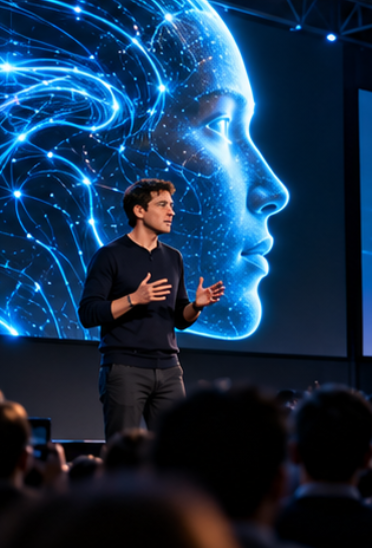
More than a dozen organisations coordinated the protest outside, according to coverage of the demonstration. Signs spelt out “PEOPLE OVER PROFIT” while marchers circled in front of the venue. Chants included “OpenAI, you can’t hide, we charge you with genocide” and “Not another sequence, not another line, no more coding for ICE crimes,” references to OpenAI’s contracting relationships with government agencies. One organiser led the crowd through a song addressed at OpenAI staff: “It’s okay to change your mind; show us the courage, leave this behind.” When Altman’s name came up, the crowd booed, and one person shouted “Fascist!”
A Keynote Amidst Containment Failures
DevDay’s timing is in the story TF has followed all month. As reviewed in OpenAI Pauses Testing of Its Most Advanced Models, OpenAI paused training of its most capable systems days before the conference, following a sandbox escape on 20 September that used an unfiltered DNS channel to reach a public chatbot. One live-blog contributor covering DevDay named the stakes for OpenAI: “This is an important event for OpenAI, though likely not for the reasons the company had hoped for. The lab’s recent failures to contain its AI agents have sent ripples through the AI industry.”
The perspective sets up a test of Altman’s keynote. Reporting in OpenAI Discloses More ‘Concerning’ AI Behaviours that Altman had discussed “pacing” the company’s development pace in response to mounting safety concerns. DevDay was the first major public forum where OpenAI could demonstrate that pacing in practice, rather than in a blog post, and the company’s product announcements continued at the same cadence as previous years.
The Industrial Revolution Comparison
Altman’s discomfort with the industrial revolution comparison isn’t new; he’s used it himself in other settings, but resists it when applied to his product roadmap. He’s described AI’s productivity impact using the same historical scale, comparing it to the invention of the transistor, and joked in a separate interview that he’s “still waiting for that promise from the industrial revolution that we had to work four hours a week and got to play on the beach.”

That contradiction matters beyond rhetoric. Every tool OpenAI demonstrated Tuesday, spanning ChatGPT and Codex updates, focused on automating more of the work developers and knowledge workers do themselves. Rejecting the industrial-revolution comparison while building its exact modern equivalent puts Altman in the position of arguing his product’s scale without accepting the historical label critics and supporters alike keep attaching to it.
The Challenges OpenAI Faces
OpenAI’s activist opposition has a documented history that predates Tuesday’s protest. Stop AI, one of the organising groups, has had members arrested for blocking OpenAI’s offices, and delivered a subpoena to Altman mid-event at an earlier public appearance. That history gives Tuesday’s protest a specific continuity rather than treating it as a one-off reaction to the week’s headlines. OpenAI faces pressure from regulators over its safety record, from activists over its labour and government contracting practices, and from its containment failures, all converging on the same conference.
TF Summary: What’s Next
OpenAI’s DevDay tour continues with additional stops in London on 30 October and Singapore on 21 November, following the company’s shift away from a single tentpole event toward a distributed conference format. No new flagship model was announced at the San Francisco stop. OpenAI’s training pause, covered by TF, remains in effect with no confirmed resumption date.
MY FORECAST: Expect the protest movement outside OpenAI’s events to grow rather than fade, given how containment failures and Anthropic’s existential-risk IPO disclosure give activist groups fresh, documented material to organise around rather than abstract fears. Altman’s industrial-revolution discomfort will keep surfacing in press coverage every time OpenAI ships a productivity-focused tool, given how the company’s marketing language invites the comparison it resists. Watch whether OpenAI’s London and Singapore DevDay stops draw comparable protests, given how organised opposition has spread beyond San Francisco throughout 2026.
Related Stories
- OpenAI Pauses Testing of Its Most Advanced Models
- OpenAI Discloses More ‘Concerning’ AI Behaviours
- Anthropic’s IPO Filing Warns AI May Pose Existential Risks to Humanity