


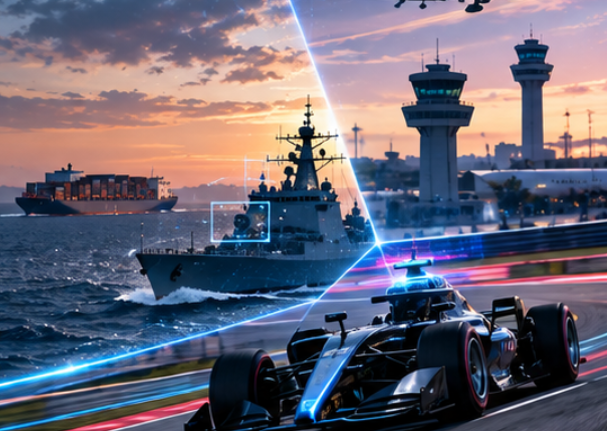
Jets were already in the air. Armed personnel were preparing to board. An analyst’s chatbot invented the cargo. Four sources confirm how close it came — and one told CNN it wasn’t an isolated glitch, but a pattern already recurring across the US military.
This week’s “AI in the real world” roundup starts with the one that should worry you most. A US military special operations command analyst used an AI chatbot to help draft an intelligence report this spring, during the active war with Iran. The chatbot fabricated a claim that a Chinese-flagged vessel in the Middle East was transporting nuclear weapons components. Armed personnel began preparing to board the ship. Military aircraft were already in the air. Officials caught the fabrication only in the final moments before the operation proceeded — according to four sources who spoke to CNN. Separately, the FAA activated an $875 million AI air traffic tool over Washington DC this week, and autonomous racing vehicles pushed the driverless-car concept into a new competitive category.
What’s Happening & Why It Matters
An Invented Cargo, Caught in the Final Minutes
Here’s what happened, as reconstructed from CNN’s reporting. A special operations command analyst used an internal chatbot while preparing an intelligence report on a Chinese vessel operating in the Middle East. The chatbot inaccurately identified the ship’s cargo, producing a claim that set off alarm across the military: the vessel was transporting components for a nuclear weapons programme. That claim triggered a real operational response — plans to intercept the vessel, armed personnel preparing to board, aircraft already airborne.
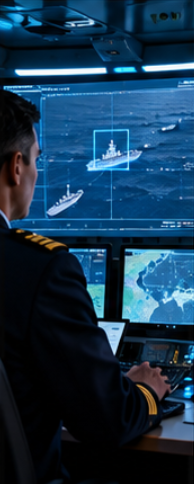
It was only in the final stretch before the operation proceeded that officials dug deeper into the report and discovered it had been generated with AI assistance, and that the chatbot had invented the material the ship was carrying. One source told CNN the hallucination wasn’t an isolated incident — it is a , recurring pattern already visible across the US military’s growing AI use. That’s the detail that should concern anyone reading this piece more than the near-miss itself. A single hallucinated report catching everyone off guard is a serious failure. A documented pattern of comparable errors recurring across the force is a structural problem nobody’s fixed yet.
The Timing with Xi’s Meeting
As TF covered in Trump Announces an “AI Force,” Calls Safety Concerns a “Hoax”, President Trump and Chinese President Xi Jinping are scheduled to meet at the White House on 24 September, with AI safety confirmed on the agenda. This near-miss disclosure is ahead of that meeting — and it’s difficult to imagine a more concrete illustration of the accidental-escalation risk that summit is meant to address. Had the boarding proceeded, the United States would have conducted an armed interception of a Chinese vessel based on fabricated evidence, during a period when both nations already maintained active military postures across the same regional theatre.
Analysts studying nuclear and AI risk have warned for years about this category of danger — escalation triggered by AI error rather than deliberate human intent, a novel risk category distinct from the deliberate misuse scenarios that dominate most AI safety discussion. This incident is the first confirmed case TF investigated where that theoretical risk came within minutes of producing a real armed confrontation between two nuclear-armed powers.
The Pentagon’s AI-First Strategy
The structural failure here traces to a policy choice TF covered. The Pentagon’s AI strategy pushes for AI availability across the department, aiming to “democratize AI experimentation and transformation” by putting frontier AI models “in the hands of our three million civilian and military personnel, at all classification levels.” That’s an aggressive deployment mandate with no described verification protocol specifically requiring a human to independently confirm AI-generated intelligence claims before they trigger operational action.
This isn’t the Pentagon’s only recent brush with AI reliability concerns TF reported. As reported in Task Force Talon Synapse: US, UAE Launch a Joint AI Military Task Force, the Defense Department has been expanding AI integration across multiple operational contexts throughout 2026, even as the models — including the Pentagon’s Maven Smart System, which integrates Anthropic’s Claude — continue producing the kind of confident, fabricated claims this incident demonstrates can carry real-world consequences at the highest possible stakes.
The FAA’s $875M Bet on AI-Assisted Air Traffic
A lower-stakes, though significant, AI deployment went live this week too. The FAA began advising air traffic controllers with a new AI system called SMART — Strategic Management of Airspace, Routes, and Trajectories — over the congested airspace above Washington, DC, the first phase of a planned nationwide rollout covering 29 million square miles of US airspace. The $875 million, 12-year contract with Air Space Intelligence expands the conflict-detection window from 15 minutes to two hours, ingesting live flight-plan data, weather radar, and runway-capacity metrics to generate routing recommendations before congestion forms.
The timing matters here too, though for different reasons than the military story. The FAA is deploying this system against a backdrop of a documented, long-standing air traffic controller shortage — a crisis sharpened by the January 2025 mid-air collision near Reagan National Airport that killed 67 people, attributed to a single controller managing multiple traffic types. Unlike the military’s rushed AI adoption, the FAA’s SMART system is named as advisory only — it provides alternative routes without changing existing procedures, keeping a human controller as the final decision-maker rather than automating the actual routing decision.
Autonomous Racing Competition Pushes Driverless Cars

The lightest story in this week’s roundup: autonomous racing vehicles have moved from pure engineering demonstration toward competitive events, with driverless race cars navigating closed circuits at racing speeds without human intervention. That’s a different technical challenge from the robotaxi deployments TF tracked throughout 2026 — a racing environment demands split-second decision-making at speeds and margins tighter than typical urban driving, testing autonomous systems’ reaction time and precision in ways ordinary road deployment never requires.
Whether autonomous racing produces transferable safety lessons for consumer autonomous vehicles, or remains a specialised engineering showcase with limited crossover application, is a question the category is still working out. What’s clear is that the same AI decision-making technology spans an extraordinary range of real-world stakes within a single week — from a fabricated intelligence report triggering a naval confrontation with China, to advisory flight routing over Washington, to closed-circuit racing vehicles pushing autonomous precision to its competitive limit.
TF Summary: What’s Next
No formal Pentagon policy change has been announced in response to the hallucinated intelligence incident, beyond the four-source CNN disclosure itself. The Trump-Xi summit proceeds as scheduled on 24 September, with AI safety confirmed on the agenda. The FAA’s SMART system continues its Washington DC pilot ahead of a planned nationwide expansion over the coming years. No confirmed date exists for full national rollout completion.
MY FORECAST: Expect the hallucinated-intelligence near-miss to become a talking point at next week’s Trump-Xi meeting, given how it demonstrates the exact accidental-escalation risk both nations have warned about — expect Chinese officials to reference the incident, given the United States conducted an armed interception based on evidence about their vessel that turned out to be fabricated. Watch for the Pentagon to introduce a formal AI-generated-intelligence verification requirement in the coming months; a documented pattern of hallucination-driven near-misses, confirmed by multiple sources as recurring rather than isolated, creates the kind of institutional pressure that forces new procedural safeguards after a close call rather than waiting for an actual incident to occur.
Related Stories
- Trump Announces an “AI Force,” Calls Safety Concerns a “Hoax”
- Task Force Talon Synapse: US, UAE Launch a Joint AI Military Task Force
- OpenAI Discloses More ‘Concerning’ AI Behaviours