



CSIC just opened Spain’s largest nanofabrication facility of its kind — the exact infrastructure that determines whether a country designs quantum chips on paper or manufactures them. It’s a modest number next to US and Chinese quantum spending. It’s also the piece nobody skips.
The Spanish National Research Council opened a new Quantum Nanofabrication Area inside the Barcelona Microelectronics Institute’s Clean Room, calling it Spain’s largest research infrastructure of its kind. The facility, funded through more than €6 million from the EU’s PERTE Chip programme and the Complementary Plan for Quantum Communications, lets researchers manufacture and analyse quantum devices and circuits at the nanoscale — the physical manufacturing step that separates a quantum computing design on paper from a chip you can build. CSIC president Eloísa del Pino said the stakes are high: quantum technology is advancing worldwide, with the US, Europe, and China pouring strategic investment into a competitive field.
What’s Happening & Why It Matters
Why a Clean Room Is Essential
Here’s the piece of the quantum computing race most coverage of the field skips. Designing a quantum chip is a physics and engineering problem. Manufacturing one at the nanoscale is a separate and harder industrial problem — and it’s the step most countries pursuing quantum ambitions don’t control. The new facility’s centrepiece is the EBPG 5150Plus, Spain’s most advanced electron-beam lithography system, paired with scanning electron microscopy and atomic force microscopy tools that can inspect structures at nanometric dimensions.
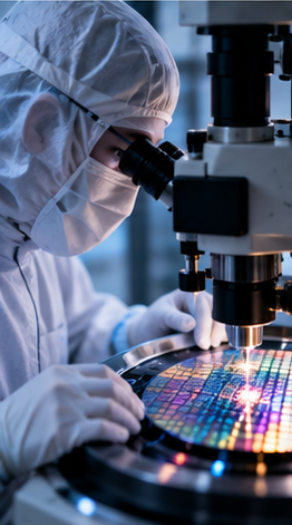
That equipment is important due to its rarity. Electron-beam lithography systems capable of this precision are expensive, specialised, and concentrated in a small number of facilities. Spain building and opening one for quantum research means the country can prototype and manufacture quantum devices in-house, rather than depending on foreign fabrication facilities for the physical hardware of its quantum research programme.
A New Institutional Centre to Match the New Physical Facility
CSIC paired the Barcelona facility’s opening with a second, structural announcement: the creation of QuARC-CSIC, a Quantum Science and Technologies Centre bringing together research groups from across CSIC’s different institutes under one coordinated strategy. Del Pino presented the organisation’s full Quantum Science and Technologies Strategy alongside the launch — a long-term planning document meant to give CSIC the sustained, coordinated approach a competitive quantum programme requires, rather than scattered individual research groups working in isolation.
That institutional consolidation is a specific bet: that Spain’s quantum ambitions need a single coordinating body with dedicated hiring authority, not just distributed funding across existing institutes. QuARC-CSIC will recruit new staff through competitive selection processes already underway, with several posts reserved for quantum specialisation. This hiring commitment signals sustained investment rather than a one-time facility opening.
Spain’s Quantum Ecosystem Was Building
The Barcelona facility doesn’t launch Spain’s quantum sector from nothing — it strengthens an ecosystem that’s been growing for several years. Multiverse Computing, based in San Sebastián, builds quantum-inspired software and raised a €189 million Series B, the largest funding round among Spanish quantum companies to date. Qilimanjaro Quantum Tech, based in Barcelona, builds analogue quantum hardware. The Barcelona Supercomputing Centre hosts Spain’s first quantum computer, and earlier this year, Telefónica and IQM Quantum Computers were selected to deploy Spain’s first IQM systems — a 54-qubit Radiance and a 5-qubit Spark — through Galicia’s CESGA supercomputing centre.
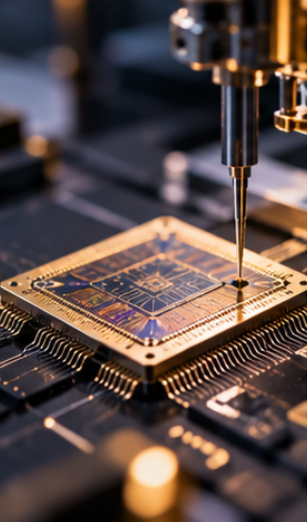
The existing commercial and research base is why the new nanofabrication facility is invaluable beyond the headline figure. Software companies like Multiverse and hardware developers like Qilimanjaro both need physical chip manufacturing and prototyping capability to move from algorithm design toward deployable quantum hardware — capability that, until this week, Spain’s quantum sector had to source from facilities outside the country.
A Modest Number Against Enormous Stakes
Worth naming: €6 million is a small figure against the scale of quantum investment coming from the US and China, both of which have committed billions to quantum research and infrastructure over the past several years. Del Pino’s approach acknowledged that competitive gap, calling for Spain to build a long-term strategic model because it can’t outspend the two dominant global players in this race.
Spain’s actual bet differs from a spending contest: build domestic manufacturing capability at a scale the country can sustain, feeding an already active commercial ecosystem, rather than trying to match US or Chinese investment figure for figure. Whether that focused, infrastructure-first strategy produces a competitive European quantum manufacturing hub, or keeps Spain relevant at the margins of a race dominated by larger economies, is the question this facility’s next few years will start to answer.
TF Summary: What’s Next
QuARC-CSIC continues its competitive staff recruitment process, with several posts reserved for quantum specialists. The new nanofabrication facility becomes available to both CSIC researchers and external companies for design, manufacturing, and prototyping work. No confirmed timeline exists for when the facility’s first commercial or research outputs will emerge. Spain’s broader Quantum Science and Technologies Strategy remains a long-term planning document with no specified completion date for its milestones.
MY FORECAST: Expect Spanish quantum companies, including Multiverse Computing and Qilimanjaro, to become the facility’s earliest external users, given how their existing hardware and software work depends on the nanoscale manufacturing and prototyping capability the Barcelona clean room provides domestically. The QuARC-CSIC consolidation is the more durable outcome of this week’s announcements — a coordinated national quantum strategy with dedicated hiring authority tends to compound advantages over scattered funding, even when the euro figure looks modest next to US and Chinese spending. Watch whether other EU member states follow Spain’s specific infrastructure-first approach, prioritising domestic manufacturing capability over pure research funding, as the broader European quantum sector continues positioning itself against larger American and Chinese investment.
Related Stories
- TSMC and Sony Are Investing Billions in a New Chip and Sensor Plant
- Isar Aerospace: First European Outfit to Reach Orbit
- IRIS², EU’s Starlink Alternative, Gets Implementation Partners