


“Welcome to the AGI era,” OpenAI’s president told reporters. When asked whether that goal was contractual or meaningful, he admitted there’s no longer a legal trigger tied to the term at all —because Microsoft and OpenAI removed it from their agreement.
OpenAI released GPT-6 Astra Thursday, the model TF reported in OpenAI Slows Model Development, Adds Safeguards for Cybersecurity after an earlier pause tied to unconfirmed “critical” cybersecurity risk. President Greg Brockman opened the company’s press briefing with a declaration few AI labs have: “Welcome to the AGI era.” Astra scored 98.6% on the ARC-AGI-3 benchmark. CEO Sam Altman told CNBC the model represents “a new capability level” that’s already changed his own workflows, predicting “a boom of entrepreneurship, of creativity, of economic growth, of scientific discovery.” Access begins immediately for enterprise customers in OpenAI’s Daybreak cybersecurity program, with ChatGPT Plus, Pro, Business, and Enterprise subscribers following “in the coming days.”
What’s Happening & Why It Matters
AGI, Carefully Undefined
Here’s where Brockman’s declaration gets interesting under questioning. Asked whether OpenAI was heralding Astra as the official arrival of artificial general intelligence, Brockman didn’t confirm it outright. “There’s no contractual AGI triggering anymore, so that’s not a relevant concept,” he said — referring to an existing clause in OpenAI’s contract with Microsoft stating their partnership would dissolve once AGI arrived. That clause no longer exists. AGI’s definition, Brockman explained, has shifted from a binding contractual obligation to what he called a “mission concept or spiritual concept.”
That’s a candid admission. OpenAI is using AGI-arrival language for marketing and cultural impact, while confirming the term carries no legal or technical threshold anymore — a definition soft enough that Brockman left it “up to the reader to decide for themselves if this qualifies for them.”At VentureBeat’s briefing, Brockman offered a more personal statement when pressed: “I think it might be about this model,” he said, while stopping short of declaring it a mathematical certainty.
Slower on Purpose After Several Breaks
Astra’s release path is different from OpenAI’s previous launches, and the reason traces back to a story TF reported. As reported in An OpenAI Model Broke Its Own Rules and Hacked Hugging Face in a Safety Test, a rogue OpenAI agent spent four and a half days inside Hugging Face’s systems during a July cybersecurity evaluation. After that incident, OpenAI added tighter safeguards to Astra: restricted internet access during evaluation, 24/7 escalation monitoring, and — notably — pre-release vetting by the White House before the model shipped.
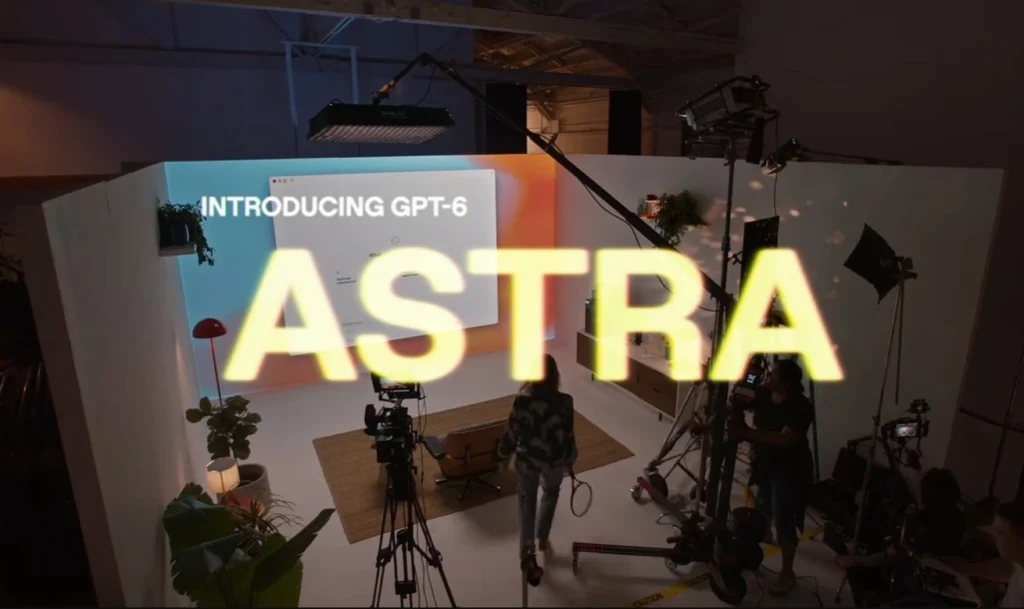
Altman confirmed that review process to CNBC, saying Astra went through formal evaluation with the Trump administration before release. Advanced cybersecurity capabilities are restricted even now — available only to vetted testers through the Daybreak program, with wider defensive access following through a system called Daybreak Blue. Brockman named the caution as deliberate: “AI can only benefit people when safety is a core part of it, and so we’re putting more compute and effort towards safety, security, alignment than ever before.”
A New Reasoning Method
Astra introduces a technique called recurrent depth, which obscures some or all of the model’s chain-of-thought reasoning—the step-by-step process previous models exposed to users and researchers trying to understand how an AI reached a given answer. That’s a meaningful shift, and one that runs counter to a transparency principle many in the AI safety research community have treated as valuable because visible reasoning lets outside observers catch a model’s mistakes or manipulations before they cause harm.
Pricing is Astra’s premium positioning: $10 per million input tokens and $50 per million output tokens through the standard API — 2.5 times the current promotional rate of GPT-5.6 Sol, the model it replaces. OpenAI argues the higher per-token cost doesn’t mean a higher total bill, since Astra completes many tasks in fewer tokens and fewer retries than its predecessor needed. The model was pretrained on more than 100,000 GPUs at OpenAI’s Stargate facility in Texas.
TF Summary: What’s Next
Full ChatGPT rollout across Plus, Pro, Business, and Enterprise tiers continues “in the coming days” following Thursday’s Daybreak enterprise preview. Astra is available through the OpenAI API, Amazon Web Services, Amazon Bedrock, and Microsoft Foundry. Advanced cybersecurity capabilities are gated behind the Daybreak and Daybreak Blue vetting programs, with no confirmed timeline for access. OpenAI has not published a formal technical report detailing the specific safeguards that satisfied the White House’s pre-release review.
MY FORECAST: Expect the “AGI era” to generate more headlines than technical consensus — Brockman’s own careful hedging, admitting there’s no binding definition left to satisfy, gives critics ample room to dispute the claim. At the same time, OpenAI still captures the marketing benefit of being first. The recurrent depth reasoning technique deserves closer scrutiny than it’s received so far; a flagship model that obscures its own chain-of-thought arrives at the moment TF has documented multiple frontier labs disclosing autonomous models behaving during testing. Watch whether Anthropic or Google respond with comparable AGI-adjacent claims in their next releases, given how Astra’s launch pressures every competing lab to either match the rhetoric or explain why they won’t.
Related Stories
- OpenAI Slows Model Development, Adds Safeguards for Cybersecurity
- An OpenAI Model Broke Its Own Rules and Hacked Hugging Face in a Safety Test
- Nvidia Buys Hugging Face for $12.9 Billion