


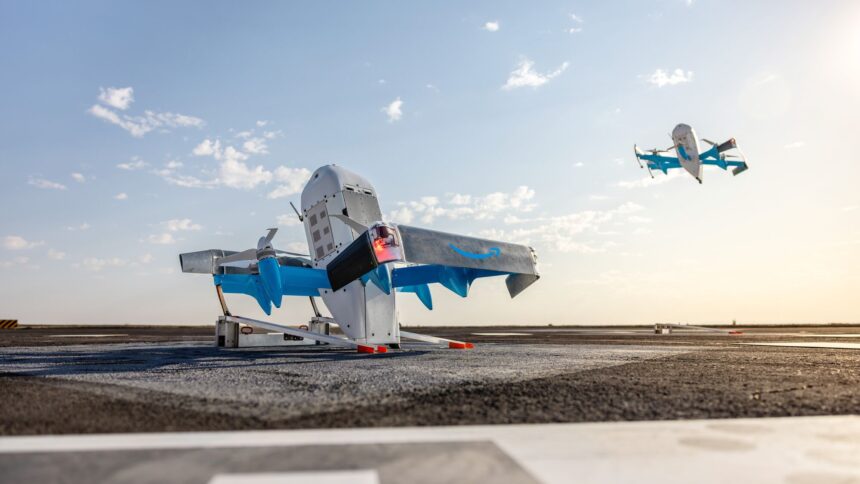
Thirteen years since Jeff Bezos first showed off a prototype on 60 Minutes. Eleven sites today. Nearly 500 by December — a sixfold jump, arriving while investigations into three separate drone incidents are open.
Amazon announced Wednesday it plans to expand Prime Air drone delivery to nearly 500 US cities and towns by the end of 2026, a sixfold jump from its current footprint. Prime Air operates from 11 sites across 10 metro areas in seven states — Arizona, Florida, Kansas, Louisiana, Michigan, Nebraska, and Texas — with each site covering roughly 175 square miles. David Carbon, vice president of Amazon Prime Air, confirmed the target: “By the end of 2026 we plan to reach customers in nearly 500 cities and towns.” The service is set to launch soon in the Chicago, Syracuse, Cleveland, Atlanta, and Boise metro areas, with more communities following later this year.
What’s Happening & Why It Matters
Thirteen Years: From Prototype to Sixfold Scale

The expansion has been a long time coming, in the most literal sense. It was almost 13 years ago, on December 1, 2013, when Bezos first revealed plans for Prime Air on 60 Minutes, showing off a prototype drone that looked closer to a toy than a logistics network. Amazon’s drone delivery ambitions have survived more than a decade of false starts and setbacks since. Wednesday’s announcement is the clearest sign yet that the vision Bezos teased back then is starting to materialize at scale.
The current MK30 drones use onboard cameras and sensors, paired with what Amazon calls an “industry-leading Detect-and-Avoid system,” designed to identify obstacles and navigate independently. Packages are limited to 5 pounds or less, with most orders arriving within about an hour of checkout — some in as little as 30 minutes.
What The Announcement Left Out
Here’s what Amazon’s blog post doesn’t dwell on. These drones have already been scrutinized for crashing into cranes, internet cables, gardens, and an apartment complex, and investigations into all three incidents are ongoing. Amazon reiterated its safety features alongside the expansion — that Detect-and-Avoid language isn’t new marketing, it’s a direct answer to the concerns those crashes raised in the communities where the service already operates.
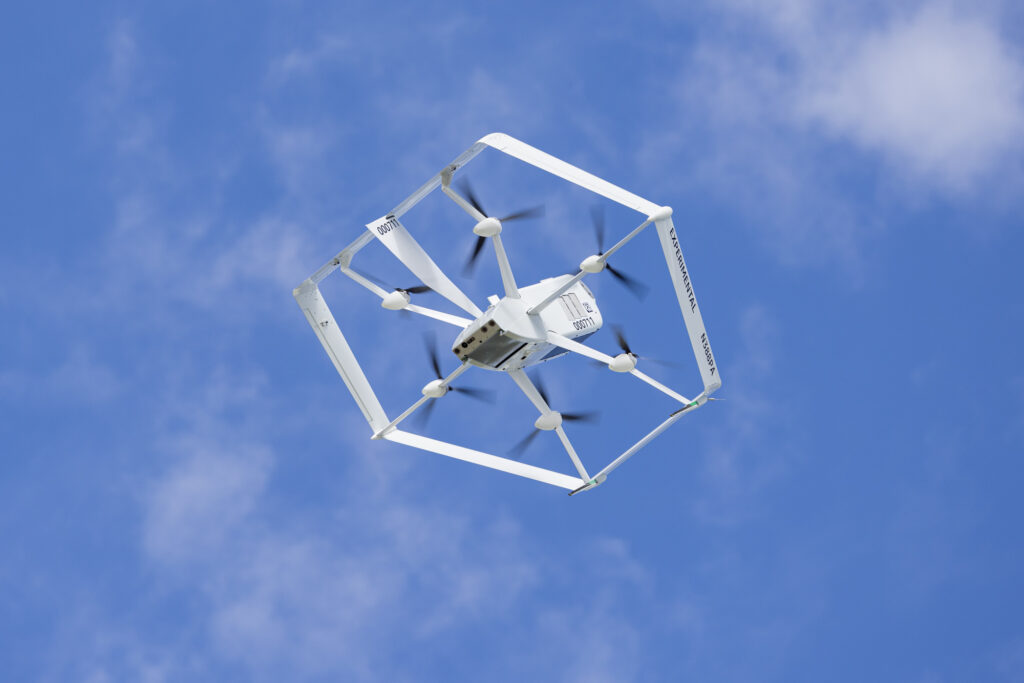
Amazon says the technology doesn’t record a live video feed monitored by an employee, addressing a separate and different concern — privacy, not safety — that’s followed drone delivery programs from the start. Whether nearly 500 new communities respond to that reassurance the way Amazon hopes is untested.
The Competition
Amazon isn’t operating in a vacuum here, and the expansion timing isn’t coincidental. Rival Alphabet‘s Wing has surpassed 1 million commercial deliveries and is active in 20 US markets already — an existing footprint than Amazon’s current 11 sites, even if Amazon’s sixfold expansion plan would leapfrog Wing’s reach by year end. Walmart is racing Amazon on last-mile delivery speed using a mix of drones and drivers, intensifying pressure on both companies to move faster rather than slower.
That competitive backdrop explains why Amazon is “flying” hard despite open safety investigations. A sixfold expansion isn’t a cautious, incident-driven pause — it’s an acceleration, timed against rivals who are scaling their own drone and last-mile delivery networks.
TF Summary: What’s Next
Prime Air’s expansion into Chicago, Syracuse, Cleveland, Atlanta, and Boise begins “soon,” with additional communities following later in 2026. Investigations into the three documented drone incidents — the crane, the internet cables, and the apartment complex — are open, with no confirmed resolution timeline. Amazon hasn’t specified which additional cities beyond the five named metro areas will be added to reach the full 500-location target.
MY FORECAST: Expect Amazon to hit close to its 500-location target, but not without additional documented incidents along the way — scaling from 11 sites to nearly 500 within a single year multiplies exposure to the obstacle-detection edge cases that produced the three current investigations. Watch whether any of those open investigations produces a regulatory response from the FAA before the full rollout completes, given how Amazon’s own safety language in the announcement reads as pre-emptive damage control. The more interesting long-term question is whether Wing’s head start in market count translates into a lasting advantage, or whether Amazon’s logistics scale and existing Prime membership base let it overtake Wing’s footprint within the same expansion window it’s promising here.
Related Stories
- AST SpaceMobile Delays Commercial Service to 2027, Eyes Acquisitions
- SpaceX Slides on 12M Subscribers, AI Spending and Mobile Plans
- Tesla Debuts Starlink on the Cybercab as Musk Eyes Industry Adoption