


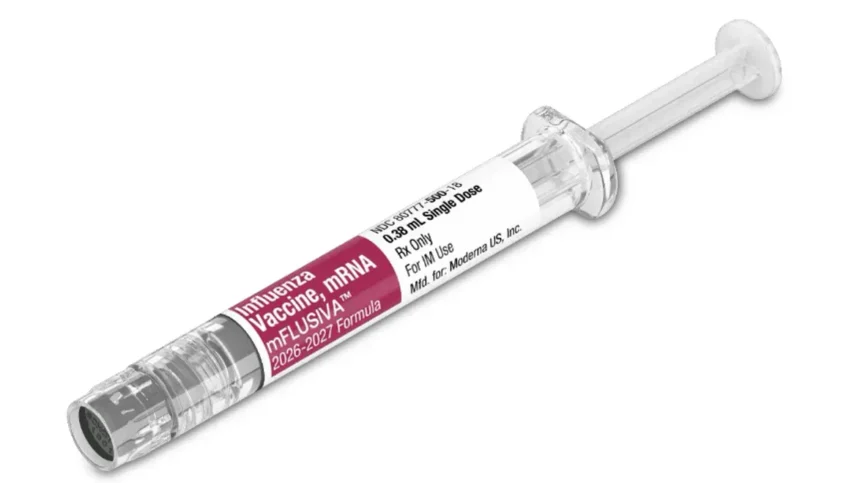
Six months ago, approval seemed unlikely. The FDA’s own vaccine chief overturned his staff and refused to even review it. Today, it’s approved, 27% more effective than the standard shot, for seniors only, with a catch attached.
The FDA approved Moderna’s mFlusiva on Wednesday, the first licensed flu vaccine built on messenger RNA technology. The approval covers two groups: full approval for adults aged 50 to 64, and accelerated approval for adults 65 and older, with a condition attached. Moderna must run an additional clinical trial in that older group as a postmarketing commitment. A late-stage trial involving more than 40,000 people found mFlusiva roughly 27% more effective than a standard flu shot. It’s Moderna’s fourth approved US product, joining Spikevax and mNexspike for Covid-19 and mResvia for RSV.
What’s Happening & Why It Matters
The FDA’s ‘No’ Turned to ‘Yes’
This isn’t a routine approval story. In February, the FDA’s then-head of biologics, Vinay Prasad, overturned his own career staff’s recommendation and issued a rare “refusal-to-file” notice. The letter argued Moderna’s trial lacked an “adequate and well-controlled” comparator, using a standard-dose flu vaccine instead of something else. No FDA regulation requires that comparator standard. Prasad applied it anyway.

The agency reversed course after a Type A meeting with Moderna, agreeing to review the application ahead of the 2026-2027 flu season. STAT News called the approval “a move that seemed out of reach just six months ago.” Prasad has since declined to review the shot himself. The reversal will draw resistance from allies of Health Secretary Robert F. Kennedy Jr., who has been sceptical of mRNA technology since the COVID pandemic.
Why Politics Factor In
The Trump administration’s hostility toward mRNA vaccines shaped the review from the start. NPR reported the FDA’s decision was being observed because of that scepticism. It’s not a stretch to read Prasad’s original refusal-to-file as more political signal than scientific gatekeeping, given the missing regulatory basis for his stated objection.
So what came next? CDC guidance from January already downgraded its recommendations on annual flu and Covid vaccination. An approval for a technology the health secretary distrusts, arriving through a reversed rejection, sets up an awkward rollout. Moderna gets the approval. Whether federal guidance promotes the shot is a separate fight.
Why It’s mRNA and Speed Counts

The pitch for an mRNA flu vaccine isn’t just efficacy. It’s speed. mRNA vaccines can be manufactured faster than traditional egg-based flu shots, letting scientists match circulating strains more each season instead of guessing months in advance. That manufacturing edge is the same one that let Moderna and Pfizer ship Covid vaccines in under a year back in 2020.
CEO Stéphane Bancel leaned into that stance. “This approval also reflects the ongoing potential of our mRNA platform to help address important public health challenges through continued scientific innovation,” he said in Wednesday’s statement. Moderna expects mFlusiva available at select retailers within weeks, timed for the fall flu season.
TF Summary: What’s Next
Moderna’s required postmarketing trial in adults 65 and older has no confirmed start date yet. The shot is limited to adults 50 and up for now, with no pediatric or younger-adult pathway announced. Availability is expected “in a few weeks,” ahead of the 2026-2027 flu season. Federal messaging around the vaccine, given RFK Jr.’s stated scepticism, is an open question.
MY FORECAST: Expect mFlusiva’s rollout to be scientifically successful and politically messy at the same time. The efficacy data is strong, and a faster-to-manufacture flu vaccine helps match seasonal strains better than the traditional process ever could. But federal public health messaging under an administration sceptical of mRNA technology won’t champion the shot the way it supported COVID vaccines in 2021. Watch for state health departments and private pharmacy chains to see whether the actual distribution engine is here, filling a promotional gap the CDC seems unlikely to close on its own.
Related Stories
- Mayo Clinic Is Testing AI Across Diagnostics and Patient Care
- A Brain Implant Just Let a Paralysed Man Feed Himself for the First Time
- FBI: Hackers Targeted Water Utilities in at Least 7 States