


Ask Waze to find a coffee shop that’s open. Let it learn your highway-over-side-streets habit automatically. Or just tell it to stop talking so much. Google’s Gemini update gives Waze five new features at once — and one of them finally solves the app’s most annoying habit.
Waze’s Gemini-powered update rolled out globally, bringing five new features to the navigation app across Android and iOS simultaneously. Google announced that Waze is getting a handful of new features, including Gemini-powered personalisation enhancements for Conversational Reporting. The headline addition for daily drivers is a new “Less Chatty” mode, letting users minimise voice prompts so navigation doesn’t intrude as much on music or podcast listening. Additionally, Waze suggests routes based on a user’s previous trips — not just real-time traffic patterns. This means the app is learning whether someone prefers highways over local streets with multiple turns. A new Motorcycle Mode adds two-wheeled shortcuts and more accurate ETAs. And Gemini powers natural-language destination search. Drivers can ask Waze to “find me a gas station nearby with the lowest prices” before they even start navigating.
What’s Happening & Why It Matters
Less Chatty Mode — What Drivers Have Wanted for Years
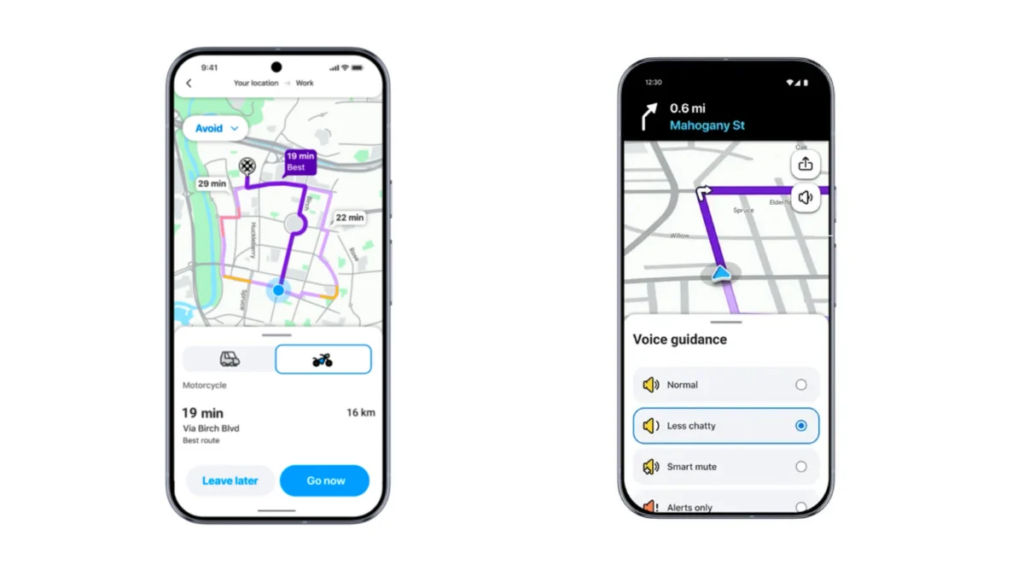
Waze’s Gemini-powered update addresses the single most common driver complaint about the app directly. When you choose to enable less chatty mode, Waze minimises the number of voice prompts and keeps them short. You’ll still get critical reminders about hazards, turns, and lane changes, but you’ll receive them less frequently — letting drivers concentrate on their audio instead. Waze is not going silent; it is filtering aggressively for relevance. The app is keeping only the alerts that genuinely affect safety or route accuracy.
By contrast, the feature responds to a genuinely common frustration. The app can be a little irritating when driving through familiar areas — constantly announcing turns a driver already knows, or talking over a podcast mid-episode. Less Chatty mode is rolling out globally on Android and iOS. Also, there is a related but separately labelled “Smart Mute” option that Google has not yet fully detailed.
Personalised Routing — Finally Learning Your Habits
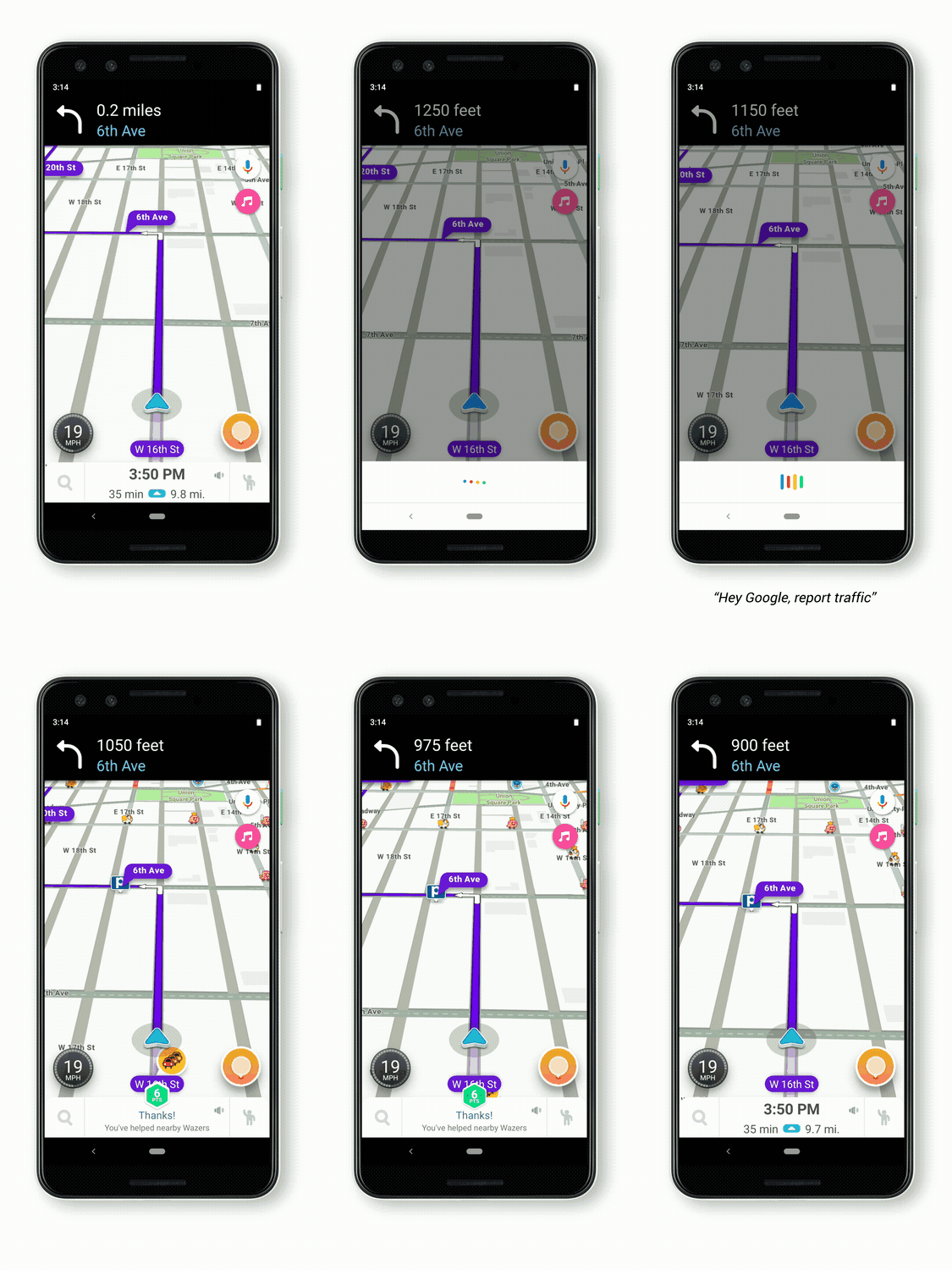
Waze’s Gemini-powered update introduces route personalisation that responds to accumulated driving behaviour rather than only live traffic conditions. Waze will suggest routes based on your previous trips, in addition to its hyperlocal understanding of a city’s traffic patterns. If a driver consistently prefers highways over local streets with multiple stops, those routes surface first going forward. The feature is fully optional — users can pick alternate routes or turn personalisation off entirely in settings.
That capability directly targets a specific and long-documented Waze quirk: the app frequently directs drivers onto a main road by default. This happens even when a series of back-street turns would be objectively faster. Personalised routing aims to let Waze learn and adapt to an individual’s actual preferences over time, rather than applying the same generic optimisation logic to every user. The feature is rolling out in phases — currently live in Argentina, Brazil, Colombia, Malaysia, Mexico, Peru, and the Philippines. A global expansion will follow.
Gemini Destination Search — Ask, Don’t Type
Waze’s Gemini-powered update extends Gemini into a genuinely new search capability. Before navigating somewhere, users can tap the search voice icon and ask questions like “find me a coffee shop that’s open right now” or “find me parking close to Grand Mall.” Waze responds with a list of matching options. This lets drivers begin navigating by voice immediately — without needing to know an exact business name or address in advance.
Additionally, Conversational Reporting — which already let users report traffic incidents like slowdowns through natural speech — extends to map corrections. Saying “the road is closed here” prompts Waze to send that information to local map editors, who verify the suggestion before it updates for every user. That human verification layer is intact even as Gemini handles the natural-language interpretation. Notably, Waze‘s crowdsourced accuracy model is not being replaced by AI, just made more accessible to report into.
Motorcycle Mode — Riders Get Dedicated AI Routing
Waze’s Gemini-powered update includes a feature built specifically for two-wheeled vehicles rather than adapting car-first navigation logic. The new Motorcycle Mode uses AI to account for the specific needs of riders, including shortcuts that might only be available to motorcycles and hazards described as “tricky for riders, like potholes, speed bumps, raised crosswalks, shoulder endings and narrow bridges.” Google has not specified precisely what “AI” means technically. However, the feature’s routing insights are grounded in Waze‘s real-time traffic map and a group of dedicated, motorcycle-focused human editors who keep hazard data current.
By contrast, the timing is notable — the feature arrives as the summer riding season continues, giving Waze a specific seasonal reason to prioritise motorcyclists in this release cycle. Most of the five new features are rolling out globally starting today, though Gemini-powered destination search is limited to beta testers for the moment.
TF Summary: What’s Next
Less Chatty mode, personalised routing, and Motorcycle Mode are live globally on Android and iOS as of 13 July 2026. Gemini-powered destination search is in beta testing with a wider rollout expected soon. It is not yet confirmed whether the features extend to Waze usage through Android Auto or Apple CarPlay. Personalised routing’s regional rollout — currently live in seven countries — continues expanding globally.
MY FORECAST: Waze’s Gemini-powered update will accelerate adoption specifically among daily commuters who have long found the app’s default chattiness the biggest barrier to sustained use — Less Chatty mode addresses the single most consistently cited user complaint across app store reviews for years. By contrast, personalised routing carries the more interesting long-term implication. As Waze accumulates individual driving preference data at scale, it edges closer to functioning as a genuinely adaptive routing assistant rather than a static traffic-aware map. This is a capability gap that has separated Waze from more static competitors for years. Expect Google Maps to receive comparable personalisation and Gemini destination-search features within the next two quarters. This is likely given Google‘s consistent pattern of testing consumer AI features in Waze before porting successful ones to its larger Maps user base.
Related Stories
- Google Wallet Now Lets You Skip the TSA Document Line — No Physical ID Required
- Google Sets Pixel 11 Launch for August 12 — Price Increases Likely
- OpenAI, Meta, and xAI All Pushed New AI Models in the Same Week