


Commerce Department cites national security risks from Chinese-sourced vehicle software
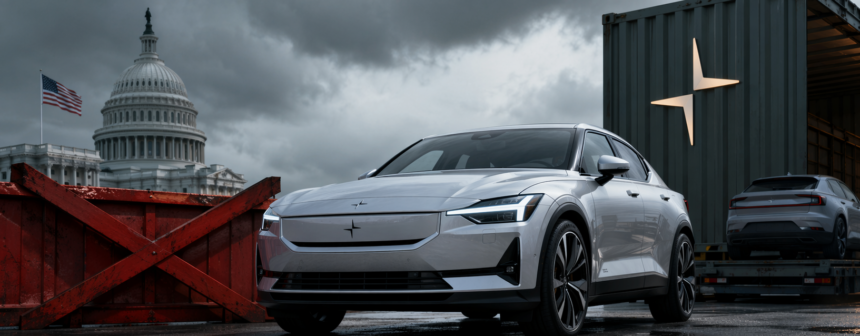
The U.S. Department of Commerce finalised the Polestar US sales ban. Consequently, federal regulators denied authorisation for all Polestar vehicles starting in the 2027 model year. The decision follows a lengthy investigation into connected vehicle technology sourced from “foreign adversaries.” The ruling immediately halts the brand’s American expansion plans.
The federal government previously warned that Chinese-developed hardware and software posed significant risks. Specifically, investigators focused on the integrated systems that manage autonomous driving and data collection. By contrast, Polestar argued its South Carolina production facility mitigated concerns. The Commerce Department rejected that argument, citing the deep integration of Geely’s technology stack.
Polestar 3 and 4 Facing Total Exclusion
The ruling directly impacts the Polestar 3, which currently retails for $73,400 (€67,300). While the company builds its SUV in the United States, the core software is Chinese-designed. As a result, the vehicle cannot receive the necessary federal safety and security certifications for 2027. The distinction is important because it targets the code rather than the assembly location.

Meanwhile, the sleek Polestar 4 crossover faces an even steeper challenge. The company had planned to import the models from a South Korean facility. That plant relies heavily on Chinese supply chains for critical telematics units. The ban includes any vehicle utilising high-level sensors capable of mapping American infrastructure. The pattern is clear.
Security Risks in Connected Vehicle Code
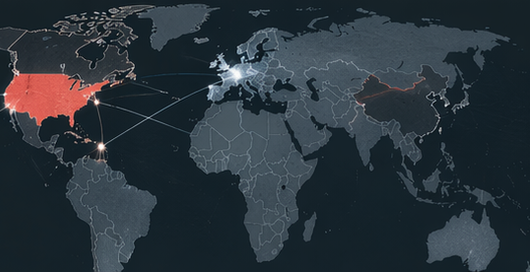
National security officials expressed concerns about remote access to American driving data. They believe the Polestar US sales ban protects domestic networks from potential foreign interference. Notably, the hardware modules in question can communicate with satellites and local cellular towers. The connectivity creates a potential back door for malicious actors to disable fleets.
In practice, the federal order requires manufacturers to prove their software is “clean” of foreign influence. Polestar’s ownership structure makes the requirement nearly impossible to meet. Since Geely owns the majority of the brand, the software development is centralised in China. That distinction is critical here. Consequently, the company must decide whether to redesign its entire digital architecture.

$50,000 (€45,900) EV Market Impact
The loss of Polestar creates a vacuum in the premium electric vehicle segment. Many American buyers saw the brand as a viable alternative to Tesla. That said, the sudden removal of the models may drive prices higher for remaining competitors. Beyond that, Polestar dealers across the country face an uncertain future regarding their inventory.
Separately, the timing matters for Polestar’s financial stability. The company recently secured new funding but relied on American growth to reach profitability. Losing access to the world’s second-largest EV market creates a massive revenue gap. The numbers tell a different story from the brand’s earlier optimistic projections. Investors are already reacting to the news.
TF Summary: What’s Next
Polestar executives are currently meeting with legal counsel to discuss a formal appeal. They hope to negotiate a “trusted software” agreement similar to those used in the telecommunications sector. However, the Commerce Department appears unwilling to grant exceptions for passenger vehicles. The current political climate favours total decoupling from Chinese automotive tech.
MY FORECAST: Polestar will exit the North American market entirely by January 2027 after failing to secure a software waiver. The company will likely shift its focus toward European and Asian markets to compensate. We expect Polestar to accelerate its efforts in the United Kingdom and Germany. At the same time, the brand may attempt to license its hardware to a domestic partner. The strategy would require a complete replacement of all onboard software systems.
Related Stories
- NHTSA Opens Investigation Into Autonomous Driving Software Failures
- Geely Increases Stake in Western Brands Amid Global Trade Tensions
- The State of the $40,000 EV: Who Survives the 2027 Security Purge?