


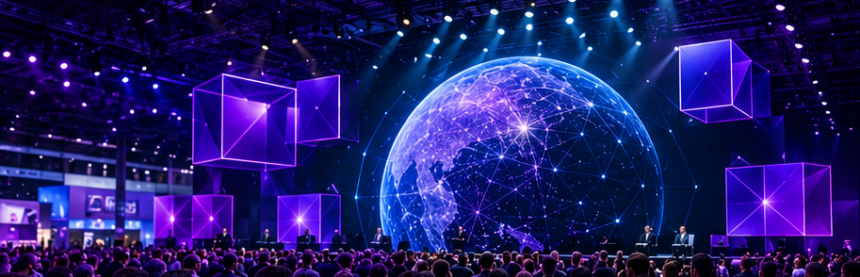
Foxconn and NVIDIA announced a deal to manufacture AI servers in France — the continent’s first Vera Rubin NVL72 production commitment. Amazon said AI will cause labour shortages, not job losses. Salesforce told CEOs to stop delegating AI adoption to IT. And L’Oréal partnered with OpenAI. VivaTech’s second day delivered on the sovereignty theme. Here is everything that happened.
VivaTech 2026 Day 2 announcements on 18 June packed four distinct stories into a single day in Paris. The race to build Europe’s artificial intelligence future found a home in Paris this week, as the city’s flagship tech conference, VivaTech, became a magnet for global technology giants who see France as key to building AI on the continent. The most commercially significant announcement of the day came from Foxconn, NVIDIA, and French computing firm Bull — a manufacturing deal that puts Europe’s most advanced AI server production on French soil.
By contrast, Amazon Web Services VP Julia White made the most counter-intuitive argument of the day: AI is not replacing workers. It is creating labour shortages. Salesforce France CEO Emilie Sidiqian warned that CEOs who delegate AI adoption to IT departments will fail. And L’Oréal Groupe announced a landmark partnership with OpenAI — putting ChatGPT‘s model directly inside the beauty consumer journey for the first time.
What’s Happening & Why It Matters
Foxconn, NVIDIA, and Bull: Vera Rubin AI Servers — Made in France
The most significant VivaTech 2026 Day 2 announcement came without a press conference. Taiwanese manufacturing giant Foxconn and French computing firm Bull announced a partnership on Thursday to build powerful AI computers in Europe to power the continent’s fast-growing network of AI factories. Specifically, the deal covers the NVIDIA Vera Rubin NVL72 platform — the most advanced rack-scale AI server NVIDIA currently produces. Systems will be manufactured and initially tested at Foxconn’s facilities in the Czech Republic before being assembled, integrated, and fully validated at Bull’s factory in Angers, France. The resulting systems will commercialise under the Bull brand.
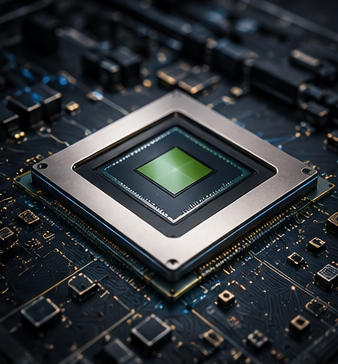
The manufacturing location is not incidental. France has EDF, which is government-owned, and nuclear and renewable power. “When I look at the work that goes into deciding where data centres should be and when people are contracting with data centres, the sustainability and the carbon impact or lack of, is a really massive part of the process,” said Nat Ives, NVIDIA’s director of enterprise for Benelux, France and Nordics. France’s nuclear grid is the decisive competitive advantage. Additionally, a consortium of eight leading French companies has submitted a bid to host a European AI gigafactory in France, thereby strengthening European AI infrastructure and accelerating AI adoption.
Foxconn’s European Debut — Humanoid Robots and Electric Cars Too
Foxconn marked its first VivaTech appearance with more than a server deal. At Booth 2B41 inside Paris Expo Porte de Versailles, a wheeled humanoid robot is performing precision assembly tasks in front of European industrial buyers — the first time Foxconn’s industrial humanoids have appeared on the continent, and the clearest demonstration to date that the simulation-to-factory pipeline it has been developing with NVIDIA is no longer a roadmap item.
Additionally, for the first time in Europe, the public can see and is in two modern EVs offered by Foxconn unit FOXTRON Vehicle Technologies under a Contract Design and Manufacturing Service business model. A MODEL B sporty crossover and a MODEL D lifestyle multipurpose utility vehicle represent the Group’s capabilities in EV platforms, complete vehicle design, smart cockpits and advanced electronic/electrical architectures. The booth visit reveals what Foxconn is. The company that assembles iPhones builds AI servers, industrial robots, and electric vehicles — from a single vertically integrated stack.
Mistral Compute — Sovereign AI Infrastructure, On NVIDIA Silicon
The NVIDIA-France relationship extends beyond the Foxconn deal. NVIDIA and Mistral AI announced the creation of Mistral Compute, a sovereign AI infrastructure and GPU cloud platform project designed specifically for Europe. The announcement directly ties together two sovereign AI priorities at VivaTech 2026t: European compute independence and frontier AI model development. Mistral AI already has a $830 million debt-financed data centre near Paris coming online in 2026. Mistral Compute gives it the cloud platform to monetise that infrastructure. France’s AI ecosystem is producing models, datasets and platforms tailored to local languages, cultural context, and European business and regulatory requirements.
Furthermore, Schneider Electric has teamed with NVIDIA to develop blueprints for gigawatt-scale AI factories, helping organisations accelerate AI infrastructure deployment. The infrastructure story at VivaTech runs in layers. NVIDIA provides chips. Foxconn and Bull provide servers. Schneider Electric provides power infrastructure. Mistral provides the European models. Each layer has a French or Franco-partnered company.
Amazon: AI Will Create Labour Shortages, Not Job Losses
Jeff Bezos made his headline-grabbing Moon speech on Day 1. Amazon‘s message was more grounded — and more surprising. Amazon founder Jeff Bezos predicted at the conference that AI will lead to labour shortages rather than the replacement of humans. AWS VP and CMO Julia White developed that argument further in a separate session. Her central claim is that AI is creating demand that outpaces human availability — not consuming jobs but multiplying the need for skilled people to work alongside AI systems.
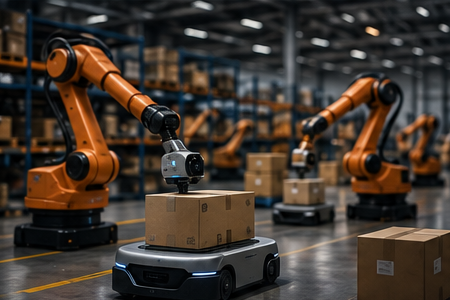
That position stands against the dominant narrative around AI and employment. Anthropic CEO Dario Amodei — as TF covered in its $350 million AI labour fund article — published an essay describing unemployment scenarios reaching 10% or higher. Amazon‘s position is the opposite. As policymakers across Europe debate how AI should reshape labour markets, Amazon’s European operations are a working example of how technology deployment and workforce participation can evolve together. Amazon has a political and labour relations interest in the “AI creates jobs” narrative. By contrast, their European robot deployment data is real — and the Career Choice programme, as TF covered in its Amazon Delivering the Future article, has retrained more than 300,000 employees globally.
Salesforce: CEOs Must Lead AI Adoption — or Fail
Emilie Sidiqian, CEO of Salesforce France, delivered the most direct leadership message. Her argument is structural. AI adoption fails when CEOs treat it as an IT initiative. It succeeds when leaders treat it as a strategic transformation requiring personal engagement at the top. 88% of companies use AI, but only one in three has deployed it at scale, according to McKinsey’s 2025 report. That gap — between adoption and scale — is the problem Sidiqian describes. The playbook to close it, she said, is direct: use AI to drive growth, not just efficiency. When experiments work, scale them fast. By contrast, companies that run AI pilots indefinitely without commitment to scale produce exactly the results the McKinsey data shows.
Salesforce announced a $2 billion investment in France through 2030 at the Choose France summit on 1 June — as TF covered in its Choose France article. That commitment gives Sidiqian’s message institutional weight. Salesforce is not advising European companies to adopt AI as an abstract principle. It is deploying capital alongside the advice.
L’Oréal Partners with OpenAI: A Beauty AI Roadmap
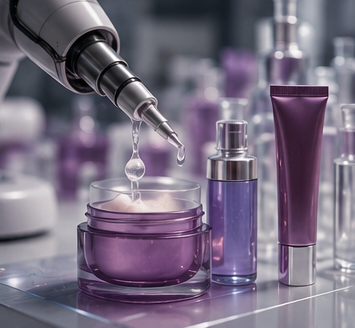
L’Oréal Groupe announced a landmark partnership with OpenAI at VivaTech on 18 June — the most high-profile consumer brand AI collaboration announced at the show. The deal covers two priority domains. Firstly, augmenting the consumer experience with personalised, AI-powered beauty tools. Secondly, empowering teams to work smarter and more creatively at scale, from marketing to research and innovation.
L’Oréal will begin using the OpenAI model GPT-Rosalind, which can study bacterial microbiomes on skin. For the brand La Roche-Posay, which will begin investigating which are best to help inform product development. Additionally, for AI-powered consumer journeys, L’Oréal has just developed its Makeup Virtual Try-On in OpenAI’s ChatGPT, set to go live starting with Maybelline New York. Furthermore, 73,000 L’Oréal employees are already trained in generative AI and equipped with internal tools like L’OréalGPT and personal AI companions.
The L’Oréal-OpenAI deal carries a strategic signal beyond beauty. Platforms such as OpenAI, Google, Meta, and Amazon are all bringing in AI and spending $700 billion combined to do so. L’Oréal looked into how shoppers discover, what deep consumer experiences follow discovery, and how they buy. Asmita Dubey, L’Oréal’s Chief Digital and Marketing Officer, described the shift. “The front door to beauty discovery is an LLM now.”
L’Oréal and PwC on Business Longevity: A Unique Panel

L’Oréal‘s Chief Innovation and Prospective Officer Delphine Viguier and PwC France Chief Innovation Officer Pauline Adam-Kalfon headlined a VivaTech session on business longevity that opened with a joke and closed with the sharpest corporate diagnosis of the day. Viguier, joking that “I have much more wrinkles than my business plan,” said that when the signs of age show up in your skin or your strategy, the response is the same: change your habits.
Adam-Kalfon’s prescription for business decay is more clinical. “Reinvention starts with subtraction,” she said. She identified three places where corporate decline: a loss of relevance in what you offer customers, erosion of margins in the operating model, and a slowdown in decision-making that leaves a company too slow to react. By contrast, both agreed on the fix. Use AI to drive growth, not just efficiency, and when experiments work, scale them quickly. Work with and understand people from backgrounds outside your usual group, both in your personal life and in your business affairs.
TF Summary: What’s Next
VivaTech 2026 runs through 20 June — with a public festival day on Saturday targeting 18-to-35-year-olds. The Foxconn-Bull Vera Rubin NVL72 production programme begins commercial delivery in H2 2026. The L’Oréal-OpenAI Makeup Virtual Try-On inside ChatGPT goes live, starting with Maybelline New York. Mistral Compute moves from announcement to operational deployment in 2026. Salesforce‘s Paris AI Innovation Hub opens as part of its $2 billion France commitment.

MY FORECAST: VivaTech 2026 announcements confirm the pattern TF has tracked throughout the conference. The geopolitical AI sovereignty debate that defined Day 1 translated into concrete commitments in manufacturing, models, and partnerships. By contrast, the most consequential story is the one that received the least attention: the Foxconn-Bull Vera Rubin NVL72 production deal. Building the most advanced NVIDIA AI rack in France — on French soil, under French sovereign conditions — is the specific outcome that the Choose France summit, the DGSI-Palantir switch, and two years of French AI sovereignty policy were all trying to produce. VivaTech 2026 is where that policy produces its first tangible hardware. L’Oréal‘s OpenAI partnership will generate the most consumer coverage. The Foxconn-Bull deal will generate the most lasting commercial value.