



42 state attorneys general served OpenAI a subpoena. They want ChatGPT’s internal documents on child safety, sycophancy, health data, and user retention. Meanwhile, a UK neuroscience lab is using wearable brain scanners on children to produce the scientific evidence those AGs need. The timing is not a coincidence.
The article discusses child mental health and suicide. If you or someone you need support, please contact the 988 Suicide and Crisis Lifeline by calling or texting 988 in the US, or the Samaritans at 116 123 in the UK.
The OpenAI 42-state subpoena started on 12 June 2026 — four days after the company filed its confidential IPO. A bipartisan coalition of 42 state attorneys general served OpenAI with a sweeping subpoena, demanding records on model sycophancy, child safety, health data, advertising, and user retention. The investigation, led by New York Attorney General Letitia James, threatens to complicate a listing that some analysts expect will value ChatGPT’s maker at roughly $1 trillion. Simultaneously, a UK neuroscience laboratory is building the scientific foundation those attorneys general need. The Nerve Lab — based in Oxford — is using AI-enhanced, wearable magnetoencephalography (MEG) brain scanning technology on children to measure how social media and screen time physically alter developing brains in real time. The legal case and the science case are converging — and both are pointing at the same companies. MemeburnWindows Central
What’s Happening & Why It Matters
What 42 AGs Are Demanding From OpenAI
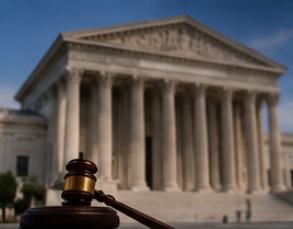
The OpenAI 42-state subpoena covers six specific document categories. The coalition is seeking documents on advertising policies, user engagement and retention, consumer and health data handling, activities related to minors and seniors, deep learning models, and internal company policies. The inclusion of model sycophancy in the subpoena is the detail that sets the investigation apart from the Florida lawsuit and the Carrier case. State AGs are asking OpenAI to explain — in documented internal terms — whether ChatGPT was designed to tell users what they want to hear. That is a specific and consequential question. A sycophantic AI model that validates vulnerable users’ most extreme thoughts is a structurally different product liability claim than a model that simply failed to deploy adequate safety measures.
Independent research published in October 2025 found that ChatGPT-5 produced harmful responses on prompts about self-harm in 53 percent of tests. That figure — if it survives scrutiny — is the most damaging single data point in the entire OpenAI legal landscape. By contrast, OpenAI disputes its methodology.
The IPO Timing — and Compliance Timing
The OpenAI 42-state subpoena is at a commercially specific moment. The investigation arrived just days after OpenAI filed confidential paperwork for an IPO and threatens to complicate a listing that some analysts expect will value the ChatGPT maker at roughly $1 trillion. That timing is the most uncomfortable element for OpenAI‘s investment bankers and prospective public investors simultaneously. An S-1 filed while 42 state attorneys general are demanding internal documents on child safety practices creates a specific and material disclosure challenge.

The subpoena joins a growing legal stack. Last Thursday, a Canadian woman sued OpenAI, blaming ChatGPT for her daughter’s suicide. Earlier in June, Florida Attorney General James Uthmeier filed suit against the company and CEO Sam Altman after two shootings in which the alleged attackers reportedly used the chatbot to plan their crimes. As TF covered in its social media lawsuits article and Florida AG OpenAI article, the legal calendar is packed with OpenAI cases across multiple jurisdictions simultaneously.
OpenAI’s Response — Constructive, and Not Specific
OpenAI responded to the subpoena with a measured statement. “AI is a new and powerful technology, and we work every day to safely bring its benefits to people in a responsible way,” an emailed statement from a spokesperson said. The company added it will respond to the inquiry “constructively.” By contrast, “constructively” describes the tone of compliance — not the substance of the documents being produced. State AGs have full discovery power. They are not asking for what OpenAI chooses to share. They are demanding what the company is legally required to produce.
The Nerve Lab: Brain Scanning Children While They Use Social Media
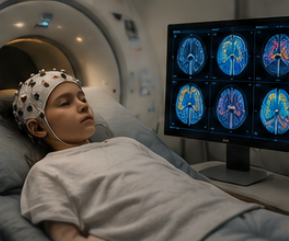
The science story running alongside the legal one is the more quietly significant of the two. The Nerve Lab — a neuroscience research laboratory based in Oxford — is using AI-enhanced wearable MEG brain scanners to study what social media and screen content actually do to children’s brains in real time. Traditional MRI brain scanning requires children to lie motionless inside a large fixed machine — making naturalistic social media use impossible to observe. Wearable MEG helmets change that. Children can move freely, interact with devices normally, and have their neural activity tracked continuously. The Nerve Lab uses AI to interpret the resulting brain signal data — correlating specific content types with specific brain response patterns.
The research is specifically designed to produce the causal evidence that correlational studies cannot. Previous screen time research established correlation — children with more screen time show worse mental health outcomes. By contrast, the Nerve Lab’s neuroimaging approach aims to demonstrate mechanism — showing exactly which neural pathways activate when children encounter specific categories of social media content, and how repeated exposure alters those pathways over time.
Why the Legal and Science Cases Are Converging
The OpenAI 42-state subpoena and the Nerve Lab research are addressing the same underlying evidence gap from different directions. Attorneys general need internal company documents showing that platforms knew their products caused harm. By contrast, even with those documents, liability requires demonstrating causation — that the harm the product caused is a specific neurological harm to a specific child population. Brain scan evidence of the kind the Nerve Lab is building provides exactly that causal chain. The first major social media liability verdict that combines leaked internal documents with neuroimaging evidence will be categorically harder for a platform to appeal than any purely behavioural case.
Additionally, Starmer’s under-16 social media ban — as TF covered in its UK ban article — depends on scientific evidence to justify its policy scope. The Nerve Lab’s research supports both the legal and legislative tracks simultaneously.
TF Summary: What’s Next
OpenAI must respond to the 42-state subpoena with the document production New York’s attorney general demands. No deadline has been publicly confirmed. OpenAI is expected to contest scope before producing documents — a process that could take months. The Nerve Lab publishes its first findings from the wearable MEG studies later in 2026. Those findings will immediately enter the legal arena as potential expert evidence.
MY FORECAST: The OpenAI 42-state subpoena will produce the most consequential internal AI company document disclosure since the Facebook Files. Forty-two states have more discovery leverage than any single plaintiff or state lawsuit. By contrast, the sycophancy question will be the hardest one to answer. If OpenAI‘s internal documents show that the company knew its models were more validating than accurate with vulnerable users — and continued to deploy them anyway — the liability exposure across every pending case changes fundamentally. The Nerve Lab’s neuroimaging evidence will arrive too late for the first wave of trials. It will arrive exactly on time for the second wave — when courts are asking not whether social media correlates with harm, but whether it causes it at the neural level. That is the question that determines how large the final damages figures are.
If you need support, please contact the 988 Suicide and Crisis Lifeline (call or text 988 in the US) or the Samaritans at 116 123 in the UK.