


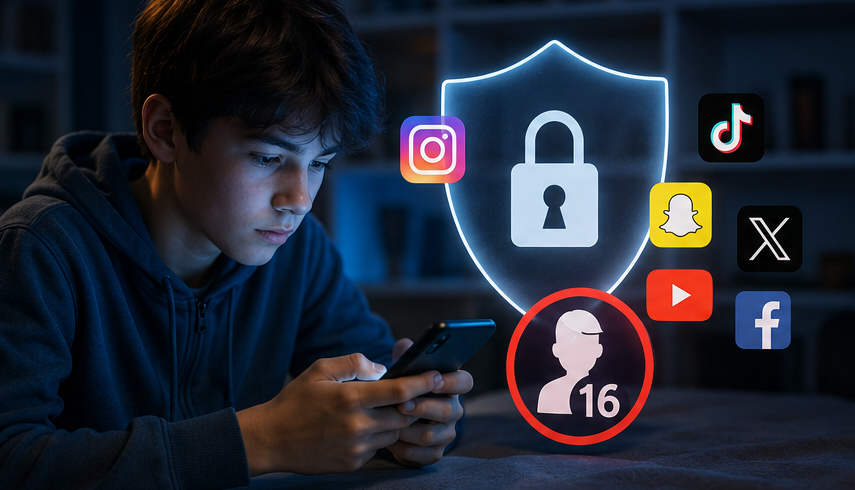
TikTok, Instagram, Facebook, X, YouTube, Snapchat, Threads, Twitch, Kick, and Reddit. All ten platforms, gone for under-16s, from early 2027. Starmer called it bigger than Australia’s ban. 116,000 parents responded to the consultation. “I am not prepared to compromise,” he said. This is the announcement TF has tracked since February.
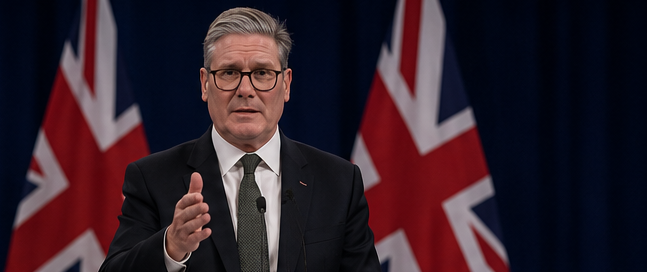
The UK under-16 (U16) social media ban became official — and Prime Minister Keir Starmer did not pull his punches. “Today I can announce the government will ban access to social media for all children under the age of 16,” he told a press briefing. He added: “I am not prepared to compromise on the safety and happiness of our children. That is why this ban must happen and it is why this ban will happen.” According to The Sunday Times, the ban covers ten platforms: TikTok, Instagram, Facebook, X, YouTube, Snapchat, Threads, Twitch, Kick, and Reddit. Starmer called it as “world-leading” — explicitly more prohibitive than Australia’s ban, which took effect in December 2025.
What’s Happening & Why It Matters
Bigger Than Australia — Curfews, Chatbots, and Addictive Design
The UK U16 social media ban goes further than any comparable global policy. Starmer specifically said the UK measures would exceed Australia’s framework. The Sunday Times reported three additional elements beyond the platform ban itself. First, curfews targeting older teenagers — aimed specifically at preventing late-night scrolling. Second, restrictions on AI chatbots — closing the loophole Technology Secretary Liz Kendall identified in February, where one-to-one AI chatbot interactions fell outside the Online Safety Act‘s scope. Third, restrictions on addictive design features within gaming apps — directly targeting the infinite-scroll mechanics that Starmer described in January as pulling children into “a world of endless scrolling, anxiety and comparison.”
Notably, the chatbot restrictions arrive amid acute political pressure. As TF covered in its Canada Digital Safety Act article, AI chatbot self-harm response requirements are appearing in legislation across multiple jurisdictions simultaneously. The UK’s chatbot crackdown follows public outcry over Elon Musk‘s Grok chatbot generating non-consensual sexualised images — a controversy that accelerated this entire policy track since February.
116,000 Responses — the Consultation That Built the Mandate
The UK U16 social media ban rests on an extraordinary public mandate. The government’s consultation — launched in March 2026 — received 116,000 responses from parents, children, and other stakeholders. As TF covered in its Starmer device-level deadline article, Technology Secretary Kendall had already confirmed in early June that nine in ten responding parents supported a ban. That figure gave the government the political cover to move beyond consideration into firm commitment.
The legislative mechanism is critical here too. The government modified existing crime and child-protection legislation specifically to allow implementation “within months, rather than waiting years for new primary legislation.” That structural choice — made back in February — is precisely what allows Starmer to announce an “early next year” timeline today, rather than a multi-year parliamentary process.
Age Assurance: How Will This Actually Work?
The technical enforcement mechanism is where the UK U16 social media ban gets genuinely complicated. The government has urged platforms to take “reasonable steps” using age assurance technologies — including face or voice recognition, government ID verification, or age inference systems that estimate a user’s age from behavioural signals before granting account access. By contrast, none of those methods are foolproof, and all carry their own privacy implications that critics will scrutinise closely.
As TF covered in its device-level deadline article, Apple and Google faced a separate 90-day deadline — from the same 8 June announcement — to implement device-level controls preventing children from taking, sharing, or viewing nude images. That device-level track and today’s platform-level ban are two halves of the same enforcement strategy. Device manufacturers handle image-based harms. Platforms handle account-level age verification. Together, they form the architecture Starmer described as “world-leading.”
The Political Backdrop: A PM Under Pressure
The announcement is at a politically charged moment for Starmer personally. He is currently facing pressure from within his own party over perceptions of weak leadership — with some members reportedly calling for him to step down. By contrast, child online safety is one of the few policy areas where Starmer commands near-universal public support. The 116,000-response consultation and the 90% parental approval figure give him a rare political win at a moment when he needs one.
Furthermore, the timing — announced the same week as a G7 business roundtable with Japanese Prime Minister Sanae Takaichi — places the UK’s child safety framework on the international stage. Starmer called it “a big moment for our country.” Whether the situation holds depends entirely on implementation — and implementation is where every comparable policy, from Australia to Canada, has faced its hardest questions.
Market Response: “I Will Fight Back”
Starmer addressed platform resistance directly and pre-emptively. He said he will “fight back” if technology companies resist the ban. The choices position the announcement as the opening move in what will likely be a sustained confrontation. Meta, TikTok, Snap, and Google‘s YouTube division have not yet issued formal responses to today’s announcement. By contrast, all four companies are simultaneously managing comparable regulatory pressure in Canada, Australia, and — per Reuters — Spain, Greece, and Slovenia, all of which have announced their own bans following Australia’s lead.
TF Summary: What’s Next
The UK U16 social media ban takes effect early 2027, according to Starmer. The government has not yet published the final list of covered platforms, the specific age-assurance technology requirements, or the enforcement penalty structure. Legislation implementing the ban proceeds through the modified legislative pathway established earlier this year — avoiding a multi-year primary legislation process. Liz Kendall is expected to publish detailed implementation guidance in the coming months.
MY FORECAST: The UK U16 social media ban is the reference framework that Spain, Greece, and Slovenia — all already committed to their own bans — adopt as their template. The early-2027 timeline gives platforms approximately seven months to build age-assurance infrastructure. By contrast, Australia’s experience — where Meta alone revoked access to 4.7 million accounts — shows the scale of what compliance actually requires. The chatbot restrictions will prove harder to enforce than the platform ban itself. A ten-platform list is concrete and blockable. An AI chatbot embedded inside a game, a customer service tool, or a general-purpose assistant is not. Within 18 months, expect the chatbot provisions — not the headline platform ban — to generate the most contentious enforcement disputes between the UK government and technology companies.