


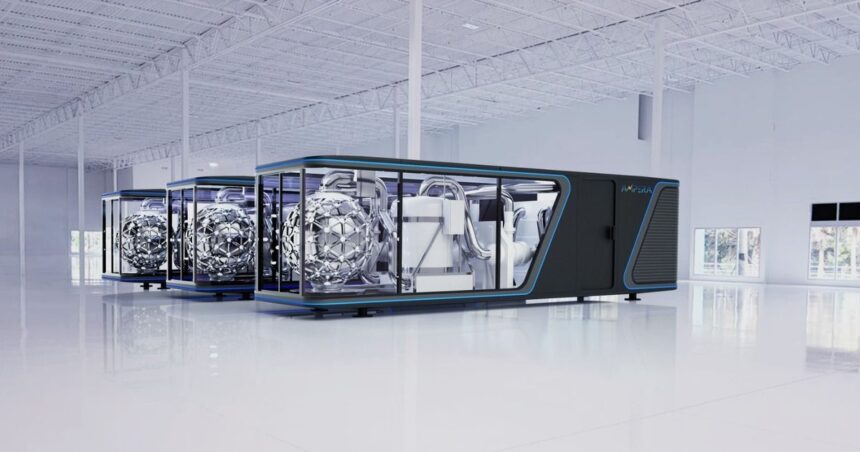
Advanced nuclear promises a cleaner, smaller, safer future. Ampera is asking the regulator’s office for go-live paperwork.
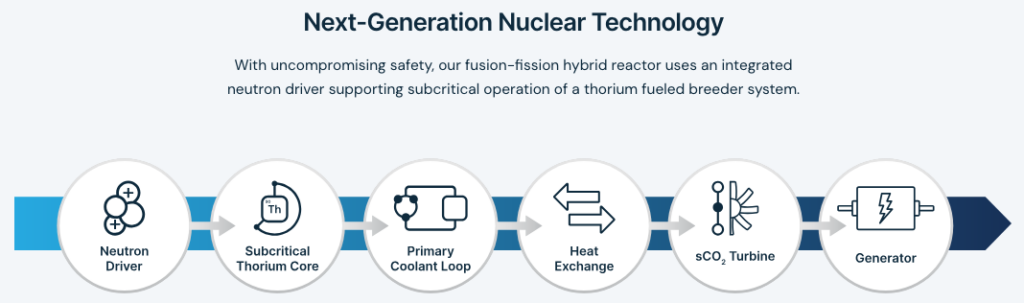
Florida-based AMPERA says it has taken a formal step toward U.S. licensing for its next-generation microreactor design, telling the U.S. Nuclear Regulatory Commission that it wants to begin the pre-application process under the agency’s new 10 CFR Part 53 framework. The company says the reactor is factory-fabricated, containerized, subcritical, and thorium-fueled, with advanced fuel forms and passive safety features designed for modular deployment.
That sounds like a lot of nuclear jargon. Underneath the jargon is a simple point. AMPERA is trying to build a smaller, more flexible reactor system and get in early under the NRC’s first major new reactor licensing framework in decades. Advanced nuclear startups love to talk about better safety, lower cost, and faster deployment. Fewer of them get to the stage where the regulator has real paperwork in hand.
What’s Happening & Why This Matters
Starting the NRC Pre-Application Process

AMPERA says it submitted a formal letter to the NRC on 23 February 2026, stating its desire to begin the pre-application process for a new class of microreactor. The company’s design is described as factory-fabricated and containerized, which is important because those two ideas are at the heart of the microreactor pitch.
Traditional large reactors are huge, site-heavy, and brutally slow to build. Microreactor developers want a different story. Build smaller units in a factory. Transport them to where power is needed. Deploy them in a modular way. Cut the giant construction risk that keeps haunting conventional nuclear projects.
That is the commercial dream. The regulatory dream is just as important. A pre-application process gives the NRC and the company a chance to align early on major licensing questions before a full application drops. That reduces surprises later, at least in theory. Nuclear development rarely stays surprise-free. Early engagement still matters.
The big takeaway is simple. AMPERA is no longer confined to concept art and investor language. The company is trying to enter the actual U.S. licensing system, and that separates serious ambition from PowerPoint cosplay.
The New NRC Rule
AMPERA’s announcement is just days after the NRC finalized 10 CFR Part 53, a new regulatory pathway meant to handle advanced reactors more directly. The NRC described Part 53 as the first new reactor licensing process in decades, designed to support faster deployment while still maintaining safety.
That timing is not accidental. AMPERA is trying to use the new framework as a cleaner on-ramp for a reactor concept that does not fit neatly inside old regulatory assumptions built around large light-water reactors.
Founder and CEO Brian Matthews made that point directly in the company’s announcement. He said that with Part 53 in place, advanced nuclear concepts can focus on licensing new technology instead of spending years explaining how they differ from traditional systems.
The old complaint from advanced reactor firms has been consistent: regulators evaluated futuristic designs through rules written for older reactor categories. A new framework does not guarantee an easy ride. A new framework can at least give companies a fairer lane.
That is the real significance here. AMPERA is not only filing because it is ready. AMPERA is filing because the rulebook finally moved closer to the kind of reactor the company wants to build.
Selling a Different Nuclear Safety Story
The company’s design is subcritical and thorium-fueled, which gives AMPERA a distinct marketing and safety pitch compared to many other advanced nuclear startups.
Subcritical systems are designed so the reactor cannot sustain a chain reaction on its own without an external neutron source. That feature gives supporters a strong talking point because it suggests an extra layer of inherent safety. Thorium adds another layer of differentiation. Thorium has long been promoted as an alternative fuel path with potential benefits around fuel availability, waste characteristics, and proliferation concerns, though plenty of engineering and economic hurdles remain.
AMPERA is clearly leaning into that difference. The company says the reactor uses advanced fuel forms and passive safety features. In plain terms, the pitch is that the system aims to stay safe with fewer moving parts, fewer active interventions, and less dependence on heroic operator response.
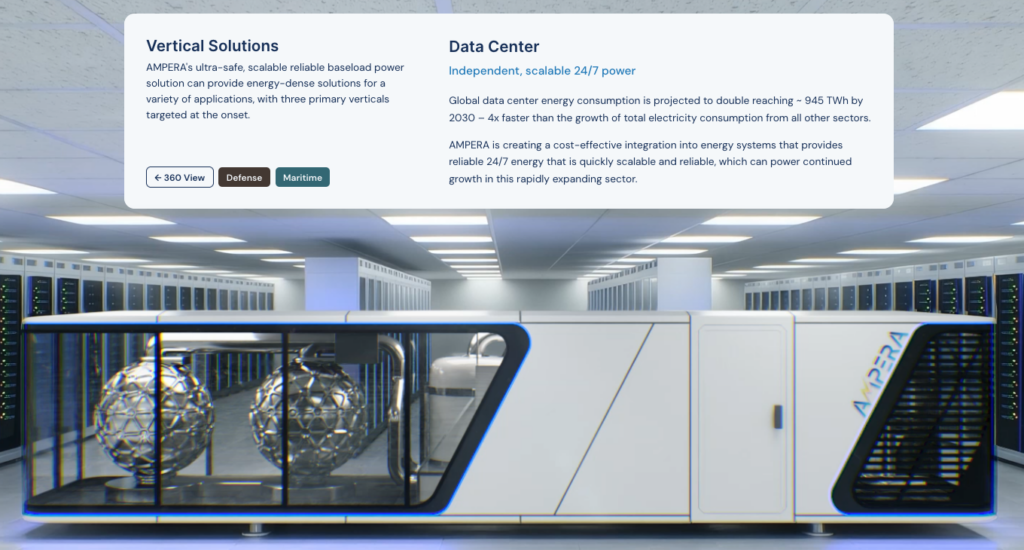
That is an attractive idea, especially at a time when nuclear supporters are trying to convince governments, utilities, and communities that the next generation of reactors will not repeat the most painful parts of the last generation.
Of course, attractive ideas are not licences. The NRC will still want hard technical proof, not elegant adjectives.
Microreactors Offer to Meet Rising Power Demand
AMPERA’s move comes at a moment when the power conversation is changing quickly. Data centres are expanding. AI infrastructure is gobbling electricity. Grid planners want carbon-free power that runs day and night. Energy security concerns have sharpened across North America and Europe. All of that has made microreactors and small modular reactors are more interesting to policymakers and investors.
Microreactors offer a particular appeal because they target use cases that giant nuclear plants often cannot serve neatly. Remote sites. Industrial campuses. Military installations. Islands. Mining operations. Energy-hungry locations that need stable power but cannot wait a decade for a massive conventional plant.
That is why AMPERA’s containerized design is important. Mobility and modularity are not decorative features. They are the commercial angle. If a company can truly fabricate a reactor system in a factory and move it to a site with less construction complexity, that can attack one of nuclear energy’s biggest problems: the crushing drag of time.
Here is where the energy sector gets interesting. Nuclear’s image still carries the weight of giant projects, budgets, and delays. Microreactors promise a more agile version of the same low-carbon logic. Whether that promise survives real licensing and real deployment is the question hanging over the whole category.
The NRC: A True Proving Ground
The market loves to treat licensing as a checkbox. Nuclear veterans know better. The licensing process is often the product.
A reactor company can have exciting engineering, smart people, and good political timing. None of that replaces the need to persuade the NRC that the design is safe, understandable, controllable, and fit for commercial deployment under U.S. law.
That is why AMPERA’s pre-application letter is vital even though as an early step. It is the point where optimism meets scrutiny. The company is entering a world of regulatory questions, documentation requirements, safety cases, public review, and technical patience.
That world is not glamorous. It is still where credibility is earned.
The better way to read AMPERA’s move is not “nuclear breakthrough achieved.” The better way is “the hard exam has begun.” If the company can move through the early stages cleanly, the market will take the design more seriously. If the process drags or exposes weaknesses, the hype will cool fast.
That sounds harsh. Nuclear has always been harsh on timelines, weak claims, and pretty narratives.
A Promotion for the Advanced Nuclear Sector?
Even though this article is company-specific, the implications stretch further. Every early mover under Part 53 helps test the new framework. That influences the advanced nuclear industry.
If AMPERA gets meaningful traction under the new NRC pathway, other startups can point to a live example of how the system handles non-traditional reactor concepts. That could help firms working on fast reactors, molten salt designs, high-temperature gas systems, and other unconventional architectures.
The opposite is true, too. If early applicants get bogged down in the same old regulatory swamp, the industry’s frustration with “faster advanced-reactor licensing” will return very quickly.
That is why AMPERA’s filing is bigger than a one-company announcement. The company is testing both a reactor design and a regulatory promise. Washington has been saying for years that advanced nuclear needs a better lane. Part 53 is supposed to provide one. The only way to know whether that lane works is for real companies to drive into it.
That is finally happening.
TF Summary: What’s Next
AMPERA has formally told the NRC it wants to begin the pre-application process for a factory-fabricated, containerized, thorium-fueled microreactor under the agency’s new 10 CFR Part 53 framework. That step does not hand the company a licence. It does show AMPERA is trying to move from advanced nuclear theory into the real U.S. regulatory process. For a sector full of ambitious claims, that is momentous.
MY FORECAST: AMPERA will get attention well beyond its own size. AMPERA’s innovations are arriving at the seminal time. The NRC has a new framework. Power demand is climbing. Microreactors are gaining policy momentum. The next key test is whether AMPERA can turn a clever, differentiated design into a clean, credible regulatory case. If the company does, Part 53 will start looking real. If not, advanced nuclear critics will say the rules changed, but the grind stayed the same.
— Text-to-Speech (TTS) provided by gspeech | TechFyle