


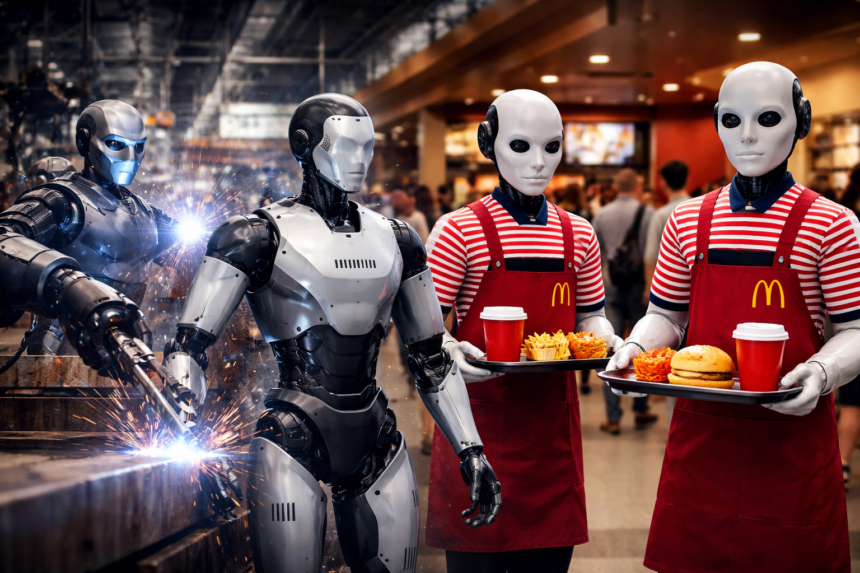
Humanoid robots are leaving labs for factories, shipyards, fast-food eateries, and even your home.
Humanoid robots are no longer stuck in glossy keynote clips and awkward hallway demos. In March 2026 alone, UBTech said it wants help from Siemens to scale industrial humanoid robot production toward 10,000 units a year by the end of 2026. A McDonald’s site in Shanghai tested humanoid robots to greet diners and deliver food during a short promotional run. HD Hyundai and Persona AI announced a shipyard welding humanoid project built for hard industrial work. These are not identical stories. They do share one big message: humanoid robotics has left the toy aisle.
The pitch has changed. The first wave sold spectacle. The next wave sells labor, productivity, and scale. Companies are no longer asking whether humanoid robots look futuristic enough. They are asking whether the machines can weld, carry trays, and navigate tight spaces — despite labor shortages and production delays. That is a colder, more serious conversation. It is the kind that turns prototypes into budgets.
What’s Happening & Why This Matters
From Prototype to Production
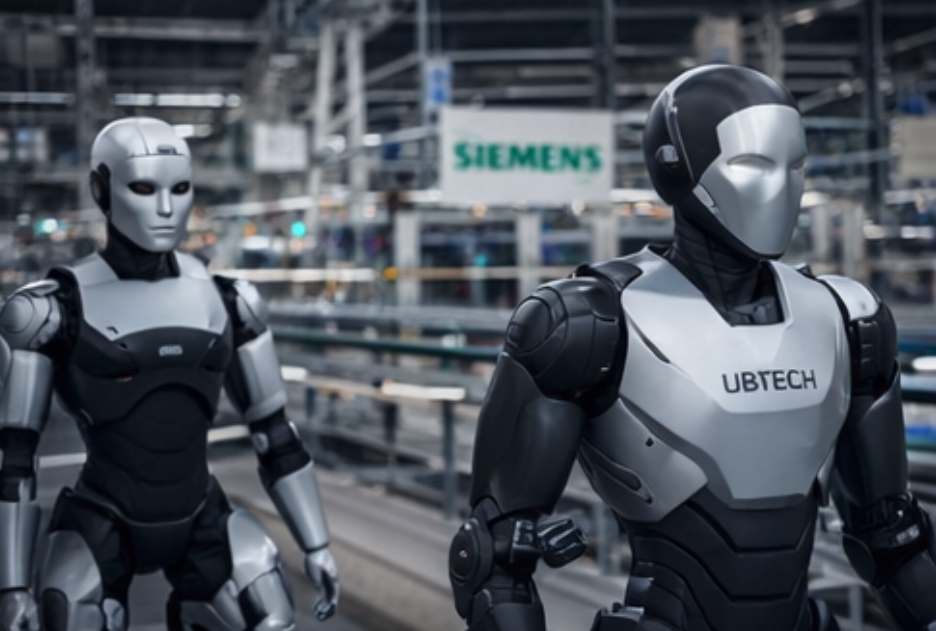
The most important shift in humanoid robot news may be on an industrial scale. UBTech and Siemens signed a strategic cooperation framework agreement in Shenzhen on 16 March to accelerate the production of humanoid robots. Shenzhen Daily reported the target clearly: UBTech wants an annual production capacity of 10,000 humanoid robots by the end of 2026. That is not a “nice concept, maybe someday” number. That is a manufacturing ambition.
The partnership combines UBTech’s robotics stack with Siemens’ digital manufacturing and industrial software tools. UBTech said the two companies will work across design, simulation, manufacturing, and lifecycle management. The basic idea is simple. If humanoids are going to matter, they need more than clever demos. They need repeatable production.
That is why this story matters. The real bottleneck in robotics is not only intelligence. It is industrialization. A robot that works once on stage is marketing. A robot that rolls off a line in meaningful volume starts to look like industry.
Not Cute Companions. The Goal Is Labor
UBTech’s announcement did not pitch humanoids as lifestyle gadgets. It focused on industrial use. Gasgoo reported the partnership aims to help the industry shift “from research and development to mass production.” That wording says a lot. The robot market is trying to cross the hardest bridge in tech: the bridge from promise to operations.

That matters because labor shortages are real across manufacturing, logistics, and heavy industry. A humanoid robot is attractive to companies that want a single machine that can navigate spaces designed for humans without redesigning the entire site. In theory, a bipedal robot can use existing tools, stairs, controls, and workstations. In practice, that theory still needs a lot of proof.
Even so, the industry’s direction is clear. The question is no longer “can a humanoid robot walk?” The sharper question is “can a humanoid robot work enough hours, safely enough, cheaply enough, to justify the rollout?”
McDonald’s Shows the Consumer Side
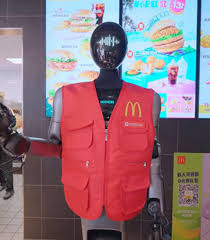
The McDonald’s robot story grabbed attention fast because it looked like a direct glimpse of the future. Videos showed humanoid robots at a Shanghai McDonald’s location greeting customers and carrying trays. Interesting Engineering and several follow-up reports said the robots took part in a five-day trial tied to the opening of a store at the Shanghai Science and Technology Museum.
That sounds dramatic, but the reality is narrower. Reuters and other follow-up coverage reported that the robots were part of a limited promotional event, not a full operational handover of kitchen and dining-floor work. McDonald’s executive Jon Banner said the robots served only a promotional role and were not involved in actual food service or operational functions. In plain English: the robots made noise, but they did not take over the lunch rush.
That distinction matters because robot hype thrives on visual shortcuts. A humanoid holding a tray looks like labor replacement. A five-day brand stunt is something else. Still, even a stunt matters when it normalizes the image of a robot in a familiar consumer space.
Fast Food Robotics Still Carries Symbolic Power
Even if the McDonald’s test was mostly promotional, it still tells us something useful. Public-facing environments matter because they shape comfort. A welding robot in a shipyard feels abstract to most people. A humanoid in a restaurant feels immediate. Customers can picture that future in seconds.
That is why companies keep testing robots in shops, restaurants, and hotels. The deployments do not only test the workflow. They test public reaction. Do customers laugh, ignore, complain, or accept the machine as normal? In product terms, that emotional answer matters almost as much as the hardware.
The McDonald’s clips suggest we are entering a transition stage. Humanoid robots are not quietly entering society. They are entering through spectacle first, then through repetition. Once enough people see the machine in a familiar setting, the idea no longer feels strange. That is how “novel” turns into “ordinary.”
Hyundai and Persona AI Take Aim at the Hardest Jobs
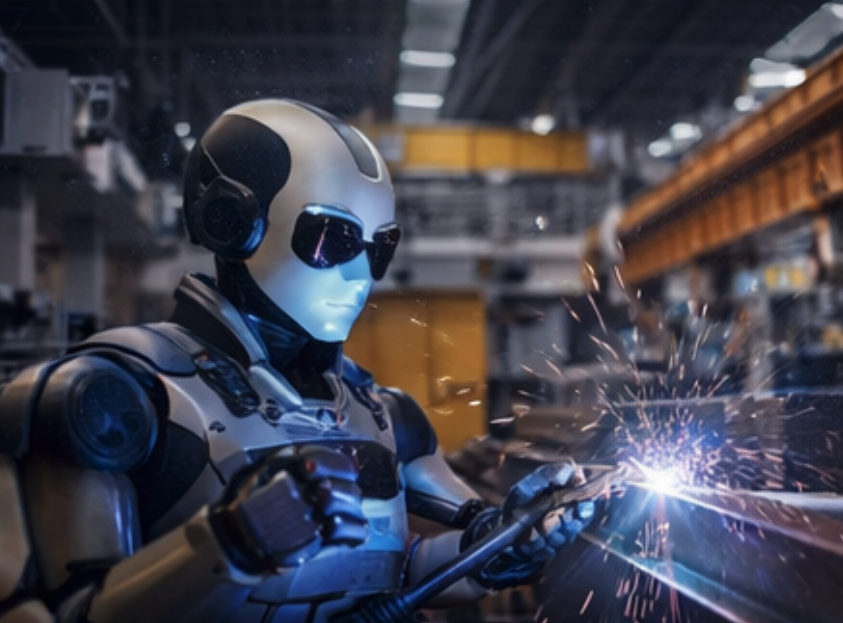
The most serious labor use case in this roundup is shipbuilding. HD Hyundai, HD Korea Shipbuilding & Offshore Engineering, HD Hyundai Robotics, and U.S.-based Persona AI said they will jointly develop and verify a humanoid welding robot for shipyards. Korea JoongAng Daily and Yonhap reported that the project focuses on welding work in difficult shipyard environments, with plans to deploy the robots at actual shipbuilding sites gradually.
That is a much harder assignment than greeting customers or carrying a tray. Shipyard welding is physically demanding, hazardous, and hard to staff. It takes skill. It takes endurance. It takes movement through cluttered, uneven, and often dangerous environments.
That is exactly why the project matters. If a humanoid robot can handle stable movement and useful welding work in a shipyard, the industry will take the category much more seriously. This is not a vanity use case. It targets one of the toughest labor problems in heavy industry.
Labor Shortages Are Fueling the Humanoid Push
A shared theme connects all three stories: human labor gaps. McDonald’s and other service brands face constant pressure around staffing, speed, and consistency. Manufacturers face cost pressure and the need for more flexible automation. Shipbuilders face chronic shortages of skilled workers, especially welders.
That labor backdrop matters because robotics adoption rarely happens only because the technology is cool. Adoption happens when a pain point stays expensive for long enough. Shipyards struggle to hire and retain skilled welding talent. Factories want more flexible automation than fixed industrial arms can offer. Service companies want ways to create attention, reduce repetitive tasks, or prepare for future labor shifts.
In other words, humanoid robots are not entering society because engineers suddenly discovered legs. They are entering because employers keep seeing jobs that are repetitive, risky, or hard to fill.
The Infiltration Story Is Real. The Timeline Is Uncertain
The headline writes itself: humanoid robots are infiltrating society. That is true in one sense. They are spreading into more visible environments and more serious work discussions. Yet the speed of the takeover still needs perspective.
A humanoid robot that can perform one task in controlled conditions is not the same as a machine that can work a full shift, recover from mistakes, operate safely near people, and justify the total cost of ownership. Production targets are one thing. Deployment at scale is another. Interesting Engineering, Yonhap, and other reports all describe early partnerships, trials, or staged rollouts rather than mature mass-market labor replacement.
That does not weaken the story. It sharpens it. The current phase is not a full replacement. It is social and industrial positioning. Companies are testing where humanoids fit, what tasks matter first, and how quickly people and operations will tolerate the machines.
From Hardware Robotics to Robotics Systems
Another reason this moment feels different is that humanoid robots are no longer sold as bodies alone. They are sold as systems. UBTech talks about full-stack robotics and digital manufacturing. Hyundai talks about verification and commercialization. Persona AI focuses on a bipedal platform tailored for shipyards. These companies are not selling a cool robot. They are building a workflow product.
That is a major change. The robot body grabs headlines, but the real value sits in integration, software, simulation, safety controls, maintenance, data capture, and task-specific tuning. A humanoid robot that cannot slot into a real process remains an expensive sideshow. A humanoid robot that plugs into a workflow starts to look like infrastructure.
That distinction will decide the winners. The biggest robotics company may not be the one with the most human-looking machine. It may be the one that best fits the ugly, practical, repetitive work companies actually need done.
What Are Robots’ Roles in the Future?
This is where the story stops being only industrial. Once humanoid robots move from labs into restaurants, factories, and shipyards, the debate turns public. Which jobs should they do first? What safety rules should apply? Who is liable when a machine makes a bad move in a crowded space? What happens to training pipelines for human workers if robots absorb more entry-level or repetitive work?
Those questions do not have neat answers. Yet they are no longer hypothetical. Humanoid robot adoption is in early stages, but the direction is evident. The first deployments will likely target dull, dirty, and dangerous work. That sounds sensible. Even then, every early deployment teaches the market what society will tolerate.
And yes, the title joke still lands. “The Humans Are Dead” works because the sight of humanoids doing human jobs still feels absurd enough to laugh at. The funny part is fading. The budget lines are showing up.
TF Summary: What’s Next
Humanoid robots are moving into the real world through three different doors. UBTech and Siemens want industrial scale, with a stated goal of 10,000 units a year by the end of 2026. McDonald’s showed how robots can enter public life through promotional service trials. HD Hyundai and Persona AI targeted one of the hardest labor problems on the board by developing welding humanoids for shipyards. Together, these moves show the category leaving the concept stage and entering the operational stage.
MY FORECAST: The first humanoid robot wins will come in heavy industry, logistics, and structured environments before they arrive in everyday consumer life. Public-facing trials will keep grabbing headlines, but factories and shipyards will shape the real economics. The next 24 months will decide whether humanoids become a durable labor platform or stay trapped between brilliant demos and stubborn reality.
— Text-to-Speech (TTS) provided by gspeech | TechFyle