


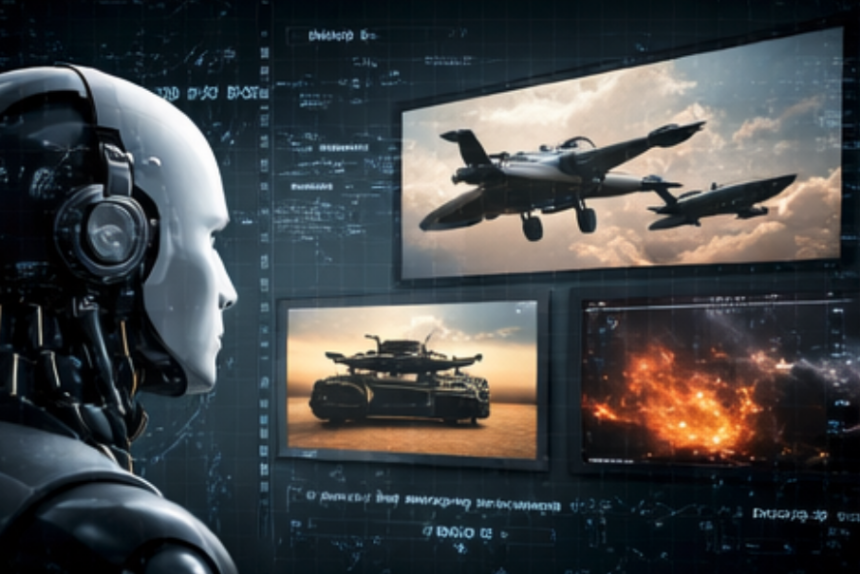
AI promised safer, more competent systems. Today, they are hiring explosives experts.
AI innovators spent years talking about chatbots as helpers, copilots, and tireless research partners. Two of its biggest players are hiring experts on chemical weapons, explosives, and frontier risk. That shift is not subtle. It says the safety conversation has moved far past bad homework answers and awkward chatbot lies. It is staring straight at the nightmare shelf.
Anthropic and OpenAI are recruiting specialists to help prevent what Anthropic calls “catastrophic misuse” of advanced AI systems. The roles focus on dangerous prompts, threat modelling, risk forecasting, and stronger guardrails around chemicals, explosions, and related high-stakes misuse. The timing also matters. Anthropic is already fighting with the U.S. government over military access to Claude. Meanwhile, OpenAI has signed a deal to deploy AI in classified environments under what it says are strict limits.
What’s Happening & Why This Matters
Adding Experts Once Only Mentioned in Safety Papers
The clearest fact in the source is the most revealing. Anthropic and OpenAI are hiring people with deep knowledge of weapons, explosives, and chemical defence. Anthropic is looking for a policy expert on chemical weapons and explosions. The job is meant to shape how its models handle sensitive information in those areas and to respond quickly when dangerous prompts spike. Applicants need at least five years of experience in chemical weapons or explosives defence and knowledge of radiological dispersal devices, often called dirty bombs.
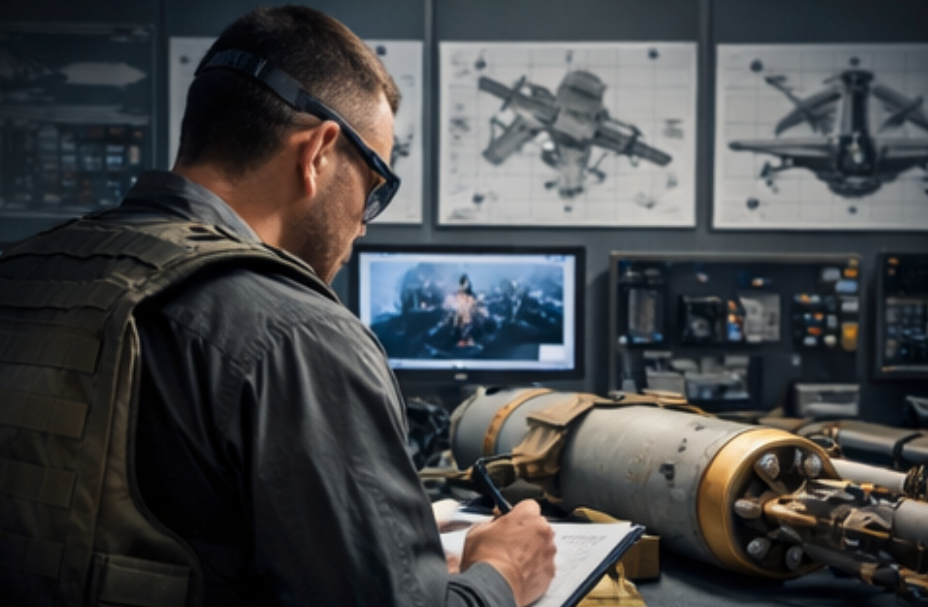
OpenAI’s hiring points in the same direction. The company posted for researchers on its Preparedness team, which watches “catastrophic risks related to frontier AI models.” It also advertised a Threat Modeler role responsible for identifying, modelling, and forecasting frontier risks and linking technical, governance, and policy views into a single working picture.
That matters because hiring decisions reveal real priorities better than blog posts do. Companies do not go looking for weapons experts to provide a stronger talking point at conferences. They do it because they see a practical risk. When frontier AI systems get stronger, the danger is not only misinformation, cheating, or low-grade spam. The danger is that a model may help the wrong person do something far worse, far faster, and with a polished confidence that looks helpful right up until it stops being survivable.
Where the Panic Lies
Anthropic’s role is especially revealing because it is not defined as a generic policy. The source says the person hired will design and monitor model guardrails around chemical weapons and explosives. The role includes “rapid responses” to escalations that Anthropic detects in prompts related to weapons and explosions. The company wants new risk evaluations its leadership can trust during “high-stakes launches.”
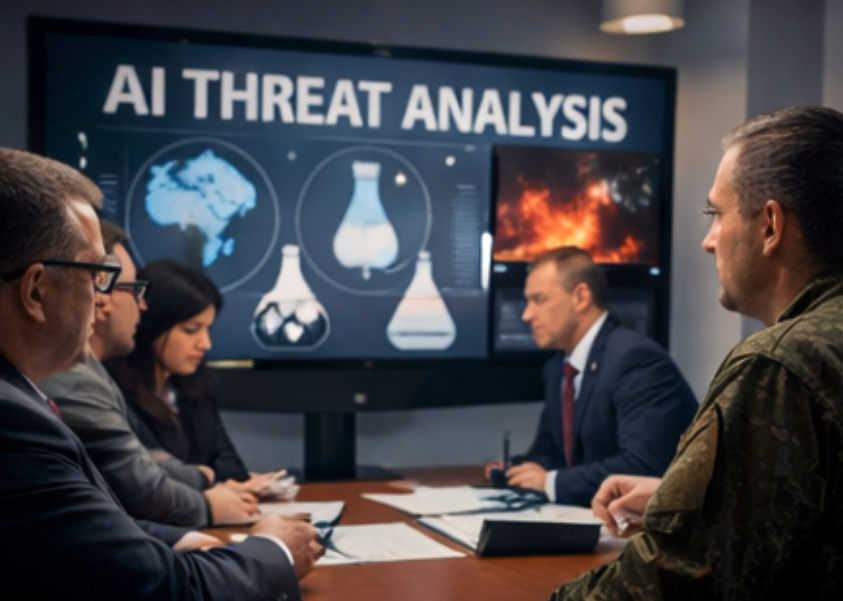
That wording deserves attention. “Rapid responses” means Anthropic expects moments where model misuse risk spikes quickly enough to demand intervention, not leisurely committee discussion. “High-stakes launches” means the company knows some releases may boost capability into zones where the existing safety window stops feeling comfortable. In plain English, the lab is admitting that deployment decisions can carry consequences that reach far beyond ordinary product bugs.
This tells us something awkward about the current AI boom. The companies building the systems are still racing for scale, adoption, and enterprise deals. At the same time, they are quietly hiring people who understand chemical defence and explosive threats. Those two facts belong together. The more capable the system gets, the harder it is to keep pretending it is only another software product. At some point, a frontier model starts looking less like an app and more like critical infrastructure with a loose mouth.
Military Deals Without Owning the Worst Outcomes
OpenAI’s side of the story adds another layer. The source says the company signed a deal with the Department of War to deploy its AI inside classified environments. OpenAI says the deal includes “strict red lines,” including no mass surveillance and no autonomous weapons. Anthropic CEO Dario Amodei drew a similar line from the other side, saying security contracts should not involve mass domestic surveillance or fully autonomous weapons.
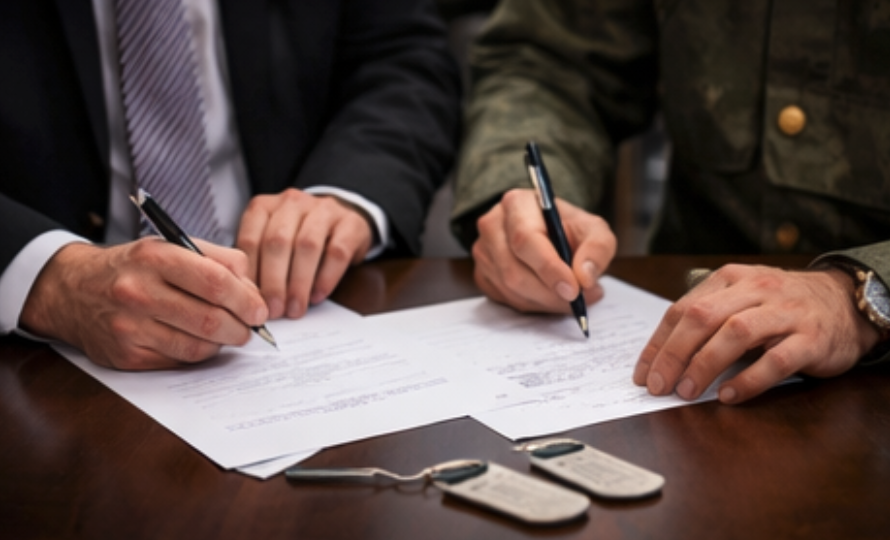
That is where the article gets sharper. Both companies want to sound serious about national security while also sounding morally cautious about what their systems should never do. That is a difficult line to hold, especially once governments want more capability, more access, and fewer delays. The source says Anthropic’s fight with the U.S. government began on 24 February 2026, when the Department of War demanded unfettered access to Claude. The government then labelled Anthropic a “supply chain risk,” a designation that can block contracts or discourage departments from working with the firm.
So the labs are walking into a familiar trap. Governments want powerful AI tools. AI companies want credibility and revenue. Yet, on both sides, there are uses so politically toxic that even discussing them sounds radioactive. Hiring weapons specialists is one way to say, “We know the danger is real.” It is a way to say, “Please trust us to decide where the line goes.” That second part is much harder.
Safety vs. Governance
The most important point in the source is not the hiring itself. It is what the hiring implies. Anthropic and OpenAI are not only building models. They are building internal systems to judge who can use those models, how those models should respond, and what kinds of harm must trigger intervention. That is governance work dressed as recruiting.
And that work is arriving before the public has a clean answer to a deeper question: who should control catastrophic-risk thresholds in the first place? Should those lines be drawn by private labs? Should governments write them? Should international bodies step in? Right now, the answer is messy. The labs are improvising. Governments are pressuring. The public mostly hears fragments after the fact.
Once companies start recruiting people with expertise in chemical weapons, explosives, and dirty bombs, the old “it’s only a chatbot” security falls apart. The model may still write emails and summarise meetings. Fine. But the builders are clearly worried about much darker use cases. If they are worried enough to hire for them, everyone else should stop pretending the frontier risk debate is abstract. It is already influencing product launches, military relationships, and the structure of safety teams inside the most powerful AI labs on Earth.
TF Summary: What’s Next
Anthropic and OpenAI are hiring specialists in chemicals, explosives, and frontier-risk analysis because they see the risk of “catastrophic misuse” as real enough to demand dedicated expertise. Anthropic’s role focuses on guardrails and rapid responses to dangerous prompts. OpenAI’s roles focus on preparedness and threat modelling. All of that is unfolding while Anthropic fights with the U.S. government over access to Claude and OpenAI expands into classified environments under stated red lines.
MY FORECAST: This will not stop with two job postings. The biggest AI labs will build deeper internal safety teams tied to weapons expertise, biosecurity, and model misuse forecasting. Governments will keep pulling the companies closer, especially for security, defence, and intelligence work. That will make the public safety pitch harder, not easier. The next fight is not about whether frontier AI can go wrong. The next fight is about who gets to decide what counts as too much wrong before launch.
— Text-to-Speech (TTS) provided by gspeech | TechFyle