



Government Sets Hard Deadline As Online Harm Reaches Boiling Point
The United Kingdom is drawing a bright red line in the digital sand. Technology companies face a strict deadline: remove abusive images within 48 hours of notification or risk massive fines — or even being blocked nationwide. The move targets nonconsensual intimate imagery, deepfake pornography, and other forms of online abuse that spread at machine speed while victims scramble helplessly behind.
Officials frame the measure as a direct response to a surge in AI-generated sexual images, revenge porn, and coordinated harassment campaigns. The policy places legal responsibility on platforms rather than victims. It signals a shift in how governments view social media companies: not as neutral conduits, but as entities accountable for the harm that occurs on their networks.
What’s Happening & Why This Matters
A Strict Removal Deadline With Real Teeth
Under new proposals tied to the U.K.’s Online Safety framework, companies must remove flagged abusive imagery within 48 hours. Failure triggers severe penalties. Regulators may impose fines reaching up to 10% of global revenue. In extreme cases, services may be blocked inside the country.
Prime Minister Keir Starmer describes the crisis in stark terms, calling it a national emergency. He argues that victims have carried the burden for too long. “The burden of tackling abuse must no longer fall on victims,” he writes. It must fall on the perpetrators and the companies that enable harm.
This is a philosophical evolution. Instead of endless reporting loops, victims gain a single trigger that activates system-wide removal efforts.
Ofcom: The Enforcer
The communications regulator Ofcom will oversee compliance. Once a victim flags content, the alert spreads across platforms. The goal is to prevent whack-a-mole reposting. Today, harmful images often reappear faster than they can be removed.

Officials are exploring digital watermarking and hash matching. These technologies create a unique fingerprint for each image, allowing automatic detection if the same content resurfaces. Similar systems already track child abuse material online.
However, experts warn that hash systems are not foolproof. Slight edits can defeat detection. AI tools make alteration trivial. A deepfake can be endlessly re-rendered into new forms.
In short, technology can help — but it cannot fully solve the problem.
AI Deepfakes Accelerate The Crisis
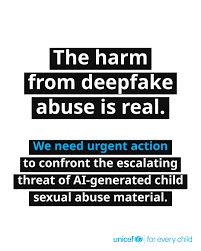
The policy arrives amid explosive growth in AI-generated imagery. Tools can fabricate realistic nude images from a single photo. Some chatbots have even produced sexualized images of real individuals.
Government officials cite incidents where thousands of requests flooded AI systems within hours. Analysts documented enormous volumes of image generation tied to harassment campaigns.
Deepfakes amplify both scale and cruelty. Victims face content that looks real yet never occurred. The emotional harm remains real. In some cases, victims report blackmail, reputational damage, and severe mental distress.
Charities link nonconsensual image abuse to suicides, particularly among young people.
Global Leaders Call For Stronger Protection
The U.K.’s ultimatum mirrors international concern. Leaders worldwide increasingly frame digital abuse as a public safety issue rather than a platform moderation problem.
At a leading AI summit, French President Emmanuel Macron noted that children must not be the test subjects for unregulated technology. “There is no reason our children should be exposed online to what is legally forbidden in the real world,” he says.
UN Secretary-General António Guterres shares the concern. He warns that AI power concentrated in a few companies carries profound societal risks.
The statements represent an established consensus: technology innovation must coexist with guardrails.
Platforms: The Practical Challenges
Enforcement will not be simple. Content spreads across dozens of services, including encrypted messaging apps. Regulators must decide how rules apply to private channels where platforms cannot see content.
There is also the issue of rogue websites operating outside mainstream infrastructure. Authorities plan to instruct internet providers on blocking hosting for sites specialising in nonconsensual content.
Still, critics question whether national laws can truly control a global internet.
Companies also worry about operational risk. A 48-hour deadline leaves little margin for error. Platforms must scale moderation teams, automation systems, and legal processes simultaneously.
Why The Policy Is a Wake-Up Call
The initiative is a transition towards platform accountability. Governments increasingly view digital spaces as extensions of physical society — subject to similar rules.
The U.K. already requires the immediate removal of terrorist content. Nonconsensual imagery receives comparable urgency.
Researchers note that 48 hours is achievable. Some jurisdictions demand even faster action for certain content categories.
However, faster removal does not automatically mean prevention. The internet excels at duplication. One file can spawn thousands of copies across continents in minutes.
The deeper question is philosophical: should platforms preemptively monitor all uploads to prevent harm? That approach conflicts with privacy rights and free speech concerns.
Civil liberties advocates warn against overreach. Others argue that failure to act leaves victims defenceless.
The Cultural Dimension
Officials see the issue as part of a more extensive social problem. Starmer points to systemic misogyny and the normalisation of abuse. He argues that dismissing victims’ experiences enables harmful behaviour to persist.
Digital abuse does not emerge in a vacuum. It indicates underlying attitudes amplified by technology.
The perspective extends the conversation from technical fixes to societal change.
TF Summary: What’s Next
The U.K.’s 48-hour rule is an inflexion point in internet governance. Platforms must treat abusive imagery with the urgency of public safety threats. The policy forces companies to invest heavily in detection systems, moderation infrastructure, and rapid response mechanisms. Other countries are watching closely. Similar laws may spread worldwide if the approach proves effective.
MY FORECAST: Expect continued tension between safety, privacy, and free expression. AI tools will keep improving. Deepfakes will become harder to detect. Governments will respond with stronger regulations. Technology firms will push back against liability and technical burdens. The next phase of the internet will likely be altered by the tug-of-war between innovation and accountability.
— Text-to-Speech (TTS) provided by gspeech | TechFyle