


Big Tech just had one of those weeks where the courtroom did more product shaping than the product team.
Courts are dragging technology into a sharper phase. A California jury hit Meta and YouTube with a landmark youth-harm verdict. A federal judge told X that advertisers can walk away without breaking antitrust law. Spotify, Sony, Warner, and Universal learned that even a court order cannot easily erase Anna’s Archive from the web. At Art Basel Hong Kong, the AI artist Botto kept raising a different legal and cultural question: who owns machine-made creativity when software, voters, and markets all grab the brush?
Put together, the pattern is hard to miss. Tech firms still sell scale, speed, and disruption. Courts keep asking a ruder question. What happens after the product reaches people, money, speech, and culture? That question is starting to bite. Badly.
What’s Happening & Why This Matters
Meta, YouTube’s Legal Gutpunches
A Los Angeles jury found Meta and YouTube liable in the first U.S. social media addiction case to reach a full jury verdict. The jury awarded $6 million (€5.1 million) in damages and split responsibility 70% to Meta and 30% to YouTube. The plaintiff, identified as KGM, said she used YouTube at age six and Instagram at age nine and later faced anxiety, depression, self-harm, and body-image issues.
That verdict does more than sting. It gives parents, advocates, and plaintiffs a live courtroom win against the “our platform is too complicated to blame” defense. Jurors reportedly treated design as the core issue, not only content. That is brutal for Silicon Valley because design is where product strategy lives.

Advocates want changes in autoplay, endless scroll, recommendation loops, and youth protections. That is the real threat to Meta and YouTube. The cash is manageable. The precedent is not. Once one jury says addictive design can count as negligence, every pending case gets a little less theoretical and a lot more dangerous.
X Learned That a Boycott Is Not Always a Conspiracy
Elon Musk’s X took a separate hit when a U.S. judge dismissed its antitrust lawsuit against major advertisers and the World Federation of Advertisers. X had argued that brands coordinated through the Global Alliance for Responsible Media to boycott the platform and starve it of ad revenue. The court was not convinced.
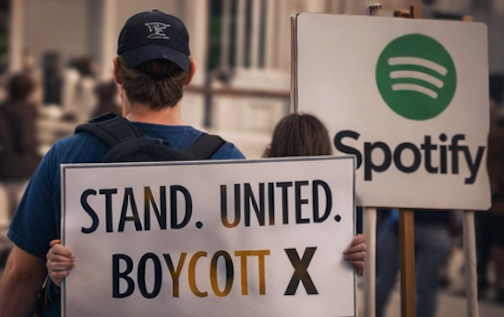
Reuters reported that Judge Jane Boyle ruled X failed to show a valid antitrust claim and dismissed the case with prejudice. That last part hurts. X cannot simply repackage the same complaint and try again.
The legal message is simple. Advertisers can make independent brand-safety decisions. They do not lose that freedom because Musk hates the outcome. X was trying to recast reputational retreat as illegal collusion.
The ruling cuts deeper than one failed lawsuit. It weakens the argument that every major advertiser’s exit from X was a coordinated attack. Sometimes brands leave because they do not like the room, the host, or the crowd. Courts are not required to rescue a platform from the consequences of its own chaos.
Spotify’s Win Against Anna’s Archive
Spotify, Sony Music, Warner Music Group, and Universal Music Group got a court order that helped take down Anna’s Archive’s .org domain earlier this year. Nice win on paper. Less nice in practice.
The bigger reality is that Anna’s Archive stayed reachable through other routes. That is why the case is important. It shows the old internet lesson again: shutting one door does not close the building when mirrors, proxies, and foreign infrastructure stay available.
The lawsuit followed claims that Anna’s Archive scraped about 86 million Spotify-linked music files and huge amounts of metadata. One report put the demand at $13 trillion (€11.1 trillion). The site failed to respond in court, which helped the plaintiffs. Yet even with the legal edge, the takedown has not produced a clean kill.
That gap exposes a wider weakness in digital enforcement. Rights holders can win filings, injunctions, and domain actions. They still struggle to wipe out decentralized or evasive archives once the files have scattered. Law can slow piracy. It does not magically un-invent distribution.
Botto Brought into the Art Fight
Then there is Botto, the AI artist showing work at Art Basel Hong Kong during the fair’s new Zero 10 digital-art platform. Botto is not sitting in a courtroom, but the legal and cultural tension fits the same theme. Technology has moved into a high-value market, and people want to know who gets credit, control, and cash.
Botto is a strange creature by design. A machine generates work. A decentralized community votes on what gets released. The art then enters galleries, fairs, and sales channels designed for human authorship. That setup messes with neat ideas of artist identity.
The market likes novelty until novelty starts asking ownership questions. Who is the artist? The code? The original builders? The token holders? The voters? The curator? The collector who paid? None of those answers is fully satisfying.
That is why Botto belongs in a courts-and-tech roundup. Even without a judge on stage, the same legal pressure is creeping closer. Copyright, authorship, resale rights, licensing, and disclosure rules will all get sharper once AI art stops being a gimmick and starts moving serious money.
Courts Are Writing Tech’s Future
All four stories point in the same direction. Product teams keep launching. Courts keep defining the edges after the fact. A jury can say addictive design carries legal risk. A federal judge can say advertisers can leave a toxic platform. A piracy case can show that copyright wins still have practical limits. An AI art success can expose how badly authorship rules need updating.
That is the new operating environment. Tech no longer gets to claim that law moves too slowly to catch up. Law is catching up in pieces. Messy pieces, yes. Expensive pieces too. Yet the pace has picked up, and the mood has changed.
The spicy version is easier. Silicon Valley spent years acting like the courtroom was a mop closet. Build first. Clean later. That strategy still works until the mop starts handing down verdicts.
TF Summary: What’s Next
Tech in the courts is no longer a niche legal beat. It is a front-line product story. Meta and YouTube face a stronger wave of youth-harm claims after a $6 million (€5.1 million) verdict. X just learned that brands can leave without committing antitrust heresy. Spotify and the labels showed that piracy enforcement still leaks once files spread. Botto showed the art market that AI can sell first and force harder ownership questions later.
MY FORECAST: More judges and juries will shape tech’s business model over the next year. Social platforms will face harsher design scrutiny. Boycott claims will keep failing unless platforms show real collusion. Piracy fights will keep exposing the limit of domain-level takedowns. AI art will drag copyright and authorship law into a louder fight. Product law lagged the market. That gap is shrinking, and Big Tech is not enjoying the new timing.
— Text-to-Speech (TTS) provided by gspeech | TechFyle