


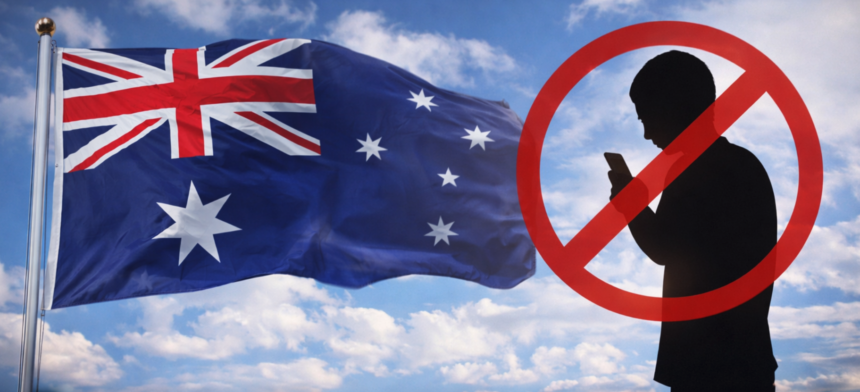
Australia built one of the toughest youth social media laws on the planet. What is the status three months later?
Australia’s under-16 (U16) social media ban was sold as a world-first line in the sand. The pitch was blunt. Big platforms had to keep younger teens off their services or face huge penalties. That sounded tough, clean, and parent-friendly. It still sounds tough on paper. The trouble is, paper does not hold a teenager with a burner email, a fast thumb, and zero respect for a weak age gate.
Three months after the law took effect, Australian regulators are investigating Meta, TikTok, Snapchat, and Google over possible failures to enforce the ban. The concern is not abstract. Reports suggest many children under 16 still have accounts, some parents say the platforms never asked for age verification, and regulators believe the systems meant to block underage users may be far too easy to dodge. That turns a headline-grabbing law into a tougher question: did Australia build a real barrier, or just a very expensive sign?
What’s Happening & Why This Matters
Australia Has Moved From Celebration to Investigation
Australia’s social media ban for u16s took effect on 10 December 2025. The law requires covered platforms to take “reasonable steps” to stop users under 16 from holding accounts. If they fail, they can face fines of up to A$49.5 million ($31.9 million, €29.5 million) per breach. That is not pocket change. That is the sort of penalty number governments use when they want headlines and leverage simultaneously.

Early official messaging leaned hard on compliance numbers. The government said platforms had deactivated, removed, or restricted more than 4.7 million suspected underage accounts across the services covered by the ban. That helped the law sound like a fast policy win.
The mood has changed. The eSafety Commissioner is investigating whether major companies actually met the legal standard. Communications Minister Anika Wells has said the government is gathering evidence for possible federal court action. That is a major shift in tone. A law that began as proof of political strength is quickly turning into a test of enforcement strength.
The real point is simple. It is easy to announce a ban. It is much harder to prove the ban works when the targets are global platforms, and the users are teenagers who grew up breaking digital fences for sport.
The Platforms Say They Acted. Regulators Suspect the Systems Are Weak.
The companies involved are not pretending they ignored the law. Meta previously said it deactivated hundreds of thousands of accounts across Instagram, Facebook, and Threads. Other platforms reported similar clean-up work when the law first hit. On the surface, that sounds like action.
The regulators are asking a rougher question. Did the platforms take reasonable steps, or did they mostly build a system that looked compliant while leaving easy gaps? A flashy number of deactivated accounts does not prove strong enforcement. It may only prove that the first pass caught low-hanging fruit.
Reports suggest many age-check systems can still be bypassed with repeated attempts, false birth dates, or weak verification logic. Some platforms appear to have checked age only during certain account changes, not consistently at sign-up. One-third of parents surveyed reportedly said their underage children still had accounts after the ban. About two-thirds said the platforms never asked for age verification.
That is a nasty signal. If correct, it means the law may have disrupted access at the edges while leaving the middle wide open. In politics, that is dangerous. Governments can survive a policy fight. They hate a policy that is performative.
Australia’s Ban Is Tough With a Brutal Technical Problem
The core enforcement issue is ugly because age verification online is ugly. Platforms, parents, regulators, and civil liberties groups all want different things at the same time. Parents want their children protected. Governments want visible compliance. Platforms want the lowest friction possible. Privacy advocates do not want every teenager forced to hand over identity documents to prove they are too young to scroll.
That is the trap. A weak age gate is easy to evade. A strong age gate can create privacy risks and lock out legitimate users. The law sits right in the middle of that mess.

Australia’s approach asks companies to take reasonable steps without dictating one single technical standard. That gives platforms flexibility. It gives them room to argue that partial systems count as good-faith compliance. Regulators seem ready to challenge that interpretation.
The harder truth is that no politician can ban U16 use with a press conference and a penalty number alone. The success or failure lives in the plumbing. Does the app ask the right questions? Does it flag suspicious behaviour? Does it stop repeated false entries? Does it block re-entry after suspension? Does it avoid turning every underage user into a password-reset magician? That is the real battlefield.
The Global Tech Industry Is Watching Australia
Australia sold the ban as a world-first move. That was never just domestic politics. It was a signal to other governments. If Canberra could force major platforms to police underage access, lawmakers in the UK, Europe, and parts of the US would watch closely. Some already are.
That is why the current investigation carries far more weight than Australia. If regulators conclude the biggest platforms failed the test, other countries will learn two competing lessons. One lesson is that stricter platform rules are necessary. The other is that headline bans are easier to pass than to enforce.
Both lessons can travel.
The platforms know that too. A loss in Australia does not stay in Australia. It is evidence in parliamentary hearings, regulator meetings, and lobbying fights elsewhere. A weak age-check design that survives in one market today may become a liability in five more markets next year.
That is what makes the current review dangerous for the companies involved. It is not only about fines. It is about precedent. Once a regulator says, “Your system does not count,” every other regulator gets a fresh script.
The Ban Has Shifted Family Behaviour
One interesting twist is outside the platform fight. Even critics of the ban admit it has changed behaviour in some homes. Earlier reporting found mixed reactions from teenagers. Some said workarounds were easy. Others said the ban helped them realise how much time and attention social media had swallowed.

That kind of cultural effect is hard to measure cleanly, but it still counts. A law can fail technically and still change social norms. Parents are more confident saying no. Schools are more justified in clamping down. Children may drift toward messaging, gaming, or newer apps outside the covered platform list.
That creates a second-layer problem for policymakers. If the big-name apps get harder to access, younger users may shift toward less regulated, less scrutinised services. A ban can close one door and quietly drive traffic through three side windows.
So even if Australia wins the courtroom fight, the youth-tech battle does not end. It mutates. Teen behaviour online is not a fixed target. It is fast, social, and opportunistic. Regulation moves in paragraphs. Teenagers move in seconds.
From the Platforms to the Government
At first, the political pressure sat mostly on Meta, TikTok, Snapchat, and Google. That is changing. If the investigation shows major holes, pressure swings back toward the government. Voters will ask whether ministers oversold the law. Critics will ask whether the standard was too vague. Industry groups will say they warned this would happen. Civil-liberties advocates will ask whether the country took on a privacy risk without solving the actual problem.

That makes the next phase politically delicate. The government cannot sound weak after branding the ban as monumental policy. It likely needs to show teeth, which means legal action, tougher guidance, or both. Yet any harder enforcement step may drag the state deeper into privacy, identification, and surveillance fights it would prefer to avoid.
That is the real political squeeze. If officials go soft, the law starts to smell hollow. If they go hard, the age-verification debate gets much messier.
And there is a columnist-sized truth hiding in plain sight: governments adore clean moral messages until implementation starts asking grubby technical questions. “Protect children” is easy applause. “Define reasonable age assurance without building a national identity maze” is where the room gets quiet.
Reviewing Product Design and Access
There is another reason this story may keep growing. The U16 ban is about access, but the deeper frustration is with platform design. Parents and regulators are angry not only because children can sign up. They are angry because the products are designed to hold children’s attention hard once they get in.
That means even a perfectly enforced age ban would not end the wider argument. Lawmakers in several countries are already shifting toward design-level scrutiny: infinite scroll, streaks, compulsive recommendation loops, algorithmic nudges, and dark-pattern engagement tricks. Australia’s enforcement fight may therefore act as a bridge. If access controls prove weak, governments may turn even more aggressively toward design restrictions.
That would be a bigger headache for the industry. Blocking underage accounts is one compliance problem. Rewriting engagement systems is a business-model problem.
The platforms know the difference. So do politicians. And once a government deems a platform has treated a flagship youth-protection law as little more than a technical nuisance, the appetite for intervention usually grows, not shrinks.
TF Summary: What’s Next
Australia’s U16 social media ban is entering its first serious stress test. Regulators are investigating major platforms over possible failures to keep younger teens out, despite earlier claims that millions of accounts had been deactivated or restricted. The legal ceiling is high, with penalties of up to A$49.5 million ($31.9 million, €29.5 million) per breach, but the real stakes are beyond any single fine. The government needs to prove the law works in practice, not just in headlines.
MY FORECAST: Australia will only push harder, not softer. Regulators will likely force at least one major courtroom or settlement moment to show the ban has teeth. The wider lesson will sting both sides. Platforms will learn that vague age gates are no longer enough. Governments will learn that youth-tech policy without serious technical enforcement is theatre with a ministerial press release. The next phase will not stop at access. It will drift toward design, accountability, and the harder question of how much digital friction a democracy is willing to impose to protect children.
— Text-to-Speech (TTS) provided by gspeech | TechFyle