


The Supreme Court handed internet providers a major win. The music industry learned that piracy law still has limits.
The U.S. Supreme Court has blocked a major copyright strategy championed by Sony Music and other record labels. In a unanimous ruling, the Court sided with Cox Communications and held that internet service providers cannot be held liable for users’ music piracy simply because they continue providing internet access after receiving infringement notices. That ruling wiped away one of the recording industry’s boldest attempts to turn broadband companies into copyright enforcers.
The labels were not chasing a small test point. They were trying to lock in a legal theory that could have forced internet providers to cut off users accused of repeat piracy or face crushing damage awards. A 2019 jury had already ordered Cox to pay $1 billion. The Supreme Court has slammed the brakes on that approach. That changes the legal map for online copyright enforcement.
What’s Happening & Why This Matters
The Supreme Court Ruled 9-0 for Cox
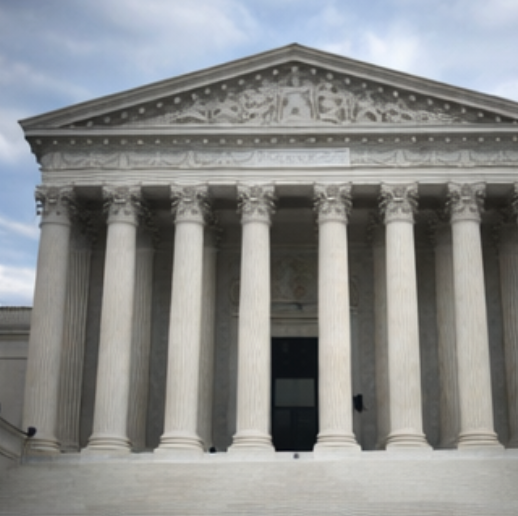
The case was Cox Communications, Inc. v. Sony Music Entertainment. On 25 March 2026, the Court ruled 9-0 that Cox was not contributorily liable for pirated music downloads carried out by its subscribers. Justice Clarence Thomas wrote the opinion.
The Court said contributory copyright infringement requires more than knowledge that infringement is happening somewhere on a network. The opinion said liability needs something closer to inducement or a service designed for infringement. Simply supplying internet access, even to people accused of piracy, was not enough.
That is the crux of the whole decision. Sony and the other labels wanted the Court to say Cox crossed the line by not terminating enough subscribers after repeated notices. The Court refused. In effect, the justices said an ISP is not automatically on the hook just because bad actors use its service to do bad things.
That distinction keeps copyright law from sliding into a duty to police users at the network level.
Sony’s Strategy Was Bigger Than One Lawsuit
Sony did not bring the case only to collect damages. The record labels wanted a stronger legal weapon against online piracy. Their argument was simple on the surface. Cox received thousands of infringement notices from rightsholders, knew repeat piracy was happening, and still did not terminate enough accounts. Therefore, the labels said, Cox materially contributed to the theft.

That theory had already won once. In 2019, a jury found Cox liable and awarded $1 billion in statutory damages for infringement involving more than 10,000 copyrighted works. That verdict sent a chill through the broadband industry because it suggested internet providers could face huge exposure for how they handled repeat-infringer complaints.
The Supreme Court’s ruling blows a hole through that model. If record labels cannot treat the internet service itself as a sufficient contribution, then a whole category of enforcement pressure loses force.
That is the ruling’s significance far beyond Sony. It resets the leverage between copyright owners and connectivity providers.
Rejected! Cutting People Off the Internet
One of the most important parts of the decision is what it avoids. The Court did not create a rule that internet providers must terminate customer access whenever rightsholders send enough notices. That is a major outcome.
Cox argued that Sony’s theory would turn ISPs into private copyright police and could pressure them to disconnect households from a core utility based on accusations rather than proven findings. That argument resonated with free-expression groups and other tech companies that backed Cox.
The Court’s logic protects against that outcome. If contributory liability required only notice plus continued service, then providers would face a brutal incentive: cut users off fast or risk giant damages. That might sound appealing to copyright owners. It is much uglier when you remember how central internet access is to school, work, health care, and daily life.
The ruling does not bless piracy. It does say the remedy cannot casually turn broadband providers into copyright executioners.
The Music Industry Took a Real Loss
The recording industry tried to cast the case as a straightforward fight against theft. There is truth in that understanding. Piracy still hurts creators, labels, and licensing markets. Yet the industry’s legal strategy was expansive, and the Court clearly was not willing to endorse it.
The Recording Industry Association of America reacted with disappointment. According to AP, RIAA chairman and CEO Mitch Glazier said the case was based on “overwhelming evidence that the company knowingly facilitated theft.” That quote captures the industry’s frustration.
Still, frustration is not the same as legal success. The Court’s ruling suggests the justices saw a meaningful difference between failing to stop piracy and intentionally helping to drive it. That difference is not academic. It changes who can be sued, for what, and under which theory.
For Sony and the other labels, the result is blunt. They lost a chance to make internet providers legally responsible in a far more direct way for subscriber piracy.
Cox, Broadband Services Won More Than a Case
For Cox, this was not only a financial escape. It was a structural win for the broadband industry. Reuters reported that the Court overturned the lower-court judgment that had required a retrial on Cox’s financial liability. That means the labels’ big remaining path to cash got cut off with it.
More importantly, the ruling gives ISPs a stronger shield in future copyright fights. Cox argued that a contrary decision would require providers to make blunt disconnection calls based on allegations of infringement. That would create risks not only to customer rights, but for the entire business model of access providers.
Other large technology and telecom firms supported Cox for a reason. They understood that a loss here could widen copyright liability in ways that reached far beyond music downloads. If broadband providers could be punished for not shutting down users fast enough, similar arguments might extend to cloud services, hosting, and other digital infrastructure.
So yes, Cox won. The internet’s infrastructure layer won, too.
Copyright Liability Narrows in a Big Way
The legal significance here is greater than the headline suggests. The Court narrowed the theory of contributory copyright infringement by requiring something stronger than mere awareness plus continued service. Several legal analyses published after the ruling said the opinion sharply rejects liability theories that had been gaining traction.
Secondary liability doctrines often determine how far copyright claims extend beyond the direct infringer. Rightsholders usually want that reach to expand. Infrastructure providers want it contained. The Court sided firmly with containment.
This does not mean every intermediary is safe in every case. The opinion leaves room for liability when a company induces infringement or designs a service around illegal use. The Court refused to say that continuing to provide an ordinary service, even after notices, crosses that line by itself.
That is a substantial doctrinal limit. It will matter in future cases involving not only music piracy but fights over how platforms and infrastructure providers relate to unlawful user conduct.
Connecting Copyright to Free Speech and Access
One reason the case drew wide attention is that it touched on more than copyright. Groups such as the ACLU and public-interest advocates warned that forcing providers to terminate users based on allegations could harm online speech and due process.
That concern was not a side issue. Internet access is no longer a luxury for most people. It is part of ordinary participation in society. A rule that pressures ISPs to disconnect users to avoid liability would not neatly fit within the copyright box. It would affect education, jobs, public services, and family life.
That is why the decision will likely be read as both a copyright ruling and an access ruling. The Court did not say piracy is harmless. It did say that protecting copyrights does not justify collapsing the distinction between a wrongdoer and the company that provides a general-purpose connection.
That balancing act will keep showing up as courts face more fights in which lawful infrastructure is used for unlawful ends.
Needed: A New Playbook for the Labels
The ruling does not leave rightsholders powerless. Sony, Universal, Warner, and others can still pursue direct infringers. They can still work through notice systems, private agreements, and legislative lobbying. They can still pressure platforms that are more directly tied to piracy behavior.
What they cannot do, at least not under the theory, is lean on the Supreme Court’s blessing for a duty-driven ISP shutdown model. That route is effectively blocked.
So the music industry now faces a strategic reset. It may compel Congress to revisit online copyright enforcement. It may focus more on platforms that appear to encourage piracy rather than access providers that merely connect users. It may intensify technical enforcement, licensing strategies, or anti-piracy partnerships.
In short, the labels still have options. They just lost one of the biggest ones.
The Future of Internet Governance
The ruling fits a trend in tech law. Courts are increasingly being asked where to draw the line between product providers and user wrongdoing. That question shows up in copyright, platform liability, AI misuse, and online safety.
The Cox case indicates courts are still cautious about expanding intermediary liability too far. That caution matters for anyone who cares about how much responsibility internet infrastructure companies should bear for what users do on top of their systems.

The ruling does not answer every future question. It does send a clear signal. If lawmakers or rightsholders want a stronger duty for internet providers to disconnect alleged pirates, they may need to seek that through legislation, not through an aggressive reinterpretation of the contributory infringement doctrine.
That is a severe message that Sony learned the hard way.
TF Summary: What’s Next
The Supreme Court’s 9-0 ruling in Cox v. Sony blocks a major music-industry strategy that aimed to make internet providers liable for subscriber piracy if they failed to terminate repeat infringers. The decision overturned the labels’ path to preserve or revive a $1 billion verdict and narrowed the reach of contributory copyright liability. For Sony and the recording industry, that is a serious legal setback. For broadband providers, it is a major protection.
MY FORECAST: The labels will regroup and determine a new enforcement route, likely through Congress, private pressure, or cases against more directly piracy-focused services. Broadband companies will treat the ruling as a shield in future disputes. The bigger fight is not over. It just moved. The next battle will center on who, exactly, must police the internet, and how far the law should go when creators seek stronger protection.
— Text-to-Speech (TTS) provided by gspeech | TechFyle