



The United States Government Press Tech for One System
Artificial intelligence entered another political chapter this week after President Donald Trump pushed for a single national rulebook on AI. The move came after months of rising tension between federal ambition, state-level regulation, and the rapid expansion of U.S. tech companies. The president framed the moment as urgent. He argued that fragmented laws from different states threatened the country’s lead in AI development.
In recent months, states created their own bills for safety, transparency, and data use. California stood on one side. Texas stood on another. Each introduced different requirements. This fractured approach raised alarms inside Washington and across the private sector. Tech firms complained that they needed clarity. AI regulation turned into a debate over competitiveness, innovation speed, and national authority.
Trump spoke directly to that tension. He said the U.S. risked losing momentum. He said competing state laws created a maze no company could navigate. He also warned that early-stage innovation suffered when rules splintered. The White House decided to intervene. That set the stage for a federal order with sweeping impact.
What’s Happening & Why This Matters
The president announced plans for a new executive order. It creates a single national framework for AI oversight. It also blocks states from creating rules that conflict with that standard. Trump posted his reasoning on Truth Social. He said, “There must be only One Rulebook if we are going to continue to lead in AI.” He added that companies cannot seek “50 approvals” each time they introduce new work.
A draft obtained by Politico revealed early details. The order forms an AI Litigation Task Force under the Department of Justice. The task force challenges state laws that the White House opposes. The order also grants Commerce Secretary Howard Lutnick authority to restrict broadband funds from states that resist. That escalation shows how central AI policy has become inside federal strategy.
Congress, States, and the History Behind the Fight
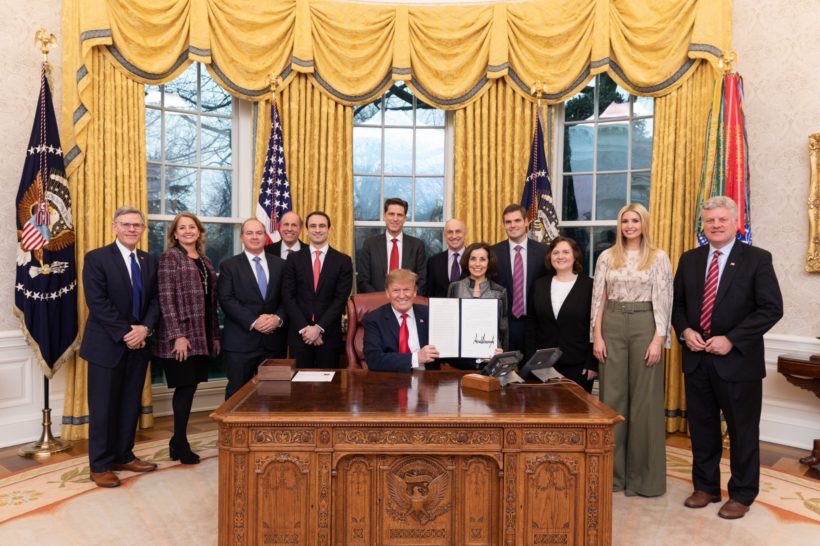
Congress attempted similar national rules earlier this year. Lawmakers debated frameworks within the National Defense Authorization Act. They considered a 10-year block on state AI laws. The Senate rejected it 99–1. The House followed. The issue is in front of the White House. Trump’s declaration resets the battle lines. States expect legal challenges. Courts expect heavy activity. No one in Washington expects an easy path.
States such as California and Texas claim their local rules protect citizens from bias, misuse, and algorithmic harm. Civil-rights groups echo that stance. Tech firms disagree. They argue that testing compliance against different rulebooks slows deployment and increases cost. The tug-of-war is at the heart of American AI development.
Reactions and Stakes
Tech companies respond with cautious approval. They prefer a uniform national framework. They fear a scramble that slows model training, data center expansion, and safety rollouts. Several AI leaders told Washington reporters that regulatory chaos poses the bigger threat, not the rules themselves.
At the same time, critics warn about federal overreach. They note risks when national laws override local protections. Privacy groups say national control may reduce accountability. Labor advocates say AI oversight must include worker protections. The policy debate runs deep. It runs across nearly every sector touched by automation.
TF Summary: What’s Next
The country is in a complex area. A national executive order follows soon. States prepare lawsuits. Innovators prepare compliance plans. Congress observes from the sidelines. The stakes rise because AI touches public safety, energy, healthcare, military planning, and daily consumer activity. The fight encompasses courts, boardrooms, and regulatory agencies.
MY FORECAST: Federal courts receive multiple challenges after the order. Tech firms respond with fast lobbying. States rally coalitions. A final national AI framework emerges, but only after heavy negotiation and political pressure.
— Text-to-Speech (TTS) provided by gspeech