



Nvidia’s CEO Champions AI’s Effects On Our World
Jensen Huang did not set out to be a global symbol of artificial intelligence. He hoped to build a better chip. That decision, made decades ago, is re-imagining markets, governments, and the future of computing. In that spirit, the Financial Times named Nvidia CEO Jensen Huang its 2025 Person of the Year for driving the modern AI boom and its powerhouse innovations.
The recognition is greater than revenue or market value. It reflects control of AI’s physical backbone. While software companies deliver models and prompts, Nvidia supplies the silicon that enables modern AI. Every large-scale system begins with Nvidia hardware. That reality places Huang at the centre of the AI economy.
What’s Happening & Why This Matters
From Gaming Chips to Global Infrastructure
Huang co-founded Nvidia at age 30 with a narrow goal: to transform computer graphics for games. That focus quietly produced a parallel revolution. Graphics processing units proved better than traditional CPUs for parallel computing. When machine learning surged, Nvidia already held the winning architecture.
Today, Nvidia chips train and run AI systems for Google, Microsoft, OpenAI, and governments worldwide. The company crossed the $4 trillion valuation threshold (then $5Tn), becoming the most valuable public company on Earth during his tenure.
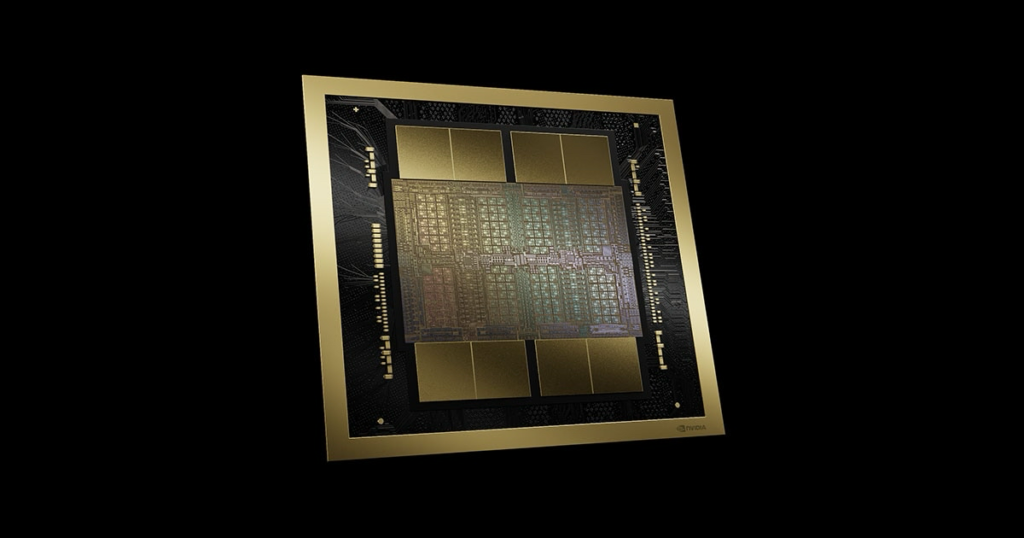
Huang describes the moment plainly: “The computer technique that took us 30 years to invent is now fundamentally changing all of computing.” That statement reflects execution, not hype.
AI Mania Meets Physical Reality
AI expansion demands real infrastructure. Data centres multiply. Power consumption rises. Supply chains tighten. Nvidia sits at the choke point. Its GPUs remain the default standard for training frontier models.
This dominance creates political pressure. Export controls, national security concerns, and chip smuggling all converge on Nvidia hardware. In response, Nvidia develops optional GPU location-tracking using telemetry to detect diversion without installing kill switches. The company publicly rejects remote shutdown mechanisms, emphasising transparency and customer control.
The choice signals maturity. Nvidia no longer builds products only for engineers. It now builds systems designed for regulators, governments, and geopolitical scrutiny.
Why the FT Pick Signals a Shift
The Financial Times does not crown celebrities lightly. Naming Huang continues a pattern of elevating AI architects, yet this selection stands apart. Huang does not run a consumer-facing platform. He controls the machinery underneath everything else.
The FT portrays Huang as a catalyst of “the AI mania sweeping business and finance.” That high, but fitting praise. It acknowledges that AI’s acceleration does not begin with code. Development begins with hardware decisions made decades earlier.
The Human Story Behind the Chips
Born in Taiwan, raised in the United States, and educated at Stanford, Huang embodies long-term engineering discipline. He survived early Nvidia failures, market crashes, and scepticism. He bet early on parallel computing while others were chasing incremental CPU gains.
That patience defines Nvidia’s advantage. Competitors are scrambling to catch up. Entire nations are negotiating access to Nvidia silicon. Huang rarely dramatises these moments. He speaks like an engineer watching a system finally work.
TF Summary: What’s Next
Nvidia’s influence continues expanding as AI shifts from experimentation to permanent infrastructure. Governments push for oversight. Companies go for supply guarantees. Nvidia responds with transparency tools, inventory controls, and next-generation chips like Blackwell.
MY FORECAST: Jensen Huang remains the most consequential unelected figure in technology for the next decade. AI policy arguments will orbit computing access, not algorithms. Nvidia remains at that AI’s centre.
— Text-to-Speech (TTS) provided by gspeech