


Apple’s latest U.K. update adds age checks for adult access, tighter default protections, and a fresh front in the online safety fight.
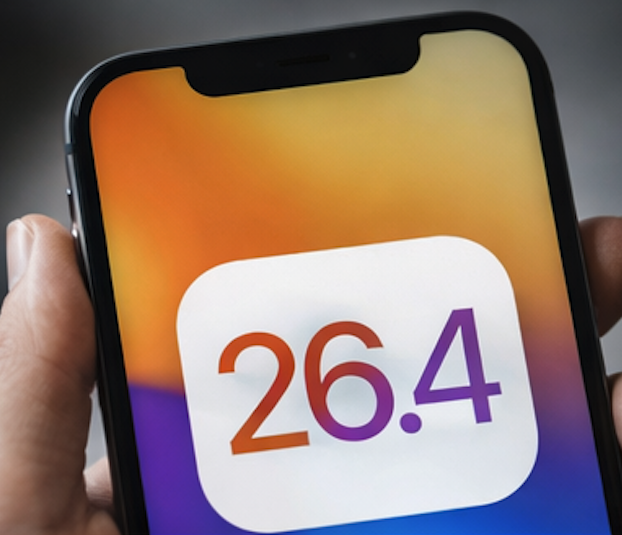
Apple rolled out iOS 26.4 in the U.K. with a new age-check system that changes how iPhones and iPads handle adult access. The update asks adults to confirm they are 18 or older before using certain services, features, or account actions. If a user does not verify, Apple automatically switches on stronger child-safety protections.
That makes this bigger than a minor settings tweak. Apple is responding to a U.K. safety climate shaped by age-assurance rules, child-protection pressure, and rising scrutiny of how platforms handle younger users. The update does not only target children. It changes the default for unverified adults, too, which is where the debate gets more interesting.
What’s Happening & Why This Matters
Age Checks as a Device-Level U.K. Rule
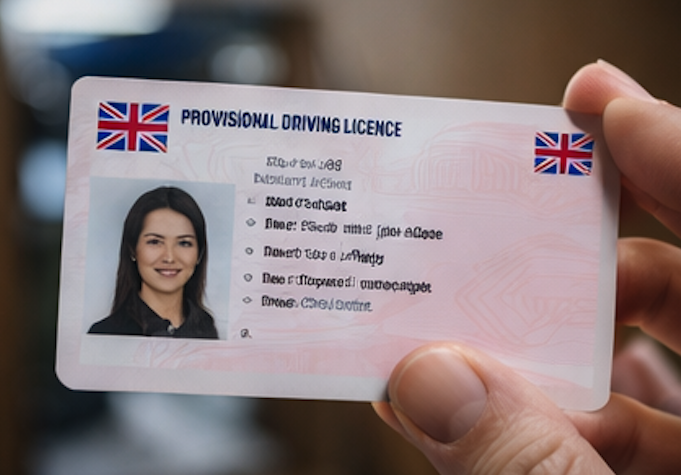
Apple’s support guidance says U.K. adults must confirm they are 18 or older to use certain services or features or take some account actions. The company says users can verify age with a credit card or by scanning an ID. Existing account holders may not need to start from scratch because Apple says it can check whether they already have a payment method or other eligible verification method on file.
That design matters because Apple is making age status part of account management, not only part of a single app or website. In practice, that means age assurance is closer to the operating system and Apple Account layer than many users may expect.
This is a very Apple move. Rather than forcing all age checks outward to individual developers or websites, Apple is building a system-level answer inside its own ecosystem. That gives the company more control. It puts more responsibility on Apple if users dislike the process or see it as overreach.
Unverified Adults Get Child Safety Filters by Default
The most important detail in Apple’s U.K. rollout may be what happens when people do nothing. Apple says the EB Content Filter and Communication Safety are automatically enabled for kids, teens, and adults in the U.K. who have not confirmed their age.
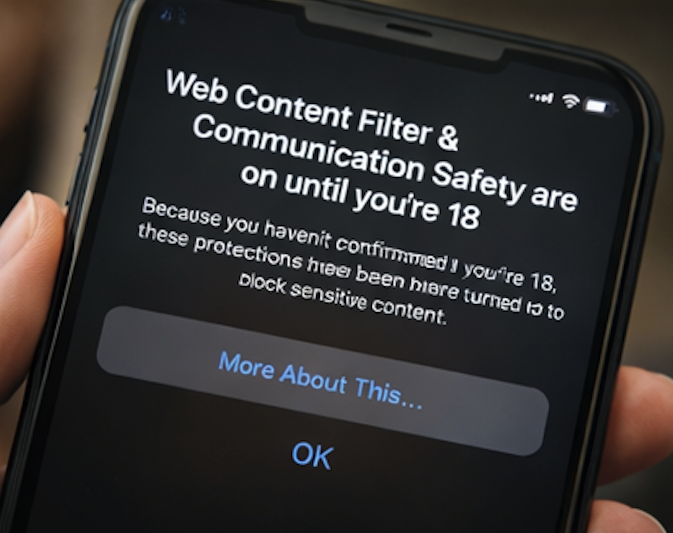
That is a meaningful shift. Apple is not simply asking adults to prove they are adults. It is treating unverified adults more like protected accounts until they complete the check. In other words, adult access is no longer assumed in the U.K. It has to be confirmed.
Those default protections include online content restrictions and features that blur or detect nudity in certain contexts. This may sound sensible to many parents and child-safety advocates. It may seem intrusive or clumsy to adults who do not want to hand over more personal data or go through one more verification flow to keep their device working as expected.
That is the core tension. Safety wins support. Friction creates backlash.
The U.K. Safety Climate Helped Force the Change
Apple’s move did not happen in a vacuum. The U.K.’s Online Safety Act has ushered platforms and digital services toward stronger child-protection measures and more effective age assurance. Ofcom’s March 2026 bulletin said more services are introducing age checks across social media, dating, gaming, and messaging as enforcement pressure builds.

At the same time, U.K. regulators have been leaning harder on big platforms over youth protection. Reuters reported earlier this month that Ofcom and the Information Commissioner’s Office pressed major social media firms to block children from services intended for them and demanded stronger age-assurance systems.
Apple’s own services are not a simple one-to-one match with the largest social media platforms. Even so, the company clearly sees where the regulatory tide is moving. The U.K. wants stronger proof of age online. Apple has chosen to answer at the device and account level.
That is a strategic decision as much as a legal one. If device makers move first, they can shape the standards before regulators do.
A Rollout Around Privacy and Control
Age checks always trigger the same immediate concern: what personal data gets collected, stored, or shared? Apple is trying to answer that before critics get rolling. Its support pages describe the system as a limited adult-confirmation process tied to account management. At the same time, its age-assurance tools for developers rely on age ranges and privacy-conscious APIs rather than handing apps a user’s exact date of birth.
Apple has already spent months briefing developers on the Declared Age Range API and related tools designed to help them meet age-assurance obligations. The company’s developer updates say those tools are available globally on iOS 26 and later. That wider groundwork matters because the U.K. rollout is not an isolated patch. It is part of an Apple architecture for age-aware services.
Still, privacy concerns will not vanish because Apple says the system is thoughtful. Asking users to scan ID or verify with a card always invites scepticism. Apple has more trust than many platforms. Trust is not the same thing as universal enthusiasm.
About More Than Kids Under 18
The headline focus is naturally on under-18 protection, but the deeper shift is about how Apple defines adulthood online in the U.K. The company says adults must confirm they are adults before they can fully use certain features. That sounds simple. It challenges a long-standing assumption: if you own the phone, you are treated as an unrestricted adult unless otherwise indicated.
The burden is flipped. If a person has not been verified, the system applies extra guardrails. That changes how the device behaves for all age groups, not only minors.
The rollout will matter beyond family accounts. Adults who never thought about age settings may suddenly have to. Young users trying to age up a misclassified account may meet new friction, too. Apple’s support documents already include guidance for cases where a child or teen account was accidentally set to an adult age and needs to be converted properly.
Once age status is more central to device behaviour, account mistakes stop being small admin annoyances. They become daily usability problems.
Developers and App Platforms Feel the Effects
Apple’s operating system decision creates pressure for developers, too. If Apple is building account-level age logic and privacy-preserving age signals, app makers will increasingly be expected to use them. That could reshape onboarding, app ratings, parental consent flows, and age-gated product design.
Apple’s developer updates from February sanotedew signals in the Declared Age Range API, including whether age-related regulatory requirements apply to a user and whether the user is required to share their age range. That may sound technical, but the implication is simple: Apple wants developers to build products that behave differently when legal age rules apply.
This may help smaller developers who do not want to build their own age-verification stack from scratch. It could deepen Apple’s control over how age-gated digital life works inside its ecosystem. Convenience and dependency often travel together.
Spreading Beyond the U.K.
The U.K. is the first version of the feature, but it is unlikely to be the last place where Apple leans harder into age checks. Apple’s developer communication has already tied age-assurance obligations to Brazil, Australia, Singapore, Utah, and Louisiana. That list alone shows the breadth of travel.

Once one major market gets operating-system-level age confirmation, others will watch closely. Regulators will ask whether it works. Child safety groups will ask why they do not have it yet. Privacy advocates will ask how far the model spreads. Developers will ask how many local regimes they now need to support.
That means iOS 26.4 in the U.K. may function as an early live test for a wider global template. If the system avoids chaos, Apple gains a strong argument for rollout. If users hate it, the company still learns before expanding.
Quietly Redefining What a Smartphone Must Do
A smartphone used to be a general-purpose device. Then it became a wallet, an ID store, a content filter, and a family safety hub. The update adds one more layer: an age gatekeeper.
That may sound minor until you step back. Apple is positioning the device as a trusted broker between the user, the account, apps, and regulation. That is a powerful role. It helps Apple respond to lawmakers while keeping more control inside its own stack.

The business logic is clear. Governments want stronger protections. Parents want safer defaults. Developers want easier compliance tools. Apple wants to stay ahead of regulation without looking like it was dragged there kicking and screaming.
The result is a more managed phone. Many families will welcome that. Some adults will hate it. Both reactions make sense.
TF Summary: What’s Next
Apple’s iOS 26.4 rollout in the U.K. brings age checks into the centre of Apple Account and device management. Adults must confirm they are 18 or older to access certain services and actions. People who do not verify are subject to child-safety defaults, such as Web Content Filter and Communication Safety. That creates a new digital baseline where unrestricted adult use is something the system wants confirmed, not casually assumed.
MY FORECAST: Apple will treat the U.K. as a proving ground and expand the model, in some form, to other regions facing stronger age-assurance pressure. The company will keep selling the change as a child-safety win with privacy in mind. Critics will keep asking whether device-level age checks normalise too much control. The next battle will not be about whether age assurance is coming. It will be about who controls it, how often users face it, and how far it spreads across the digital stack.
— Text-to-Speech (TTS) provided by gspeech | TechFyle