



France is moving toward a crackdown on youth social media. The politics are less about nudging and more about a digital curfew.
France is moving closer to a new social media restriction for minors, but the details are more important than the headline. The French Senate has backed a plan to restrict social media access for children under 15 (U15), while debate continues over how strict the final version should be and how age checks will work in practice. The policy follows a pledge from President Emmanuel Macron, who has argued that children’s emotions should not be “for sale or manipulated by American platforms and Chinese algorithms.”
That means the actual French story is slightly different from the European mood. France is not yet adopting a flat U16 national rule. Instead, it is moving closer to a tougher U15 regime while Europe keeps discussing whether the bloc should harmonise a digital minimum age of 16 with parental-consent carve-outs for children aged 13 to 16. Politicians love a simple ban headline, but enforcement lives in the legal plumbing.
What’s Happening & Why This Matters
France’s Senate Has Moved the Law Forward, but Not Cleanly
The most important development is both procedural and political. France’s Senate has approved a new version of a social media restriction bill for children U15. That gives the proposal momentum, but not finality. The lower house, the Assemblée Nationale, had already passed its own version in January. The two chambers do not agree on the details, so a compromise is still needed before the law can settle into final form.
That disagreement is not a small legislative footnote. It is the core of the current story. The lower house version is harsher. It would require platforms to delete all accounts belonging to children U15 and block new users under that age. It would even go further by banning mobile phones in high school. The Senate version is more layered. It proposes a two-tier system that separates platforms by risk and carves out room for some access under more controlled conditions. Educational platforms and online encyclopedias would be excluded.

That split tells you a lot about where France is. The country wants tougher digital limits for minors. However, lawmakers are still arguing over whether the right approach is a blunt prohibition or a more selective regime based on platform type and parental involvement.
France Is Revisiting a Problem It Already Tried to Solve in 2023
One reason this story carries weight is that France has already been here before. In 2023, lawmakers passed legislation restricting social media access for minors under 15 and requiring parental consent before they could open an account. Yet the law never entered into force because it clashed with the European Union’s Digital Services Act.

It exposes the gap between political will and legal architecture. It is easy for a national parliament to promise protection for children. It is much harder to make the law stick when EU-level rules shape how platforms operate across borders. France’s renewed effort is only possible because the EU revised its guidance last year, giving member states more room to decide their own age limits or parental-consent regimes.
So the current bill is not appearing out of nowhere. It is the second serious attempt. That gives the debate more urgency and more edge. France is no longer only declaring concern. It is trying again after its earlier effort got tangled in wider European law. That kind of retry usually means the political appetite has hardened.
Macron Wants a Stronger Cultural Signal, Not Only a Technical Rule
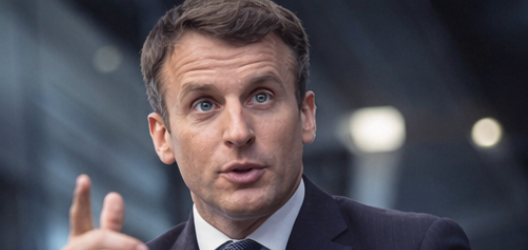
President Macron’s role is not only administrative. It is cultural. In January, he said the emotions of children and teenagers should not be “for sale or manipulated by American platforms and Chinese algorithms.” That line is sharp for a reason. It turns platform regulation into a sovereignty issue as much as a child-safety issue.
France has long liked to wrap digital regulation in the language of national and civic protection. That language plays well domestically because it blends concerns about addictive design, foreign platform power, and youth well-being into a single political message. The target is not only screen time. The target is who profits from children’s attention and how much cultural leverage foreign platforms hold over young French users.
The positioning helps explain why the debate keeps returning. It is not only about whether a 14-year-old should have an account. It is about whether a government can still impose social boundaries on products built to erase them. Macron is effectively saying that social media design is not a private matter when children are the raw material.
That is a much bigger argument than “phones are bad.” It is an attempt to redefine access to social platforms as a public-interest issue rather than a family-by-family choice.
Europe Is Leaning Toward 16, but France Is Still Working at 15
The story is numeric but important. France is moving toward U15 restrictions, while the wider European debate is drifting toward 16. In November, the European Parliament backed a non-binding resolution that proposed a harmonised digital minimum age of 16 for social media, video-sharing platforms, and AI companions. It suggested that children aged 13 to 16 could still access those services with parental consent.

That leaves France in an awkward middle position. It wants stronger action. It is not yet fully aligned with the more ambitious Europe-wide ceiling. That is why your requested title works as a strong editorial line, but the underlying policy detail is more complicated. France is inching closer to the tougher European mood, even if the live parliamentary fight still centres on 15, not 16.
Every age threshold carries a different legal and technical burden. A higher threshold affects more users, more families, and more platform workflows. It can strengthen the protective argument, but it can make enforcement harder and political opposition louder. France’s live debate shows lawmakers know that. They are trying to tighten the boundary without jumping too far ahead of what the current legal and technical structure can support.
The Real Fight Will Be Over Age Verification, Not Parliamentary Speeches

Every social media age-ban story eventually runs into the same brutal question: how do you actually verify age without creating new privacy problems or building a weak gate that children can sidestep in minutes?
France’s bill has already reached that point. The exact age-verification system is still under debate. The EU conversation about age checks is not expected to settle until early 2027. That means France is pursuing stricter rules before the technical enforcement layer is fully standardised.
That is where every politician’s clean soundbite starts sweating. A ban sounds simple. Enforcement is not. Weak checks are easy to dodge. Strong checks can raise privacy fears, identity concerns, and more friction for legitimate users. Platforms will say implementation is messy. Critics will say the law is theatre without real age assurance. Families will ask whether the burden is on parents, platforms, app stores, or telecom systems.
And yet the lack of a perfect system rarely stops political momentum once the child-safety argument catches fire. France appears willing to move first and argue over the machinery later. That can work politically for a while. It can still produce a very awkward reality if the final law is tough on paper and porous in practice.
TF Summary: What’s Next
France has moved closer to a stricter social media regime for minors, but the current parliamentary fight is still about children U15, not a clean national U16 ban. The Senate has approved its version; the National Assembly has already approved a tougher draft; and both chambers must still reconcile the gap between a blunt prohibition and a more selective system with carve-outs. At the same time, the wider EU debate is drifting toward a harmonised minimum age of 16, with possible exceptions for parental consent for younger teens.
MY FORECAST: France will keep tightening the politics before it fully solves the mechanics. Lawmakers want to show they are serious about children, screens, and platform manipulation. That pressure will not fade. The next big clash will be less about parliamentary symbolism and more about age verification, privacy, and whether France wants to stay at 15 or edge toward the wider European 16 standard. The social media fight in Europe is getting harder, not softer. France is simply one of the loudest stages right now.
— Text-to-Speech (TTS) provided by gspeech | TechFyle