


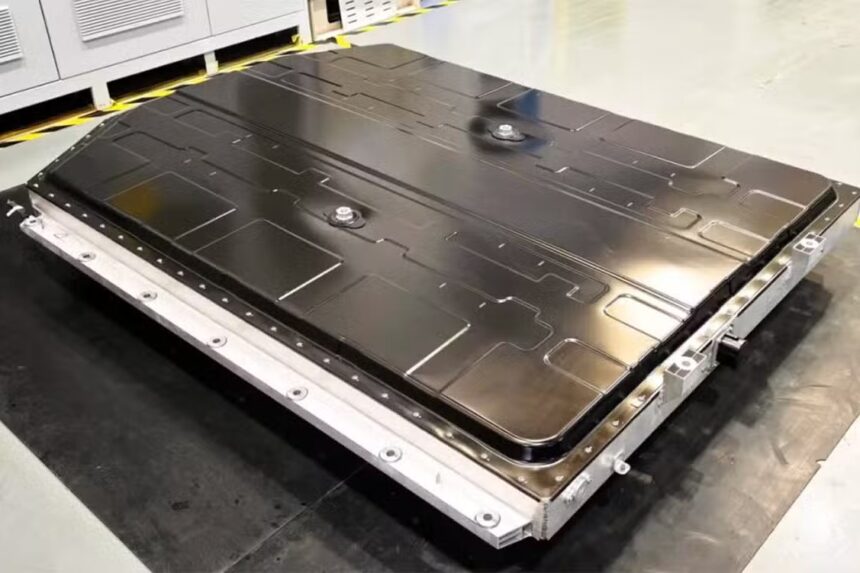
A new sodium-ion battery from BAIC points to faster charging, stronger cold-weather performance, and a fresh challenge to lithium’s long reign.
BAIC Group has stepped into the fast-charging battery race with a headline that grabbed instant attention. The Chinese automaker said its new sodium-ion (Na-Ion) battery can recharge in about 11 minutes. That figure came with a 4C charging claim, energy density above 170 Wh/kg, and strong cold-weather performance. In plain language, BAIC wants the market to see sodium-ion as more than a backup plan.
That matters because EV battery competition has entered a tougher phase. Carmakers still want lower cost, faster charging, safer chemistry, and less reliance on critical minerals. Sodium-ion batteries offer one answer. Sodium is abundant, widely available, and less geopolitically tense than lithium, cobalt, or nickel. For years, the big drawback was lower energy density. BAIC’s update suggests that the gap is narrowing fast.
What’s Happening & Why This Matters
A Sodium-Ion Pack Fully Recharging in About 11 Minutes
BAIC said its new prismatic sodium-ion battery supports 4C fast charging, which allows a full recharge in roughly 11 minutes. Reports covering the announcement said the battery reached an energy density of more than 170 Wh/kg. That places the prototype close to the edge of what many observers expected from sodium-ion chemistry just a few years ago.
The number matters because charging time remains one of the biggest pain points in EV adoption. Drivers may love quiet cabins, low running costs, and quick torque. They still hate waiting. When a battery pack gets close to the convenience of a gas station, the whole ownership pitch improves. That is why every battery headline with single-digit or low double-digit charging times gets instant attention.
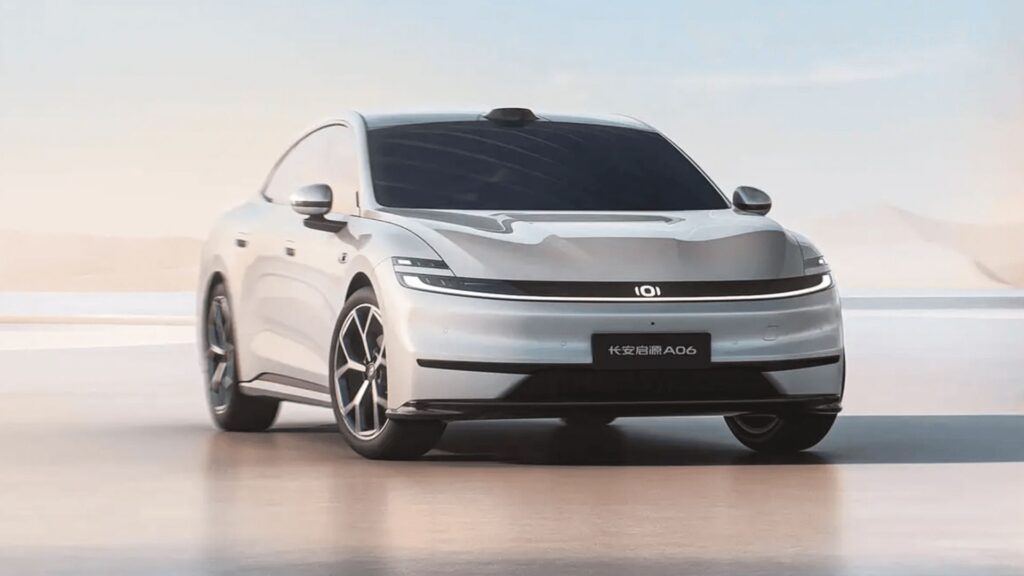
Still, one reality check matters. BAIC announced a company result, not an independent road test under retail conditions. Battery breakthroughs often sound dazzling before scale, cost, durability, and charging-network compatibility catch up. So the claim is exciting, but the commercial test still lies ahead.
Sodium-Ion: Cost, Supply, and Cold Weather
The most interesting part of the BAIC story may not be the 11-minute recharge alone. It may be the chemistry behind it. Sodium-ion batteries use sodium instead of lithium. Sodium is far more abundant and can be sourced more widely, including from seawater and common industrial supply chains. That lowers strategic dependence on scarcer materials.
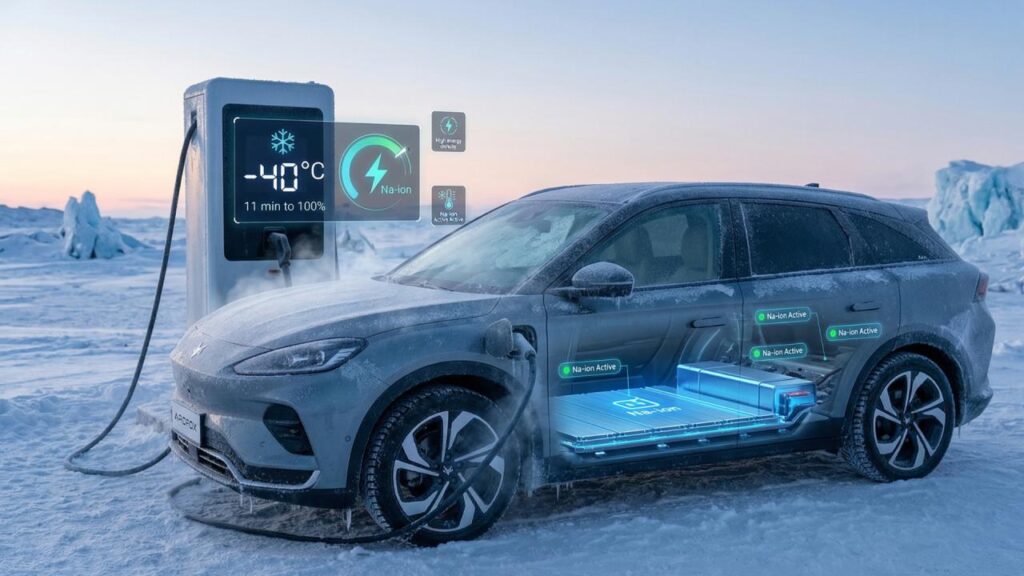
Reuters reported this month that Chinese battery makers are betting heavily on sodium as part of a move away from critical minerals. The report said sodium-ion batteries can perform better in cold climates and offer faster charging, even though their energy density still trails some lithium-based packs. That context helps explain why BAIC’s numbers matter. This is not a random lab curiosity. It sits inside a much larger battery race in China.
Cold-weather performance adds even more weight. BAIC said the battery works from -40°C to 60°C and retains more than 92% of its energy at -20°C. That is a very useful claim for EV drivers in colder regions, where battery performance often drops, and range anxiety grows teeth.
BAIC Is Not Alone, and That Is the Bigger Story
BAIC’s battery news lands during a wider sodium-ion surge in China. CATL has already promoted its Naxtra sodium-ion work. BYD and other Chinese players continue to invest in alternative battery chemistry as they pursue lower costs, better charging, and stronger supply chain resilience. Reuters said Chinese firms are racing ahead of many global rivals in sodium-ion development.
That makes BAIC’s announcement more important than a single-company tech update. It shows that sodium-ion is moving out of the fringe and into a real industrial contest. Once multiple companies start building samples, production methods, and vehicle plans around the same chemistry, the market pays closer attention.
This shift does not mean lithium is finished. Far from it. Lithium-ion still holds strong ground in energy density, mature supply chains, and proven mass-market deployment. Yet the EV battery market does not need one winner. It can support several chemistries, each matched to different price points, climates, and use cases.
Sodium-Ion’s Energy Density Claim
For a long time, sodium-ion had a reputation problem. It was safer and cheaper in theory, but weaker in density and range. That made it useful for stationary storage or lower-demand mobility, not premium EV headlines. BAIC’s reported 170+ Wh/kg figure changes the tone.
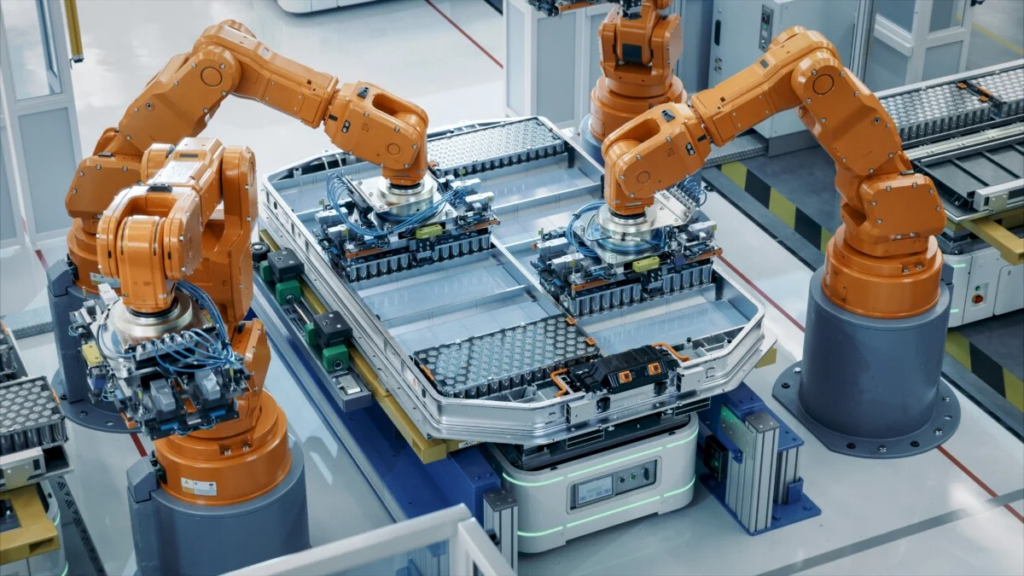
Electrek noted that this level places BAIC’s sodium-ion pack among the stronger results in the category. Battery-Tech Network reported the same metric and noted the prototype had passed safety standards. If those numbers hold through commercialization, sodium-ion starts to look much less like a compromise and much more like a strategic option.
That could affect more than passenger cars. Fleet vehicles, urban delivery vans, taxis, and cold-region transport could all benefit from lower material risk and stronger low-temperature behavior. A battery does not need to win every benchmark to win market share. Sometimes it just needs to solve the right problem at the right price.
Safety and Durability
Fast charging gets headlines. Safety keeps products alive. BAIC said the battery remained stable under tough abuse conditions, including overcharging to 200% state of charge without fire or explosion and exposure to 200°C in thermal abuse testing. Those are bold claims, and they matter because battery safety still shapes consumer trust, insurance risk, and regulatory acceptance.
Reports covering the announcement said BAIC had established capability across electrolyte formulation, cell design, and system integration. That suggests the company is trying to build a full technical stack rather than a single flashy demo. It matters because battery innovation rarely succeeds through chemistry alone. Cell design, thermal management, charging logic, packaging, and manufacturing discipline all determine whether a battery survives real-world conditions.
Durability remains a key question. Public summaries around the BAIC announcement focused on charging, density, and temperature range. They gave less detail on long-term cycle life in retail use. That missing piece will matter. Drivers and fleet operators care about how a battery performs after years of charging, parking, heat, and winter starts.
Fast Charging Alone Will Not Decide the Winner
The EV market loves a dramatic charging number. That makes sense. Drivers compare EV charging time with the speed of filling a fuel tank. Yet the next battery winner will not be chosen on charging speed alone. Cost per kilowatt-hour, pack lifespan, low-temperature behavior, charging infrastructure compatibility, and factory scale all matter.
BAIC’s sodium-ion update is strong because it speaks to several of those points at once. It suggests faster charging. It points to a safer supply of materials. It claims strong cold-weather retention. It signals progress in density. That is why the story matters. The battery did not win one race. It entered several races simultaneously.
This is where China’s battery ecosystem keeps applying pressure. Carmakers, battery giants, research groups, and state-backed industrial policy work in parallel. That structure helps companies test new chemistries faster and move them toward production with greater urgency. Western automakers still innovate, but China’s battery pipeline keeps turning headlines into factory plans at an unusually rapid pace.
The Meaning for EV Buyers and the Industry at Large
For EV buyers, the short version is simple. More battery options usually lead to lower prices, better specialization, and faster improvement cycles. A sodium-ion battery with strong cold-weather performance and fast recharge times could open new options for people who do not need maximum long-range performance.
For the wider industry, BAIC’s result adds pressure. Carmakers outside China will need to decide whether sodium-ion deserves bigger investment, licensing deals, joint ventures, or strategic hedges against lithium-heavy roadmaps. Battery chemistry is turning into a portfolio game. Betting on a single path may look riskier over time.
The story matters for energy storage, too. Sodium-ion may fit grid storage especially well because stationary systems care less about space and more about cost, safety, and material availability. Reuters reported that sodium batteries are already attractive for energy storage systems where size is less restrictive. So even if passenger EV use grows slowly, the chemistry can still build scale elsewhere.
TF Summary: What’s Next
BAIC’s new sodium-ion battery claim adds real heat to the battery race. The company said the pack can recharge in about 11 minutes, deliver more than 170 Wh/kg, operate from -40°C to 60°C, and retain more than 92% of its energy at -20°C. Those numbers, if they hold at scale, would make sodium-ion much harder to dismiss as a niche alternative.
MY FORECAST: Sodium-ion will not replace lithium across the board, but it will carve out meaningful ground in EVs, fleets, and grid storage. BAIC’s update adds one more sign that battery competition is entering a multi-chemistry era. The next phase will depend less on hype and more on mass production, cycle life, and whether real-world charging networks can support the promise behind the press release.
— Text-to-Speech (TTS) provided by gspeech | TechFyle