


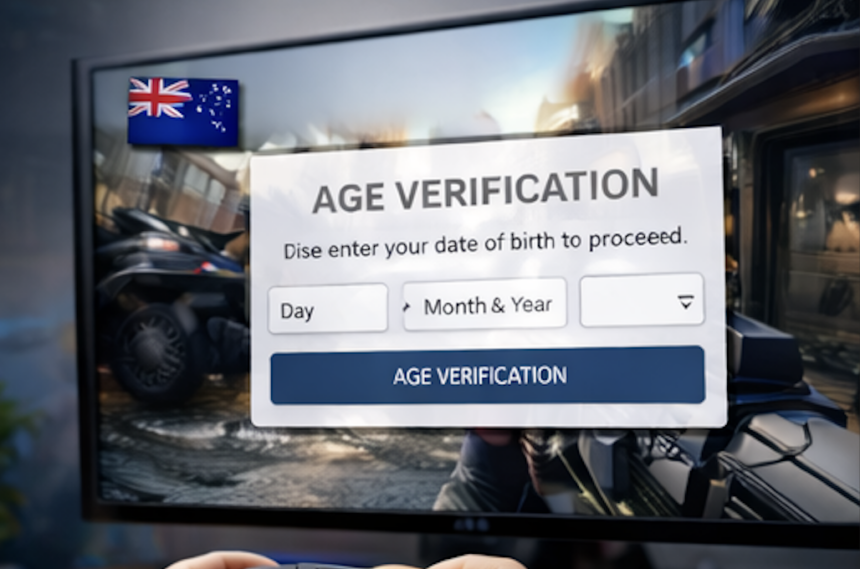
Canberra Tightens the Digital Front Door for Kids, and the Rest of the World Is Watching.
Australia has spent the past year acting like the Internet’s bouncer. First, it moved against youth access to social media. Today’, it’s widening the net.
The country is rolling out new age verification rules for a much larger slice of online life, including AI chatbots, adult video games, pornography sites, app store purchases, and search engines. The goal is simple: stop children from wandering into digital spaces packed with sexual content, graphic violence, suicide material, self-harm prompts, and eating-disorder rabbit holes.
That sounds like common sense to many parents. It is a compliance migraine for platforms and a privacy headache for civil liberties advocates. It is a preview of what other countries may copy next.
Australia is not nibbling around the edges here. It is treating the web like a physical place with locked doors, age checks, and restricted rooms. Julie Inman Grant, the country’s eSafety Commissioner, states it in exactly those terms: children can’t walk into bars, bottle shops, adult stores, or casinos, so why should the digital version operate like a free-for-all?
The understanding is important. It moves the debate away from “internet freedom” and into “child safety infrastructure.” Once a government makes that rhetorical switch, tougher rules get easier to sell.
What’s Happening & Why This Matters
Age Checks Beyond Social Media
Australia’s new Age-Restricted Material Codes require platforms to verify the age of users trying to access content deemed inappropriate for children. The law covers material involving high-impact violence, pornography, self-harm, suicide, and disordered eating.
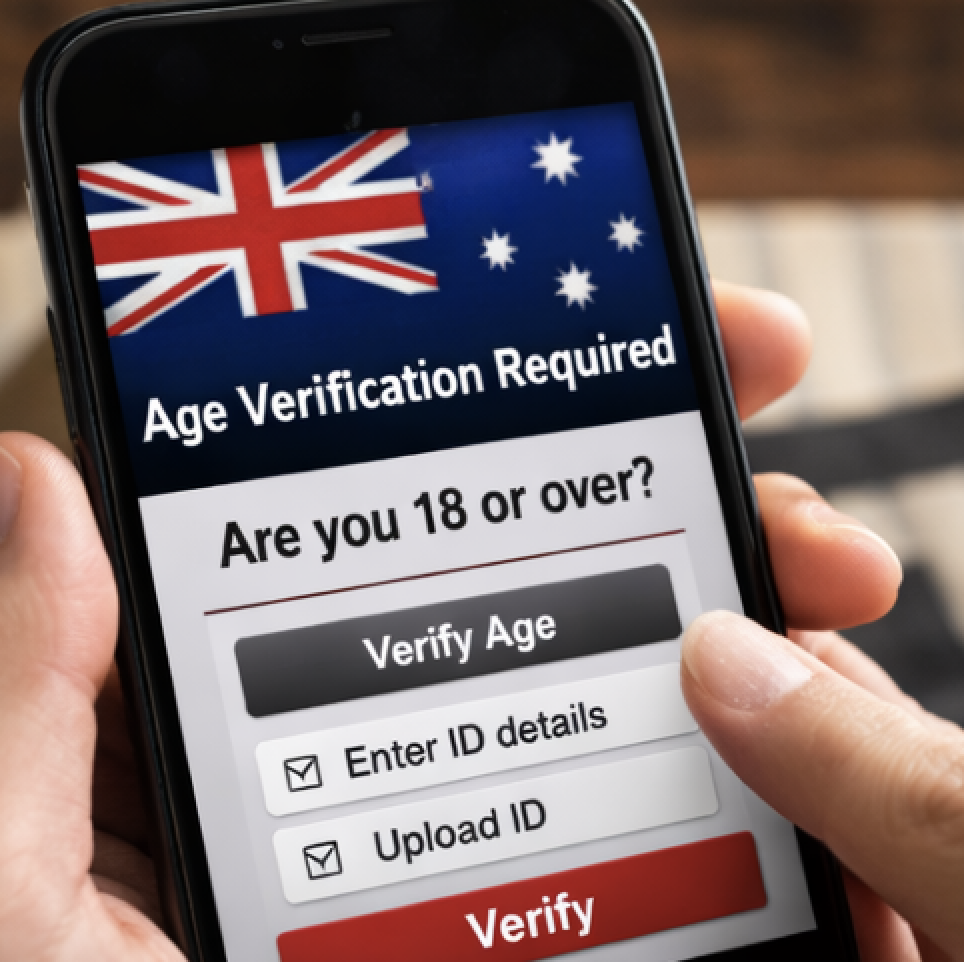
The scope is the big story. This is not only about TikTok-style doomscrolling. The rules reach into app store purchases, 18+ games, porn sites, and search engines. That is a major expansion of the age-gate idea.
Search engines especially stand out. They are not merely hosting content. They are directing traffic. Under this logic, if a child searches for suicide or self-harm material, the system should not serve up a digital cliff edge. It should serve as a helpline first. Inman Grant says exactly that: when a child searches for self-harm or suicide content, the first result should be support, not a harmful rabbit hole.
That’s a sharp policy turn. Search is no longer being treated as a neutral index. It is being treated as an active duty-of-care layer.
Chatbots Are Part of the Problem Set
The rules reach into AI chatbots that can generate sexual or graphic content. Platforms offering that kind of AI output must confirm users are at least 18, either at login or when the user requests restricted material.
Chatbot safety is one of the messiest stories in tech. The file links Australia’s move to lawsuits in the United States, alleging that teenagers harmed themselves after interacting with AI systems. That context matters. Governments are no longer treating chatbots like quirky novelty software. They’re treating them like systems that can shape mood, risk, and behaviour.
That is a quiet revolution in regulation. Once governments classify AI systems alongside porn, gambling, and adult games in age-restriction frameworks, the “just a tool” defence starts to look flimsy.
The age-verification debate collides with a real product problem: AI systems often blur categories. A chatbot may answer homework questions, then pivot into sexual roleplay, violent fiction, or self-harm discussion with the wrong prompt. Regulators hate blurry lines. They prefer switches, gates, and logs.
Australia Is Building on Its U16 Social Media Ban
These rules don’t appear in isolation. Australia is already the first country to block children under-16 (U16) from creating their own accounts on major social platforms, including Facebook, Instagram, TikTok, Snapchat, X, Reddit, Twitch, Threads, and YouTube.

So the latest choice is not a policy experiment floating in the dark. It’s the next brick in a larger digital safety wall.
That explains why this matters globally. The file notes that countries, including the United Kingdom, Portugal, France, Spain, Italy, Greece, Finland, and Germany, are already debating similar protections.
Australia is becoming the test lab. Other governments are standing behind the glass, taking notes.
The Politics Are Easy. The Technical Reality Is Messier.
It is easy to say “verify age.” It is much harder to do it well.
Any age-check system creates friction. Some require document uploads or use facial age estimation. Some rely on payment instruments, app store account settings, or third-party age tokens. Every method creates tradeoffs around privacy, accuracy, and exclusion.
A weak system gets bypassed by teenagers in about twelve minutes. A strong system scares adults, annoys users, and creates fresh data-collection risks. That’s the gremlin in the machine.
Australia’s rules don’t erase that tension. Theformaliseze it.
Platforms will need to answer ugly operational questions. What happens when an age estimate gets it wrong? What evidence counts? Who stores the proof? For how long? Who audits the auditors? If a chatbot gates explicit output, does it need to gate prompts about suicide or self-harm? What about search results that mix news reporting, support services, and harmful material?
There is no elegant answer here. There is only a sliding scale of compromise.
The Child-Safety Case Is Stronger Than the “Do Nothing” Case
Even with those problems, the political centre of gravity has shifted.
For years, tech platforms got away with a basic dodge: “We host content; we don’t supervise childhood.” That line is collapsing. Parents, regulators, and safety advocates increasingly see platform design as part of the problem.
And there’s evidence for that scepticism. In adjacent reporting from other uploaded files, chatbots have steered vulnerable users toward illegal online casinos and have stumbled badly around harmful prompts. Once AI systems start behaving like reckless concierges for vice, governments stop feeling patient.
Australia is acting on that impatience.
The Fight About What the Internet Is Supposed to Be
Beneath all the implementation details is a deeper question: is the internet an open street, or a managed venue?
Australia is clearly voting for the managed venue model. Certain rooms require age checks, and queries trigger intervention. Certain systems must prove they are not handing harmful tools to children.
Critics will argue that this normalises surveillance, weakens anonymity, and puts too much discretion in the hands of platforms and regulators. They are not wrong to worry. Age checks can quickly drift into overreach. But the opposite camp will say the old model already failed, because “open” too often meant children got algorithmically marched toward harmful content with no adult in sight.
That is the real clash here. Freedom versus duty of care. Frictionless access versus friction with a purpose.
The duty of care is winning political points.
TF Summary: What’s Next
Australia’s new rules push age verification beyond social media and into search, gaming, adult websites, app purchases, and AI chatbots capable of graphic or sexual output. The law treats harmful digital content less like abstract speech and more like a restricted venue with a front door and an age check. It also reinforces Australia’s role as the most aggressive democratic regulator in youth online safety.
MY FORECAST: Other governments will borrow the model, piece by piece. Search engines will face stronger safety obligations for youth queries. Chatbot makers will be driven to build harder content gates and clearer age-assurance systems. App stores will become enforcement chokepoints because they are easier to regulate than the entire open web. The backlash will focus on privacy and overreach, but the political momentum favours stricter controls. Australia has not ended the debate. It has simply dragged it into its next phase.
— Text-to-Speech (TTS) provided by gspeech | TechFyle