


Anthropic Introduces Ability to Create Desktop Applications Using Claude
Anthropic PBC has made another significant leap in AI development by enabling users to create fully functional desktop applications for both Windows and macOS through its AI model, Claude, using a single prompt. This latest feature underscores the growing conversation around artificial intelligence’s potential to revolutionize the software development landscape.
With this new capability, users can transform what Anthropic refers to as “artifacts” into standalone applications that function independently of Claude and are easily accessible from the desktop. Artifacts, which can range from simple order trackers to meeting dashboards that integrate information from a user’s calendar and email inbox, have been available for some time but required more cumbersome access methods.
Previously, accessing these artifacts necessitated logging into Claude, navigating to past conversations, and retrieving the specific artifact. However, as Anthropic explains, the challenge of accessibility was a barrier for users. “If you rely on a tool for work, it should open like the rest of your apps and remind you when something needs your attention,” the company stated, indicating a push toward improving user experience.
The newly launched “Install as App” feature is currently in beta on Windows and macOS, allowing users to generate and share desktop applications. A demonstration released on social media shows how easy it is to create an app: users simply provide a description of the desired functionality, confirm the request, and observe as Claude generates the necessary coding in a matter of seconds.
You can now install Claude artifacts as desktop apps on Mac and Windows. Ask Claude to build an artifact, click “Install as app,” and open it like any other app. It can use your connectors and, if you allow it, send notifications or add a menu bar item. pic.twitter.com/8CBgqe5OKq
— ClaudeDevs (@ClaudeDevs) November 24, 2026
The desktop applications created through this feature boast unique app icons and open in dedicated windows, providing a more integrated user experience compared to running within the Claude interface. These applications can also send notifications to users, enhancing their interactivity.
Moreover, the applications created from Claude artifacts will have the capability to utilize various connectors, thus allowing AI agents to operate within these apps autonomously. However, Anthropic has cautioned users that any requests from an app to Claude will count towards their monthly credit usage, which could lead to increased costs if an application is used extensively.
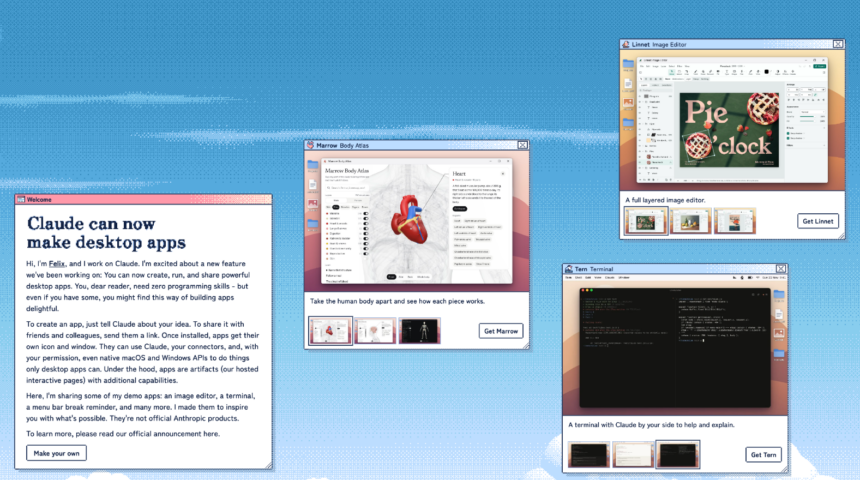
As part of its promotion of the new feature, Anthropic showcased examples of successful applications built by its internal teams. This included a fully functional image editing tool named Linnet, a visually striking file manager called Phosphor, and a terminal application known as Tern that integrates with Claude.
Currently, the “Install as App” feature is available in beta for all Claude subscribers, with certain restrictions for HIPAA-compliant organizations and hybrid deployments. While subscribers on Team plans will have the feature available by default, Enterprise users will need administrative approval. It is important to note, however, that users must be online and logged into Claude to access any applications created through this feature, presenting a limitation that contrasts with traditional desktop applications that typically allow offline access.