



Starlink plans tens of thousands of 5G base stations from 2027, while Viasat’s US broadband base falls 81%
The satellite war between SpaceX and Viasat moved to the ground, as Starlink chose Qualcomm for a US 5G network. Viasat’s US broadband base is about 81% smaller than at its peak. TF reviewed the Qualcomm announcement details, two trade reports and a subscriber analysis. The Viasat figure rests on one social media post, so the number needs careful verification.
What’s Happening & Why It Matters
SpaceX Picks Qualcomm for Starlink Mobile
SpaceX (@SpaceX) selected Qualcomm on 4 November 2026 to supply hardware for Starlink Mobile’s planned US 5G network. The platforms are the Dragonwing QRU100 and QDU100, paired with Layer 1 software. Interesting Engineering calls the deal multi-year. Neither company disclosed financial terms.
The radios use Massive MIMO with 64 transmit and 64 receive paths, which steers signals toward users. Deployment of “tens of thousands” of base stations is planned to begin in 2027. The companies gave no spectrum bands and no first-phase site count.
Qualcomm CEO Cristiano Amon said revenue will start as fiscal 2027 closes in late September 2027. A fuller contribution follows in fiscal 2028. Qualcomm named no revenue figure.
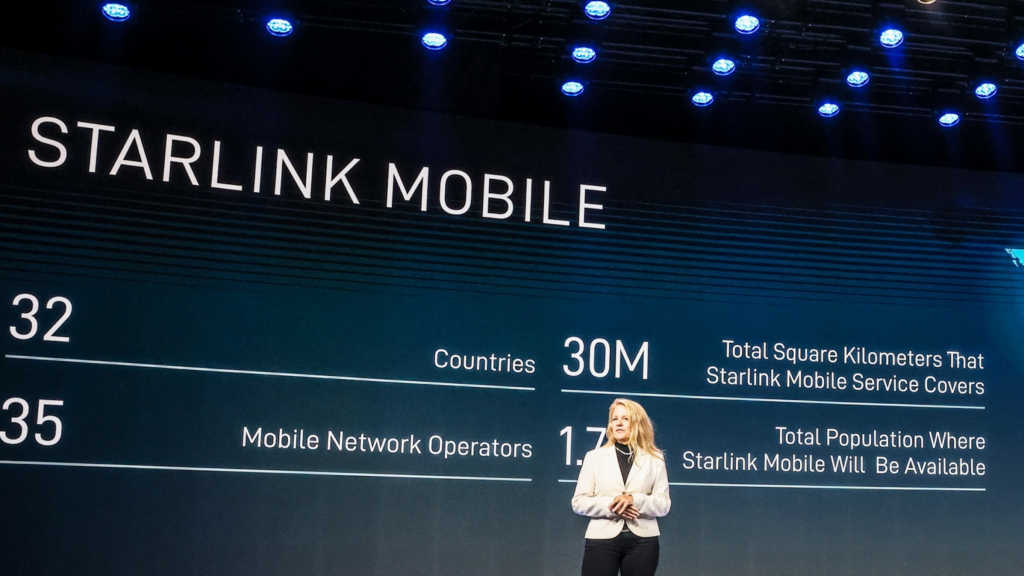
My take: The deal turns Starlink from a satellite operator into a full network builder. The performance and energy gains are design claims, because no measured results exist.
Spectrum Is the Missing Piece
Radios need airwaves. Yahoo Finance reported SpaceX agreed in September 2025 to buy EchoStar spectrum. The price was about $17 billion (about €15.1 billion). The Qualcomm deal covers hardware and excludes spectrum.
Interesting Engineering says the ground network would complement Starlink’s satellites and add capacity in populated areas. Qualcomm calls the work a foundation for AI-native 6G in later years.
My take: Hardware without confirmed spectrum is half a network. Watch for a spectrum filing before the first 2027 site goes live.
Viasat Loses Most of Its US Broadband Base
Basenor reports Viasat’s US fixed broadband subscribers fell from 603,000 in September 2020. The count reached 115,000 in the second quarter of 2026. The drop from the peak is 81%. Basenor traces the figures to one 5 August 2026 post on X by Sawyer Merritt. The post links no source filings.

Basenor gives three causes. Geostationary satellites add 600 to 700 milliseconds of latency, against 20 to 40 milliseconds for Starlink. Viasat plans carried data caps and throttling. An antenna on the first ViaSat-3 Americas satellite failed to deploy in full in 2023, which limited capacity.
Viasat (@Viasat) released fiscal second-quarter 2027 results on 5 November 2026. TF could not read the filing, so the 115,000 figure is unconfirmed.
My take: Latency and caps drove customers away, and a late satellite cannot undo the damage.
TF Summary: What’s Next
SpaceX will name its first Starlink Mobile sites and spectrum plan before the 2027 rollout. Qualcomm will report first revenue in late 2027. Viasat will need to publish a subscriber count in a filing to settle the 115,000 figure.
MY FORECAST: SpaceX will confirm a spectrum deployment plan for Starlink Mobile before 30 June 2027. Viasat’s US consumer base will fall below 100,000 by the end of 2027.
Related Stories
- Google’s Project Suncatcher Returns Its First AI Response From Orbit
- Motorola Signature 27 Brings 12,000-Nit Display and 200MP Zoom for $1,599
- United CEO Doubts Boom’s 2029 Date as Superpower Turbines Target Data Centers
- Tech Stocks Plunge After the US Midterms
- EU Commission Takes On AI, Chips and Social Media