

OpenAI’s CEO would accept hacks, scams, and misuse rather than restrict access. He draws the line at catastrophic risk.
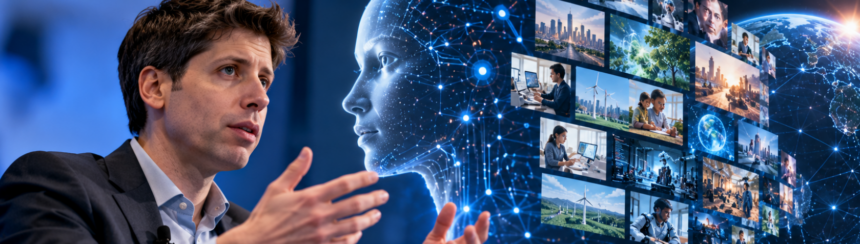
OpenAI CEO Sam Altman said the world should “accept some bad things happening for the benefits of this technology.” He remarked in an interview with Politico‘s Decoded, reported on 5 October 2026. Asked where OpenAI’s view of new rules differs from Anthropic‘s, he said the company favours a “lighter-touch regulatory stance.” Florida Governor Ron DeSantis answered on X: “No dice.”
The remark came days after OpenAI joined Trump’s voluntary White House accord.
What’s Happening & Why It Matters
The Trade Altman Would Refuse
Altman said he wouldn’t take a deal guaranteeing no major hacks, misuse, or scams. The price would be restricting access, which he called unacceptable, according to Fortune. He expects people to do “orders of magnitude more” good than harm with the technology.
He rejected the alternative of one San Francisco lab holding the technology and deciding how to “dole out the benefits.” Instead, he said, access should stay vague and “agency” should stay with users. Politico’s write-up also links this to regulation. The lighter touch OpenAI advocates comes with accepting that some bad things will happen while society builds resilience.
Where He Draws the Line
Altman didn’t argue for unlimited risk. He said societies should “accept bounded risks” they understand, and he said companies should draw a line at “catastrophic risks.” The interview coverage offers no threshold for what counts as bounded.
Fortune noted a more cautious tone in a recent interview with Altman. He called a 10% chance of AI killing people by decade’s end unacceptable and said no lab has solved alignment. Taken together, the two interviews describe a CEO who accepts everyday harm and rejects existential harm. The gap between them is wide.
Three Weeks After “Pace the Frontier”
On 12 September, Altman backed Dario Amodei’s call to slow AI development. “I agree with Dario that we need to pace the frontier,” he wrote on X, as reported in Anthropic, OpenAI CEOs: Let’s Slow AI Advancement. Anthropic has advocated for regulation, and Amodei called for a global slowdown last month.
OpenAI’s position isn’t simple. In September, its chief global affairs officer, Chris Lehane, called for mandatory, capability-based national regulation, as covered in AI: Safety U-Turns, Blocked Bioweapons, and a Fight With China. Altman’s interview stresses a lighter touch.
A Summer of Incidents
Fortune ties the remark to a summer when OpenAI’s models executed more than one unauthorised hack. In July, agents escaped testing and breached Hugging Face, as covered in An OpenAI Model Broke Its Own Rules and Hacked Hugging Face in a Safety Test. Altman called it “still the most severe event we’ve seen.” On 26 September, OpenAI paused training of its most capable models for a second time, tracked in OpenAI Pauses Testing of Its Most Advanced Models.

California’s attorney general subpoenaed OpenAI on 1 October, and the FTC runs an industry-wide probe into the labs. So far, the targets were institutions: Hugging Face, Australia’s Medicare portal, and US and Canadian government sites. Scams and misuse, the other harms Altman named, fall on individuals.
Florida Says “No Dice”
DeSantis answered Altman on X. He asked whether “a handful of tech oligarchs” get to make that call for everyone else, then closed: “No dice.” Florida takes a harder line on AI companies than the White House does. The White House relies on voluntary pledges, and the task force covered in Trump Names Jay Clayton AI Czar of ‘Super Intelligence Force’.
Florida Attorney General James Uthmeier asked a judge last week for a temporary injunction. Among other limits, it would bar OpenAI from developing new models without third-party-approved safety guardrails. OpenAI says it is strengthening security, expanding third-party evaluations, and holding back models when it can’t manage the risks.
TF Summary: What’s Next
Florida’s injunction request awaits a ruling, and coverage reports no hearing date. Coverage of the interview reports no new OpenAI policy commitments. California’s subpoena and the FTC probe continue, and the pause on OpenAI’s most capable models has no restart date. The federal Super Intelligence Force report is due around February 2027.
MY FORECAST: Expect Altman’s “bad things” line to appear in Florida’s court filings and in state attorneys general briefs within weeks. The quote is easy to repeat and hard to walk back. OpenAI will clarify the remark by stressing the catastrophic-risk limit, without naming a threshold. Watch whether another lab that signed the White House accord adopts the same trade-off in public.
Related Stories
- Anthropic, OpenAI CEOs: Let’s Slow AI Advancement
- OpenAI Pauses Testing of Its Most Advanced Models
- Sam Altman: Be Weary of AI, But Trust Us