


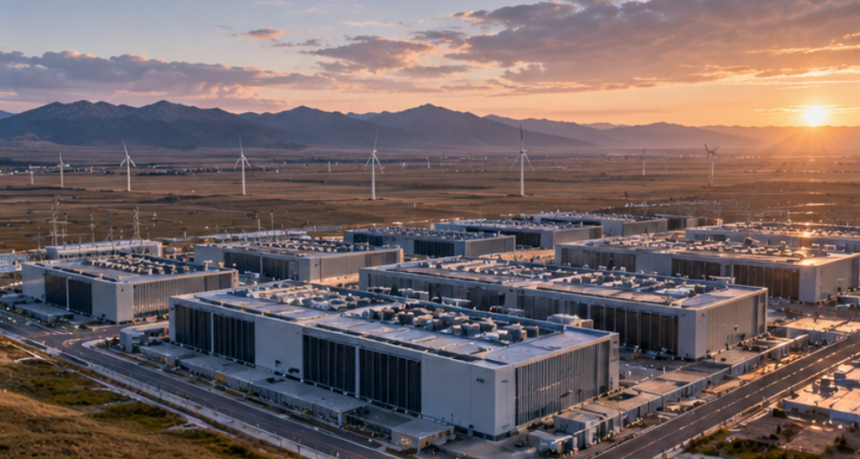
Potato farms turned into server farms. A national strategy with a name — Eastern Data, Western Computing — built to solve a computing crunch before it stalls the country’s AI ambitions. Alibaba just unveiled the chip meant to fill them.
A new skyline of data centres is rising from rural China, concentrated in provinces like Guizhou and Inner Mongolia, as Beijing races to secure the physical infrastructure underpinning its AI ambitions. More than half of China’s data centre pipeline is in the country’s north and northwest, according to BloombergNEF data — a deliberate geographic shift away from the eastern coastal cities that have historically hosted China’s tech industry. The strategy has an official name: Eastern Data, Western Computing, launched in 2021 and accelerating as AI compute demand climbs.
What’s Happening & Why It Matters
How Potato Country Changed to Computing
The logic behind China’s rural pivot is straightforward once you understand what a data centre needs. Rural expanses in Guizhou and Inner Mongolia offer cooler climates, abundant open space, and enormous wind and solar generation capacity — the ingredients large-scale server farms require, and what China’s dense eastern cities can’t provide at comparable cost or scale. Beijing has set a hard target requiring 80% of data centre power to come from renewable sources by the end of the decade, making these renewable-rich rural provinces the realistic path to hitting that mandate.
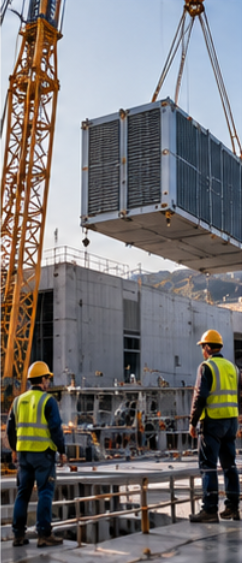
Guizhou’s Guian New Area hosts Huawei’s largest data centre — a town-like complex, complete with European-style clock towers and multi-arched bridges, emitting a permanent low hum across what was agricultural land. Dozens of comparable facilities have risen across the province in recent years, part of a national strategy designed to prevent a computing crunch that could otherwise stall China’s AI expansion before it reaches full speed.
The Human Cost
Not every local account matches the official optimism. One Inner Mongolia resident, speaking off camera to the BBC, offered a blunt assessment: “This big data has absolutely nothing to do with ordinary people. What benefits has it brought us?” Entire villages have been relocated to make way for construction, though it’s difficult to determine the exact number affected or what compensation residents received—a topic few people are willing to discuss, given the risk of voicing concerns too publicly in China’s censored environment.
By contrast, other residents described tangible local benefits. New roads, two universities, and expanded job opportunities have followed the Guian New Area buildout. One local farmer, Zhang, told the BBC his children had found employment in the new facilities — a optimistic account sitting beside the more sceptical, anonymous one. That split is a pattern researchers have flagged: surveys suggest little organised opposition to AI adoption in China compared with many other countries, but those figures are hard to evaluate given how public dissent is managed.
Water Scarcity and Coal Power Complications
China’s renewable mandate doesn’t resolve the environmental questions surrounding the buildout. Water supply is a concern in the arid stretches of Inner Mongolia, where data centre cooling systems compete with agricultural and residential needs in a region that was never water-abundant to begin with. And despite the 80%-renewable target, parts of China’s grid supplying these facilities still run on coal power — meaning the “green data centre” Beijing promotes publicly coexists with a genuinely mixed energy reality on the ground.
Alibaba’s New Chip, Designed for Chinese Facilities
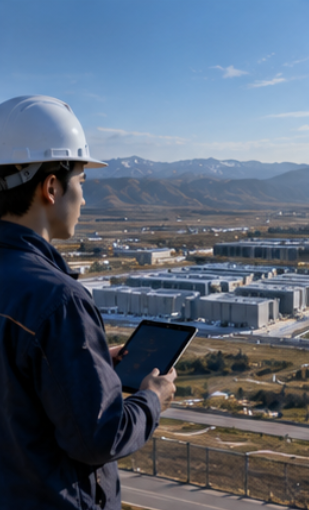
The infrastructure push isn’t happening in isolation from China’s chip industry. Alibaba unveiled a new AI accelerator, the Zhenwu V900, on 22 September, which the company says triples the performance of its predecessor. Built by Alibaba’s T-Head division, the chip can be combined in clusters of up to 500,000 units to power frontier-model training —
competing with Nvidia’s hardware. CEO Eddie Wu set a target of 20 gigawatts of global data centre capacity for Alibaba Cloud by 2032, citing what he called exponentially rising demand.
Alibaba has committed more than $53 billion over three years to expand its AI capabilities, and raised $10.2 billion through a follow-on share offering in Hong Kong in August 2026. That capital commitment, paired with rural provinces actively building out the physical facilities to house it, gives China’s AI infrastructure buildout a genuinely coordinated character — chip design, capital raising, and physical construction all advancing on parallel, mutually reinforcing tracks.
TF Summary: What’s Next
Alibaba’s Zhenwu V900 accelerator enters production toward the company’s 2032 capacity target, with no confirmed near-term deployment timeline beyond Wu’s stated ambition. China’s Eastern Data, Western Computing strategy continues expanding, with more than half the country’s current data centre pipeline already concentrated in northern and northwestern provinces. No formal accounting of village relocations or compensation has been made available.
MY FORECAST: Expect China’s rural data centre buildout to accelerate through 2027, given how the renewable energy mandate and land availability both favour the western provinces over any realistic return to coastal-city concentration. The Zhenwu V900’s real test isn’t its announced specifications — it’s whether Alibaba can cluster hundreds of thousands of units enough to compete with Nvidia’s established ecosystem, a manufacturing and software integration challenge harder than the chip design itself. Watch whether water scarcity concerns in Inner Mongolia produce any policy adjustment, given how they cut against Beijing’s stated environmental commitments for the exact infrastructure category.
Related Stories
- Chinese Memory Chipmaker CXMT Surges on Stock Market Debut
- Sour Sentiment Triggers AI, Chip Stocks Sell Off
- China vs America: Who’s Winning the Tech War?