



Trump signed the order Thursday. Google shipped the change by Saturday — faster than the president’s own Interior Department, which technically has 30 days to finish the process. Canada’s response arrived even quicker: a billboard on the shoreline reading “Lake Ontario. Now and forever.”
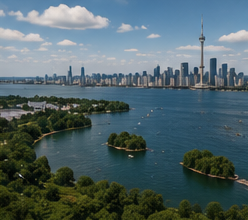
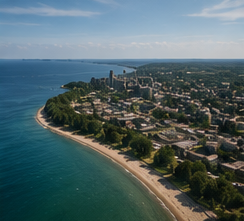
Google began displaying “Lake America” in place of Lake Ontario for US users Saturday, three days after President Trump signed an executive order renaming the lake amid escalating trade tensions with Canada. Canadian users continue seeing “Lake Ontario.” Everyone else sees “Lake Ontario (Lake America).” Google’s statement was procedural, not political: “These updates follow our long-standing policy for bodies of water with names that vary from country to country, and are starting to roll out now,” citing a change already made by the US Geographic Names Information System. Apple, notably, had not updated Apple Maps as of Sunday.
What’s Happening & Why It Matters
Google Acted Faster Than the Government

Here’s the detail that undercuts the “we’re just following official channels” company line. Trump’s executive order states the Secretary of the Interior has 30 days to work through the renaming process with the Board on Geographic Names — the body that governs official US place names. Google updated its maps within 72 hours of the signing, well ahead of that 30-day window closing. The company’s justification rests on the Geographic Names Information System already indicating the change, but the formal process the order itself describes hadn’t finished.
This is a rerun of a play Google’s already made once. The company applied identical logic in 2025, when Trump ordered the Gulf of Mexico renamed “Gulf of America”—updating US-facing maps while leaving the name unchanged for users elsewhere. Google’s “long-standing policy” language treats the jockeying as routine, mechanical compliance. In practice, it’s a company choosing to move faster than the government’s own formal timeline, on a politically charged renaming, twice in two years.
Pres. Trump’s Position — and the Trade War Underneath
Trump signed the order during an Oval Office appearance, calling the change “effective immediately” and tying it to Canada’s trade behaviour. “They haven’t treated us well. The Canadian officials have treated us very badly. They’re nasty people,” Trump said, adding the renaming was “something I’ve been thinking about for a long time.” The order arrived days after trade talks between Washington and Ottawa collapsed — the US imposed 50% tariffs on $20 billion of Canadian goods on 22 August, with Canada’s retaliatory tariffs on a comparable dollar figure set to take effect on 8 September.
Reuben Rose-Redwood, a geography professor at the University of Victoria, offered a specific read on the timing: “Trump is using cartography as a weapon of mass distraction to call attention away from his falling approval ratings and the rising cost of living caused by his policies.” That’s a pointed interpretation, but it’s grounded in a real data point — Trump’s approval rating had matched the lowest mark recorded across both his terms in the same week’s Reuters/Ipsos polling, at 33%.
Canada’s Response: A Billboard, a Bill, and MapQuest’s Sarcasm
The pushback came fast and from multiple directions. Ontario Premier Doug Ford answered Trump’s order with a billboard-sized message on the Canadian shoreline: “Lake Ontario. Now and forever.” Three Democratic members of Congress — Timothy Kennedy, Debbie Dingell, and Joseph Morelle — announced plans to introduce a bill called the “Hands Off Our Great Lakes Act,” designed to nullify the executive order. Kennedy, whose district includes Buffalo and Niagara Falls, made the cross-border relationship personal: “We drink Tim Hortons coffee. We drink Levant Blue beer. We cross the Peace Bridge.”
The sharpest response, though, came from a company with nothing to lose. MapQuest — the original commercial web mapping service, long since eclipsed by Google — posted: “We’re not changing the name of Lake Ontario. Name it whatever you want at your leisure.” The post linked to a satirical tool that let users rename the lake themselves, alongside a parody map labelling it “Lake Are We Doing This Again?” It’s a small company with little at stake in US-Canada trade relations, using that freedom to say what Google, with regulatory and commercial exposure in both countries, couldn’t.
TF Summary: What’s Next
Google’s rollout continues across US-based accounts, with the company describing the change as ongoing rather than complete for every user. Apple Maps had not implemented the change as of Sunday, with no confirmed timeline for whether or when it will. The formal 30-day Board on Geographic Names process referenced in Trump’s executive order is ongoing. The “Hands Off Our Great Lakes Act” has not yet been introduced beyond the announced plan.
MY FORECAST: Expect Apple to follow Google’s lead rather than hold out indefinitely, given the company made an equivalent, if quieter, adjustment during the Gulf of Mexico renaming last year once political pressure built. The “Hands Off Our Great Lakes Act” faces long odds of passage given current congressional dynamics. Still, its introduction alone generates the kind of bipartisan Great Lakes-region pushback that keeps this story alive beyond a single news cycle. Watch whether the trade dispute itself, not the map labelling, determines how long “Lake America” survives — a de-escalation in tariff tensions would give Trump’s own administration a face-saving reason to let the Board on Geographic Names process stall out past its 30-day window.
Related Stories
- Bank of England Governor Warns of AI Bubble
- Third-Party App Stores Are Rolling Out Inside Google Play
- EU Fines Google €890 Million for Favouring Its Own Apps