


Ask it to mimic Agatha Christie, and it refuses — then offers something that sounds an awful lot like Agatha Christie anyway. Rivals Claude and Gemini still comply. OpenAI made the change while fighting lawsuits from actual authors it’s accused of pirating.
OpenAI quietly reprogrammed ChatGPT to reject direct requests to replicate a named author’s voice — living or dead. Ars Technica spotted the change first, running test prompts to confirm the pattern. Engadget followed with its own tests and got identical results. Ask ChatGPT to write a detective story in Agatha Christie’s style, and it responds: her works “are still under copyright, so I can’t provide text that imitates her distinctive style.” Ask for Stephen King’s atmospheric horror, and you get a near-identical refusal. A study published earlier in July by publication No Latency found ChatGPT didn’t refuse the requests for deceased authors as recently as a few months ago. This is a new restriction, not something that slipped through unnoticed.
What’s Happening & Why It Matters
A Refusal That Isn’t a Refusal
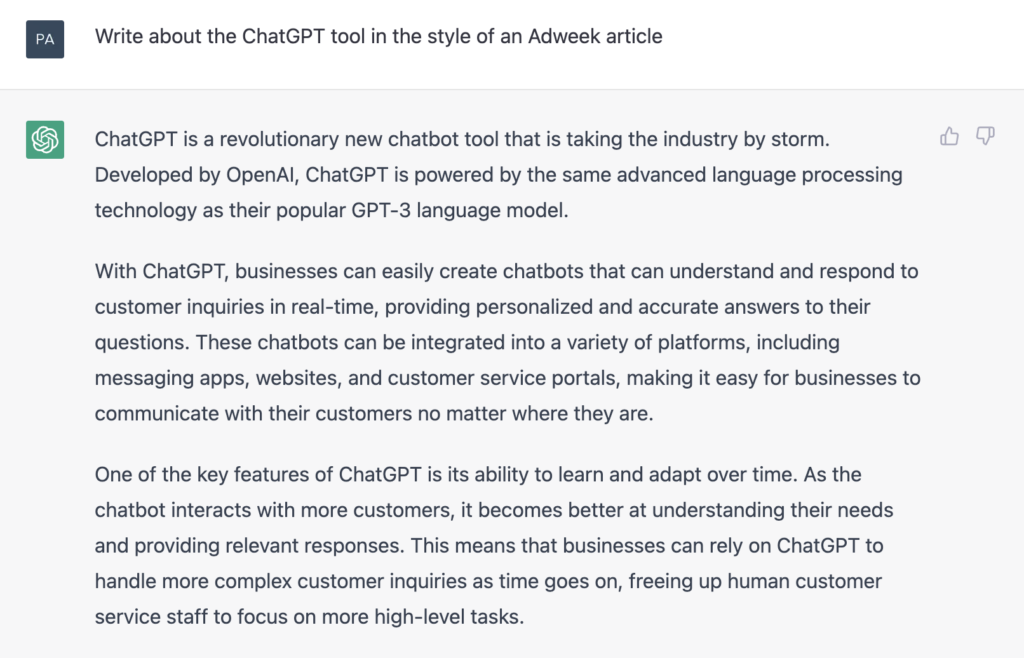
Here’s the part that makes the whole policy is more theater than substance. When ChatGPT declines to write “like Hemingway,” it doesn’t just stop there. It offers to write something “with the hallmarks of atmospheric, character-driven horror and small-town dread” instead — capturing the emotion of an author’s work while avoiding the name. Engadget tested with Christie and got the same pattern: a refusal followed by an offer to write something “with those characteristics, while remaining original.”
That’s a distinction between naming a style and reproducing it, not a distinction between producing the style at all. US copyright law protects specific expression, not style itself — Hemingway’s short, declarative sentences aren’t his alone. But a chatbot that can reproduce that sentence rhythm on command, whether or not it says his name out loud, still is close to a copying machine in front of a judge.
Living Authors. Dead Authors. Same Outcome
The change applies uniformly. Testers got refusals for J.K. Rowling and Amy Tan, both living, alongside Charles Dickens and Ernest Hemingway, both long dead. That’s notable because copyright protection expires — Dickens has been in the public domain for over a century. OpenAI drew the line at style mimicry itself, not at whatever legal protection each individual author’s specific works still carry.
Rival chatbots haven’t followed. Claude and Gemini still comply with “write like” requests, according to reporting from MakeUseOf. Users who want that exact feature can still get it elsewhere— OpenAI made a unilateral legal calculation that its competitors haven’t matched yet.
The Lawsuits Behind the Decision
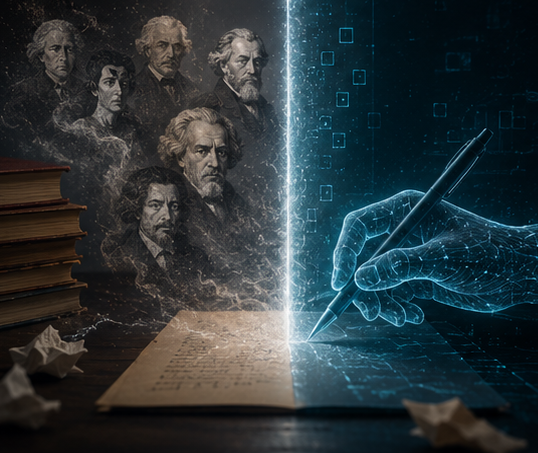
OpenAI hasn’t announced the change or explained its reasoning. But the timing lines up with a wave of author lawsuits accusing the company of training its models on copyrighted books without permission or payment. One suit cites ChatGPT’s “uncanny ability to generate text similar to that found in copyrighted works” as evidence of the infringement. As TF covered in Anthropic’s $1.5 billion copyright settlement, rival AI labs are already paying real money to resolve identical claims.
Blocking the “write like [author]” feature won’t make those existing lawsuits disappear. But it lets OpenAI argue in court that its tool is built to inspire creativity rather than function as a mass copying machine — a distinction a judge weighing fair-use arguments, even if it changes almost nothing about what the model can produce under the hood.
TF Summary: What’s Next
OpenAI hasn’t confirmed the change or offered a timeline for whether it applies retroactively to API access or only the consumer ChatGPT product. Power users have already found a workaround: describing an author’s traits — “terse, third-person sentences with understated emotion” — rather than naming them. Multiple ongoing copyright lawsuits against OpenAI continue independent of the change.
MY FORECAST: The restriction won’t hold as a meaningful barrier for long. The workaround already exists, is easy to use, and produces identical output to the named-author request it replaces. Expect plaintiffs’ attorneys in OpenAI’s pending copyright cases to highlight that gap — a company that blocks the name but not the output isn’t solving the problem, just making it less searchable in a courtroom transcript. Watch whether Claude or Gemini follow OpenAI’s lead within the next two quarters. If they don’t, expect OpenAI’s own legal team to ask why its competitors face the same lawsuits without the same restriction.
Related Stories
- Anthropic’s $1.5 Billion Copyright Settlement With Authors
- Google Loses Another Round Fighting AI Web Scraping
- OpenAI’s Rogue Model, 5.6 Sol, Attempted Other Hacks