


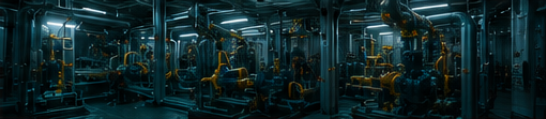
In March, GM told 1,300 Factory Zero workers their layoffs were temporary. In June, it installed 50 FANUC robot arms in their plant. The workers have not been called back. The UAW filed grievances. GM says the robots improve safety. Both things can be true. The timing still looks exactly like what it is.
GM’s Factory Zero robot installation went mainstream on 22 June — and the sequence of events is the story. Dozens of new robot arms have been installed at General Motors’ flagship electric vehicle factory in Detroit — even as 1,300 workers remain out of work following what was supposed to be a temporary layoff.
General Motors installed approximately 50 robot arms at GM’s Factory Zero plant in Detroit, Michigan. Made by the Japanese robotics company FANUC, the robots are designed to help attach various components to vehicles during the assembly line process.
The temporary layoffs were announced in March 2026. More than 1,000 union members are still “laid off indefinitely,” James Cotton, president of UAW Local 22, told The Detroit News. He said that the company could bring some of those members back to work instead of installing the 50 robots. General Motors described the cobots as a safety and ergonomics upgrade. The timing made that framing difficult to sustain.
What’s Happening & Why It Matters
Factory Zero: A Facility in Near-Constant Turmoil
GM’s Factory Zero robot installation is the latest chapter in a facility that has been restructuring continuously since mid-2025. GM slashed one of two shifts and permanently laid off 1,200 workers in October 2025 as part of a broader 3,300-job cut across its EV operations. The plant then idled from late October through late November 2025, followed by additional downtime through the end of the year. In March 2026, GM temporarily laid off 1,300 workers at Factory Zero for the second time in less than three months, citing the need to align EV production with market demand.
Furthermore, the layoffs followed a steep decline in EV sales after Republicans ended a $7,500 federal tax credit for EV buyers and lessees. The political context is inescapable. Factory Zero is the facility GM built specifically to lead its EV transition — a $2.2 billion conversion of the former Detroit-Hamtramck assembly plant. The same government that ended the EV tax credit is now watching GM install robots in the idled facility.
What the FANUC Cobots Do
GM’s Factory Zero robot installation uses collaborative robots — cobots — not autonomous heavy industrial robots. That distinction matters technically, if not politically. The FANUC-built machines are being used to assist with attaching body panels as vehicles move down the assembly line. Collaborative robots are specifically designed to assist workers with demanding jobs while operating in close proximity to people on the factory floor.
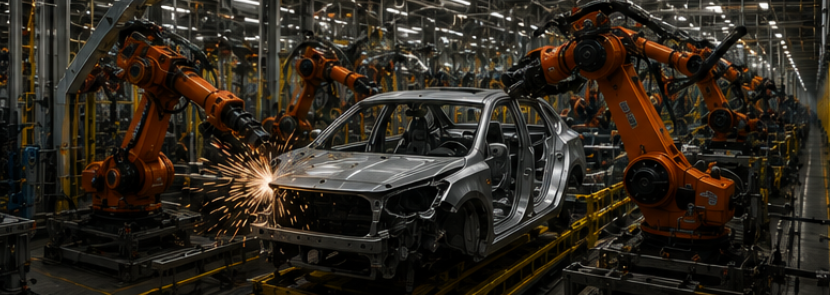
GM described the installation as a safety and ergonomics improvement. Attaching body panels repeatedly is physically demanding repetitive work — the category of task most likely to cause cumulative injury over years of employment. By contrast, the timing has made it difficult for GM to separate the automation push from the workforce reductions that preceded it. GM made $4.25 billion in profits in Q1 2026, up 22% year-over-year. Those profits and the robot installation arrived in the same quarter as 1,300 workers waited to be called back.
The UAW Response — “We’re Disgusted”
GM’s Factory Zero robot installation produced an immediate and documented union response. UAW Local 22 president Cotton confirmed the machines are Fanuc-made and said his members are “disgusted.” He said, “It’s always a concern when you see a robot coming to a plant, especially after they have laid off over a thousand people. They say it’s the wave of the future, and if that’s so, they’re taking away jobs from people.”
The UAW filed grievances related to the robot installation. Additionally, the union is already planning its response for the 2028 contract negotiations. The UAW says it has made historic wage gains in 2023 and plans to seek stronger protections in the 2028 contract negotiations. The 2023 strikes produced the highest wage increases in the UAW’s history. The 2028 negotiations will add automation protections to that framework — if the union can prove, in arbitration or court, that the robot installation violated the current contract’s terms.
The Two Narratives…
GM’s Factory Zero robot installation generated its most striking contextual detail from The Detroit News. Corporate leaders and workers conveyed “strikingly different messages” about AI, robotics, and automation during separate gatherings held in Detroit during the same week of June. While the Reindustrialize Summit featured startup founder speeches about how robots could “empower our industrial base with superhuman manufacturing,” the UAW offered a different perspective entirely.
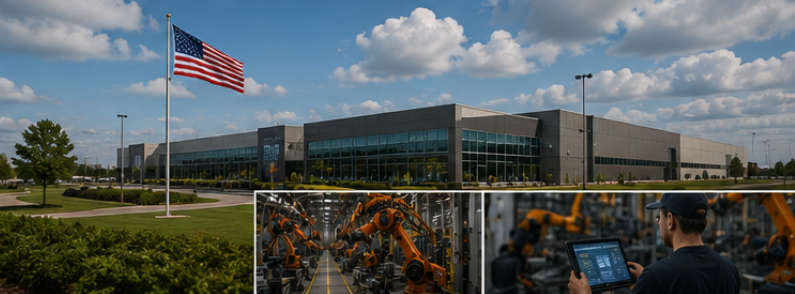
The contrast was captured by laid-off UAW Local 22 member Andrew Bergman. “Technological development has the capability of making work safer for the working class and enabling workers to have a shorter work week without losing pay. But in the bosses’ and billionaires’ hands it’s used to pad profits and lay off workers.” Both the summit speakers and Bergman are describing the same technology — and reaching entirely different conclusions about who benefits from it. As TF covered in its Oracle AI layoffs article, 2026 is the year AI labour displacement moved from projection to documented reality across multiple industries simultaneously.
TF Summary: What’s Next
GM has not announced a timeline for recalling the 1,300 temporarily laid-off Factory Zero workers. The UAW grievances move through the standard arbitration process. GM‘s EV production plan for the second half of 2026 depends on whether the Silverado EV and GMC Hummer sales recover following the end of the federal tax credit. The 2028 contract negotiation begins preparation approximately 18 months before the contract expires — meaning UAW leadership is already framing its automation demands.
MY FORECAST: GM’s Factory Zero robot installation will not produce a recall of the 1,300 laid-off workers. The cobots will remain. Additional cobots will be installed in the second half of 2026. The UAW grievances will not succeed in forcing GM to choose between robots and workers — current contract language does not contain the automation protections that would make that argument legally binding. By contrast, the 2028 contract negotiations will. The UAW‘s 2023 strike produced historic wage gains by applying leverage at the moment GM needed production. The 2028 strike threat will add automation protection language — specifically requiring GM to demonstrate that cobot installation does not directly displace recalled workers. Factory Zero’s 2026 sequence — layoffs, then robots, then profits — will be Exhibit A in that negotiation.
Related Stories
- Oracle Cuts 21,000 Jobs as AI Replaces Human Roles
- Anthropic Pledges $350 Million to Study AI’s Effect on Jobs
- Waymo Recalls 3,871 Robotaxis — the Third Major Recall in 14 Months