



The European Union and Spain officially launched a €9.8 million ($10.6 million) quantum computer in Barcelona on Thursday. Authorities housed the advanced hardware inside a former chapel at the Barcelona Supercomputing Centre. The system successfully integrated with the existing MareNostrum 5 supercomputer. Consequently, the installation created a massive hybrid processing network. The event attracted numerous high-ranking government officials and scientific leaders. They gathered to witness the activation of the highly advanced machine. The atmosphere reflected immense pride in regional engineering capabilities.
Spanish startup Qilimanjaro Quantum Tech designed and built the machine entirely within national borders.
Officials celebrated the launch as a major victory for European technological sovereignty. The investment directly challenged the computing dominance previously held by foreign superpowers. The project proved that public funding effectively accelerates deep-tech innovation. The continent finally secured a physical asset capable of rivalling those of overseas competitors. The successful deployment completed a multi-year effort to modernise regional data capabilities.
What’s Happening & Why It Matters
Creating a Massive Hybrid Processing Network
The Barcelona Supercomputing Centre currently operates a highly unique hardware ecosystem. Specifically, the facility combines three distinct and powerful computing paradigms. The site features an analogue quantum system, digital quantum processors, and a classical supercomputer. Engineers connected the new EuroQCS-Spain directly to the MareNostrum 5 architecture. As a result, the location is one of the few unified hybrid facilities worldwide. BSC director Mateo Valero confirmed the installation’s absolute uniqueness. He stated that the centre uniquely connects three distinct quantum computers directly to a classical supercomputer. The architecture completely redefines how scientists approach massive data sets.
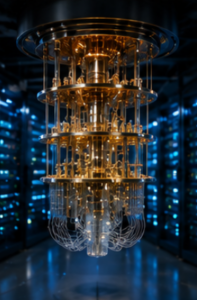
The analogue system uses a specialised adiabatic processing unit. Such a unit excels at handling continuous, infinitely complex variables. Therefore, researchers possess the exact tools required to bypass classical processing limitations. By merging different paradigms, the centre maximises its raw computational power. The digital and classical systems handle structured mathematical problems.
Meanwhile, the analogue component processes fluid, real-world simulations. Consequently, the unified machine operates with unprecedented efficiency and speed. The entire configuration establishes a towering benchmark for global engineering teams.
Breaking Free from Foreign Hardware
European leaders actively prioritise technological sovereignty over global trade agreements. Currently, the continent relies heavily on hardware manufactured overseas. However, the Barcelona project proves that domestic engineering can compete globally. Qilimanjaro Quantum Tech built the 10-qubit processor using entirely regional resources. Consequently, the European Union secures a critical piece of strategic infrastructure. European High Performance Computing Joint Undertaking coordinators manage the wider continental network.
The group continuously funds similar installations across member states. Thus, the strategy reduces reliance on American and Chinese suppliers. Ultimately, controlling the hardware guarantees security for highly sensitive digital research. National governments demand absolute control over their defence and economic data. Relying on foreign processors introduces unacceptable cybersecurity vulnerabilities. Therefore, building the technology locally eliminates the threat of external espionage. The continent establishes a formidable defensive perimeter around intellectual property.
Solving Impossible Global Challenges
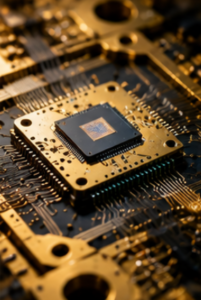
Classical computers often fail when processing highly complex optimisation problems. Conversely, analogue quantum processors handle massive variable calculations effortlessly. Therefore, the new machine targets specific industrial bottlenecks across multiple sectors. Scientists utilise the hardware to safely design new pharmaceutical drugs. Furthermore, energy companies model highly efficient electricity grids to reduce waste. Logistics firms optimise complex supply chain routes across the globe. Additionally, financial institutions run advanced market simulations to predict economic trends accurately.
Qilimanjaro Quantum Tech CEO Marta P. Estarellas confirmed the system’s specific utility. She explained that the development of artificial intelligence requires robust domestic computing power. Consequently, the facility directly supports the booming AI sector. The hardware dramatically reduces the time required to train complex machine learning models. Companies complete years of traditional research in a matter of hours. Ultimately, the upgrade transforms theoretical science into practical commercial applications. The raw speed allows corporations to release products faster than ever before. Consumer markets will directly benefit from the resulting medical and technological breakthroughs.
Funding the Innovation Pipeline

The European Commission and the Spanish government split the €9.8 million ($10.6 million) bill equally. Such aggressive public funding guarantees the rapid deployment of advanced technologies. Furthermore, the contract guarantees two future hardware upgrades for the facility. Qilimanjaro plans to deliver second and third-generation processors in the coming years. As a result, the facility will continuously scale operational capacity. Public investment prevents the technology from stagnating inside private corporate laboratories.
Therefore, the continent builds a highly sustainable innovation pipeline. The government views the expenditure as essential for future economic growth. Private venture capital often avoids hardware projects due to extreme upfront costs. Consequently, state intervention bridges the gap between academic research and commercial viability. The financial strategy ensures that the brightest minds receive adequate tooling. The region aggressively courts top-tier talent with world-class facilities. Ultimately, the multi-million-dollar commitment creates a robust foundation for sustained industrial leadership.
Scaling the European Tech Sector.
The Barcelona Supercomputing Centre operates as a strictly open-access resource. Specifically, the facility invites researchers from across the continent to run experiments. Industrial partners test new algorithms using the massive hybrid network. Furthermore, public administrations utilise the raw data processing power for civic projects.
The installation benefits the entire European tech sector equally. Developers test the system through highly secure cloud-based access points. Consequently, brilliant minds can invent novel applications without purchasing expensive hardware. The continent builds a massive collaborative ecosystem around the supercomputer. Ultimately, sharing the resource accelerates scientific discovery. Startups leverage the immense computational power to disrupt traditional industries. The democratisation of elite hardware prevents monopolies from dominating the technology space. Open access fosters a culture of rapid iteration and peer review. Such an environment practically guarantees a massive surge in continental patent filings. The open framework represents a masterclass in civic technology management.
TF Summary: What’s Next
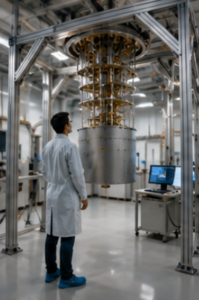
Engineers are currently calibrating the 10-qubit analogue system for public access. We expect the facility to open digital doors to European researchers by late summer. Meanwhile, Qilimanjaro actively develops the next generation of adiabatic processors. The team plans to deliver a substantially larger chip within two years. Such an upgrade will massively expand the capabilities of the Barcelona site.
Other European nations continuously observe the Barcelona experiment with great interest. We anticipate the launch of similar hybrid facilities in Germany and France shortly. The European Union clearly intends to fund a massive, interconnected quantum network. Consequently, the global hardware race guarantees massive public investments throughout the decade. The physical infrastructure of the internet is undergoing a fundamental upgrade.
MY FORECAST: I predict that Europe will absolutely dominate the analogue quantum computing niche by 2030. You will witness a massive brain drain as global engineers flock to open-access facilities. The United States will regret focusing entirely on digital quantum systems. Ultimately, the hybrid approach will win the race to commercialise artificial intelligence infrastructure. Barcelona will cement a permanent status as the Silicon Valley of the European continent. The region will dictate the global standards for next-generation data processing.