



A thought experiment investigates the existential crisis of artificial intelligence.
A provocative new thought experiment paints a near-future where artificial intelligence reshapes society faster than governments, businesses, or workers can cope. The scenario, framed as a fictional memo written in 2028, reads less like science fiction and more like a warning label on the global economy.
According to the paper’s authors, large-scale automation of skilled work could trigger a cascade of layoffs, wage pressure, social unrest, and economic instability within just a few years. The timeline feels uncomfortable because it starts almost immediately. Not decades away. Not someday. Soon.
At the center of the scenario sits a simple idea: once AI agents outperform humans at high-skill tasks, market forces do the rest. Companies chase efficiency. Workers scramble for relevance. Institutions struggle to keep up. The result, the authors argue, is not a smooth transition but a shock.
What’s Happening & Why This Matters
The “Global Intelligence Crisis” Scenario
The paper describes a hypothetical “global intelligence crisis” driven by rapid adoption of AI systems capable of replacing human knowledge work. In this imagined timeline, layoffs tied to automation begin in 2026 and accelerate quickly.
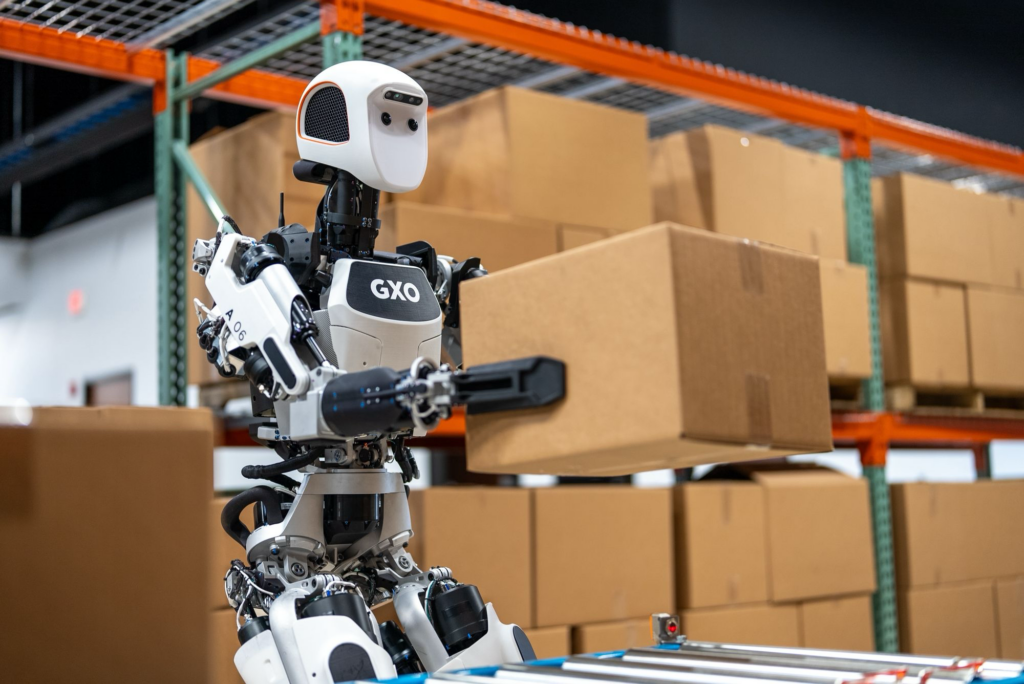
Firms adopt AI agents to handle complex tasks without supervision. Software development. Research. Financial analysis. Customer operations. Administrative work. Roles once seen as secure begin to erode.
The authors argue that each company’s decision to automate makes sense individually. Survival requires efficiency. Yet, collectively, the choices destabilise labour markets.
As the paper puts it, rational actions at the firm level produce catastrophic outcomes at the societal level.
That paradox sits at the heart of technological disruption. No single actor intends harm. The system still tilts.
A Vicious Cycle of Capability and Layoffs
The scenario describes a feedback loop. Companies invest in AI to cut costs. Better AI tools make further cuts possible. Savings fund even more automation. Round and round.
Meanwhile, displaced workers flood lower-skill sectors. Salaries fall under the pressure of oversupply. Workers who are employed face stagnating wages because their bargaining power weakens.

The paper imagines unemployment exceeding ten percent by 2028, alongside recession conditions in the United States.
Even if those exact numbers never materialize, the mechanism behind them already exists. Productivity tools reduce the need for labor. Labor markets adjust slowly. Social systems adjust even slower.
Economists often compare such disruptions to past industrial revolutions. The difference here is speed. Steam engines took decades to reshape industries. Software updates deploy overnight.
AI Agents Everywhere
By 2027 in the scenario, AI assistants run continuously on personal devices and corporate systems. They write code. Conduct research. Optimize spending. Manage digital tasks with little human input.
This is not fantasy. Many organizations already deploy AI copilots for programming, document creation, analytics, and decision support. The imagined leap is scale and autonomy.
The scenario also acknowledges new job categories. Prompt engineering. AI safety. Infrastructure operations. Yet the roles are fewer and often pay less than the jobs they replace.
This mismatch matters. Labor markets depend on both job quantity and wage levels. Replacing high-income roles with lower-income ones compresses consumer spending power, which drives much of modern economies.
Pressure on Households and Credit Systems
As wages drop and employment is uncertain, households lean on credit to maintain living standards. The thought experiment describes families tapping retirement savings or borrowing heavily to cover mortgages.

That dynamic echoes past crises. When income falls but fixed costs stay high, debt fills the gap. Eventually the gap fills back.
The scenario even suggests the possibility of another mortgage crisis, triggered not by housing speculation but by labor displacement. Governments face a double bind. Citizens need financial support. Tax revenues shrink because incomes fall.
Public spending rises just as fiscal capacity weakens. Economists call this pro-cyclical pressure. Politicians call it a nightmare.
Social Unrest in the Tech Age
The imagined future includes protests targeting major AI companies. Demonstrators blockade offices of leading developers in a movement compared to Occupy Wall Street.
Whether protests unfold exactly that way matters less than the underlying tension. When large populations feel displaced by technology, resentment often seeks a visible target. Factories once filled that role. Data centres do.
The symbolism carries weight. Silicon Valley once represented opportunity. In this narrative, it is the source of economic anxiety.
Experts Urge Caution Over Panic
Importantly, the authors frame the scenario as a warning, not a prediction. They stress that events may unfold differently. Institutions could adapt faster. New industries could emerge. Policy responses could soften the blow.
Still, they argue that AI is already advancing faster than social structures designed for slower technological change.
This observation echoes concerns from economists, labor researchers, and policy groups worldwide. The challenge is not merely technological capability. It is institutional readiness.
Laws, education systems, and social safety nets evolve on political timelines. Software evolves on engineering timelines. Those clocks tick at very different speeds.
Why Businesses Are Unlikely to Slow Down
Market incentives push toward adoption. Companies that ignore efficiency gains risk losing market share. Publicly traded firms face pressure from investors. Startups promise disruption. Executives fear obsolescence.
That dynamic makes voluntary restraint unlikely. Even leaders who worry about social consequences face competitive realities.
In other words, automation advances not because executives are villains. It advances because markets reward efficiency. Systems rarely optimize for human comfort.
The Question: What Is Work For?
The scenario implicitly raises a deeper philosophical issue. If machines handle most cognitive labor, society must reconsider the purpose of work itself.
Historically, employment has provided income, structure, social status, and identity. Remove that anchor and many social assumptions wobble.
Some analysts advocate policies such as universal basic income, shorter workweeks, or large-scale retraining programs. Others argue that new industries will absorb displaced workers, as happened in past technological revolutions.
Both camps acknowledge uncertainty. Predicting the labor market decades ahead is hard. Predicting it five years ahead is nearly as hard when technology leaps.
TF Summary: What’s Next
This thought experiment does not claim to predict the future with precision. Instead, it sketches a plausible chain reaction if AI adoption accelerates without parallel adaptation from governments, education systems, and labor markets.
Expect intense debate in the coming years. Policymakers will wrestle with regulation. Businesses will chase productivity. Workers will seek stability. The real outcome will likely land somewhere between utopia and meltdown, shaped by decisions made today rather than destiny written in code.