



Artificial intelligence promises wizard-level capabilities, yet access to that magic remains wildly uneven. Wealthy nations sprint ahead with data centres, talent, and infrastructure. Meanwhile, much of the world still struggles with patchy internet and scarce computing power. Microsoft now steps into that gap with a colossal pledge: invest $50 billion by 2030 to expand AI access across developing economies.
The announcement lands at a tense moment. Governments worry that AI could widen global inequality instead of reducing it. Tech leaders warn that whoever controls compute controls destiny. Microsoft argues the opposite outcome remains possible — but only with deliberate intervention. The company frames its investment as a way to turn AI into a “shared public good,” not a gated kingdom for the rich.
In plain terms, this move tries to ensure the future does not belong solely to countries that already own the servers, cables, and engineers.
What’s Happening & Why This Matters
A Massive Commitment To The Global South
Microsoft’s plan targets developing nations across Africa, Asia, Latin America, and other lower-income regions. The funding will support new data centres, cloud infrastructure, training programs, and expanded internet access. These ingredients form the substrate of modern AI. Without them, advanced models remain distant curiosities rather than practical tools.
Company leaders stress urgency. They warn that AI adoption already skews heavily toward high-income countries, roughly double the usage rates seen in lower-income regions. If this trajectory continues, the technology risks reinforcing the very inequalities it claims to solve.
Brad Smith, Microsoft’s president, describes the situation bluntly: the world faces a “growing AI divide.” The phrase echoes earlier debates about electricity, industrialisation, and broadband. Each technological leap created winners and losers depending on who gained access first.
History suggests late adopters struggle to catch up without external support. Microsoft’s proposal attempts to compress that gap.
Infrastructure: The Real Bottleneck
Public discussions about AI often fixate on chatbots and image generators. The true bottleneck sits deeper. Modern AI demands enormous computing infrastructure — specialised chips, energy-hungry data centres, and reliable networks. These systems cost billions to build and maintain.
Microsoft’s investment focuses heavily on those foundations. New data centres will host cloud services that local businesses, governments, and researchers can use without owning the hardware themselves. Expanding broadband access ranks equally high on the agenda. After all, AI cannot help communities that remain offline.
The digital disparity remains stark. In 2022, only about 36% of Africa’s population had broadband internet access, compared with roughly 90% of households in the United States. That gap limits everything from online education to e-commerce, let alone advanced AI tools.
Building infrastructure does more than enable chatbots. It unlocks economic participation in the digital era.
AI As A Development Shortcut — Or Trap
Proponents argue AI could help developing nations leapfrog older growth stages. Machine learning can optimise agriculture, improve healthcare diagnostics, streamline government services, and expand financial inclusion. For countries with young populations, the payoff could be enormous.
Microsoft leaders note the optimistic scenario. They suggest AI may offer one of the biggest economic opportunities of the century for emerging economies. The logic mirrors how mobile phones allowed many regions to skip landline infrastructure entirely.
However, critics warn that technology rarely distributes benefits automatically. Without local expertise, regulatory frameworks, and economic diversification, countries risk becoming mere consumers of foreign AI products rather than creators. Data sovereignty concerns also loom large. Who owns the information processed in these systems? Who profits from it?
The outcome hinges on governance as much as engineering.
Geopolitics And Soft Power
Large-scale tech investments rarely exist outside a geopolitical context. Providing digital infrastructure can deepen economic ties and influence global standards. Nations that build the platforms often shape the rules governing them.

Microsoft frames its initiative as collaborative rather than competitive. Executives call for cross-border partnerships to prevent fragmentation. International organisations echo that sentiment. The United Nations has urged global cooperation to ensure AI benefits humanity broadly rather than concentrating power in a few hands.
Still, observers note that infrastructure ownership confers leverage. Cloud platforms become critical national assets once governments and businesses depend on them. In this sense, AI development doubles as a new arena for soft power competition.
The race for influence now runs through server farms as much as embassies.
Economic Impact Beyond Technology
AI adoption affects labour markets, education systems, and social stability. Countries lacking access risk falling behind in productivity and innovation. Conversely, those that integrate AI effectively could see rapid economic expansion.
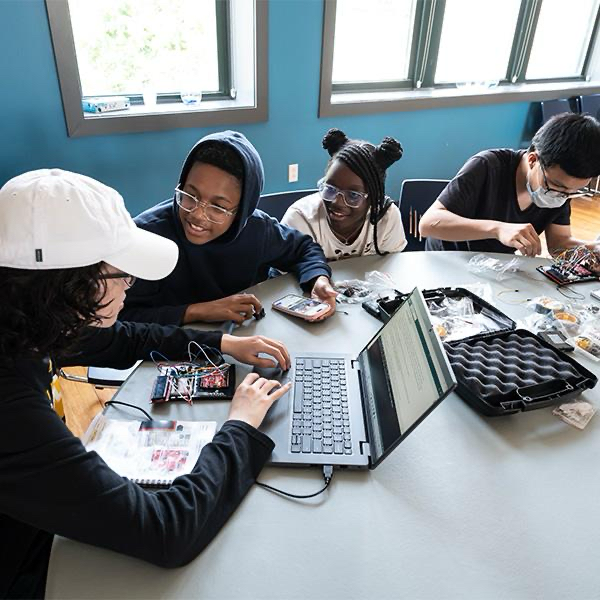
Microsoft’s initiative includes workforce training programs designed to cultivate local expertise. Teaching citizens how to build, deploy, and manage AI systems matters as much as installing hardware. A nation with data centres but no skilled workforce gains limited long-term value.
Education, therefore, is the true multiplier. Skilled engineers can create domestic solutions tailored to local needs, from crop monitoring to disaster prediction.
The stakes extend beyond GDP figures. Technological inclusion influences political autonomy, resilience, and cultural preservation.
TF Summary: What’s Next
Microsoft’s $50 billion commitment signals recognition that AI inequality poses real risks to global stability and economic fairness. Infrastructure investments, connectivity improvements, and training programs could help developing nations participate meaningfully in the AI economy rather than watching from the sidelines. Success depends on execution, governance, and genuine collaboration with local institutions.
MY FORECAST: Expect other tech giants and governments to announce similar initiatives. The AI race now revolves around access, not just capability. Regions that secure infrastructure and talent pipelines today will shape global power dynamics tomorrow. Those that miss the window may spend decades catching up.
— Text-to-Speech (TTS) provided by gspeech | TechFyle