


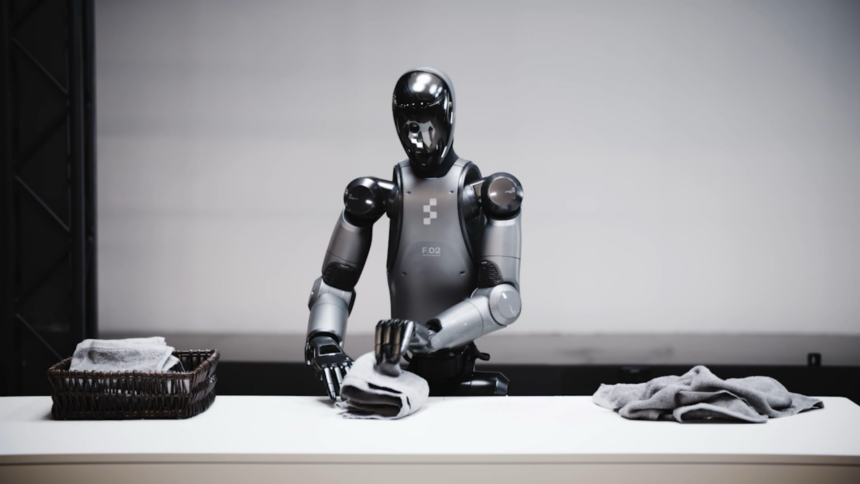
Robots are more in warehouses than in living rooms. The gap tells us everything.
The robot takeover is not here with laser eyes and metal fists. It is arriving with barcode scanners, conveyor belts, dishwashers, and laundry baskets.
Robots already work beside humans at scale. Drones, and more importantly, humanoids, lift shelves, move pallets, and sort packages. They do not complain or need breaks. Reality plays out daily inside facilities run by Amazon and other retail and e-commerce leaders.
At the same time, robots struggle to load a dishwasher without help.
So are robots really about to take over?
The short answer is no.
The longer answer is more… nuanced.
What’s Happening & Why This Matters
Robots Already Dominate Structured Environments
Amazon offers public tours of select U.S. warehouses. These tours double as recruiting tools and public relations exercises. They also reveal a truth that rarely makes headlines.
Robots thrive in predictable spaces.
Inside a four-story, 640,000-square-foot Amazon warehouse in Georgia, robots move shelves to workers, print shipping labels, and palletise goods. Roomba-like bots glide across marked floors. Conveyor belts hum overhead. Humans fill in the gaps.
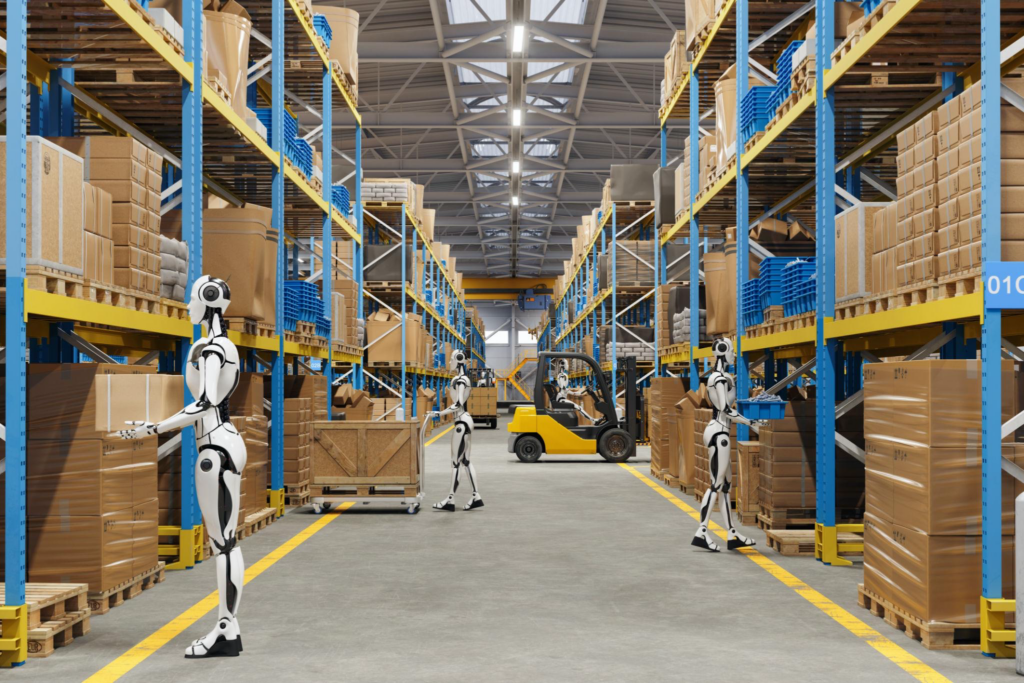
Amazon deploys at least ten different robot types across its network. Some facilities use more. Others use fewer. Construction continues behind closed-off sections, signalling deeper automation ahead.
The logic is simple.
Robots excel where rules are fixed. Warehouse layouts are stable. Tasks are repeatable. Objects look the same. Lighting stays controlled.
In these environments, robots increase speed and reduce the risk of injury. They also reduce labour costs.
Amazon acknowledges the direction openly.
CEO Andy Jassy tells employees that AI adoption will reduce the company’s corporate workforce in the coming years. Internal documents reportedly outline plans to automate up to 75% of operations by 2027. Amazon disputes the framing but not the ambition.
We’re in a period of transition.
Jobs Do Change, Even If Robots Do Not Fully Replace Humans
Amazon’s leadership long insisted robots would not eliminate jobs. In 2022, Tye Brady argued that robots create new roles rather than destroy existing ones. He pointed to millions of jobs added alongside robotics investments.
That claim remains partly true.
Robots create demand for maintenance, programming, and systems oversight. Workers cross-train in robot repair. Human resource systems shift toward AI-driven automation. Workers interact with software instead of people.
Yet job anxiety grows.
Warehouse workers describe fewer human HR staff. Automated systems handle scheduling and disputes. AI manages performance metrics. Workers feel monitored and replaceable.
Champions say we are no longer in science fiction, but in process optimisation. The result is likely to be still disruptive.
Domestic Robots’ New Problems
Let’s contrast warehouses with homes. Homes are chaos.
Every kitchen differs. Every cupboard has a different handle. Floors are cluttered. Pets act unpredictably. Children add variables hourly.
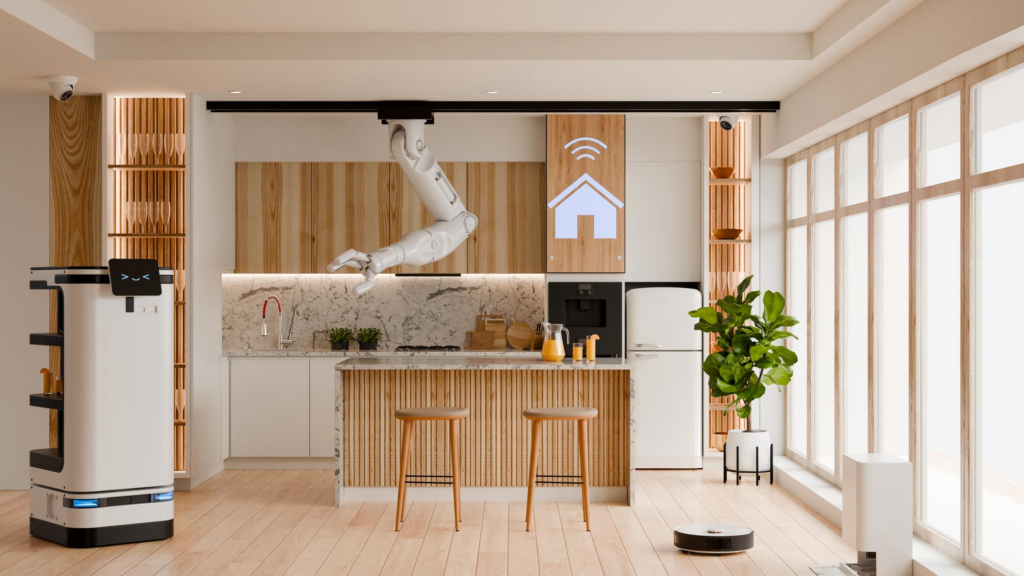
Robots struggle here.
Companies such as Tangible AI, 1X, Weave Robotics, Sunday AI, and Physical Intelligence are racing to build domestic robots. These machines water plants, fold laundry, tidy rooms, and carry fragile objects. Sometimes. Slowly. Often with help.
Many impressive demos hide a secret. Human operators remain in the loop.
Eggie, a robot from Tangible AI, performs household tasks but relies on remote human control. NEO, from 1X, mixes autonomous action with human assistance. Operators wear VR headsets to guide movements when the robot gets confused.
This hybrid approach trains the machines. It also exposes limits. Genuine autonomy is rare.
Cost, Patience Limit Household Adoption
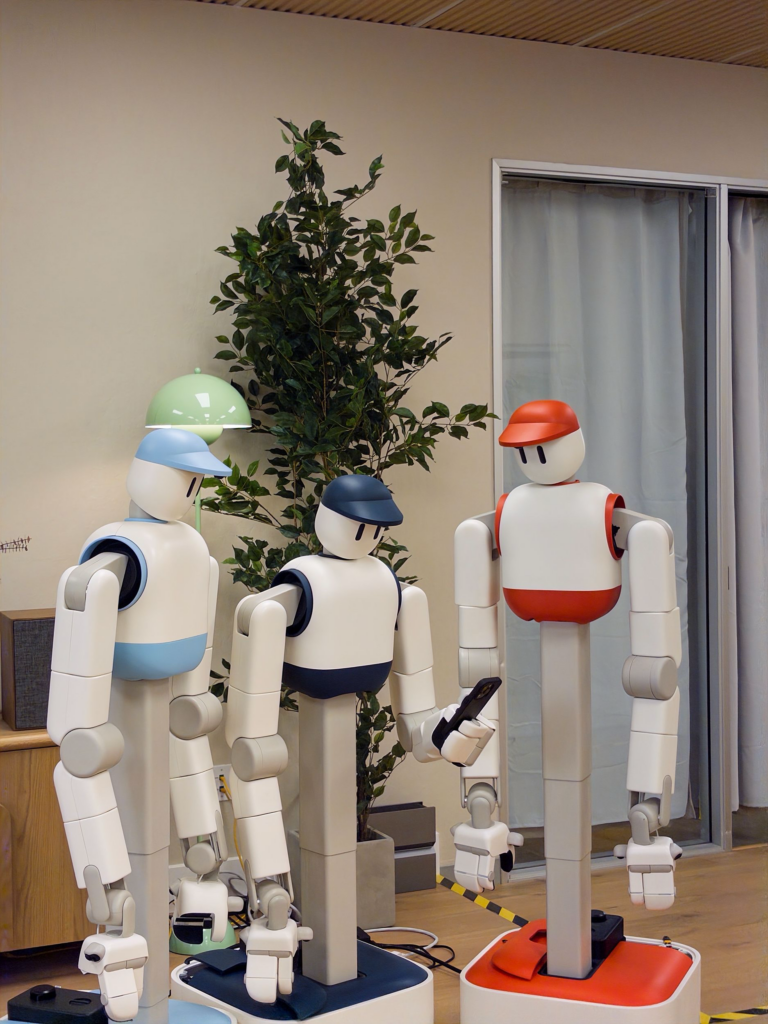
Even when domestic robots work, they cost a fortune.
NEO carries a price tag of around $20,000, or roughly $500 per month. That places it far beyond mass adoption. Early buyers need patience, money, and comfort with privacy trade-offs.
Founders acknowledge this reality.
Bernt Børnich, CEO of 1X, describes NEO as useful but imperfect. He admits human intervention still plays a role. Data collection drives improvement. Deployment accelerates learning.
The message stays consistent. Robots improve through exposure, not theory.
Data Fuels Progress, Not Intelligence Alone
Domestic robots face a data problem.
AI models learn from examples. Chatbots ingest billions of words. Robots must learn from physical interaction. That means touching objects, failing, correcting, and repeating.
Companies adopt creative solutions.
Sunday AI develops sensor-equipped gloves. Humans wear them while performing chores. The system captures real-world data from hundreds of homes. That data trains robots faster.
Weave Robotics deploys stationary laundry-folding robots across San Francisco laundromats. They fold shirts in about 90 seconds and gather continuous feedback. They get faster.
The integration works because it narrows the problem.
Folding laundry is easier than running a household.
The Humanoid Dream Is Expensive, Fragile
Some companies chase humanoid robots that walk, balance, and interact like people.
That dream attracts attention and investment. It also carries risk.
Humanoid robots require advanced balance, dexterity, and perception. They break easily. They cost more to repair and struggle in cluttered spaces.
The International Federation of Robotics estimates that it may take 20 years for domestic robots to be truly useful and widely accepted.
China pushes hard into humanoids. Government warnings caution against a potential bubble. Too much hype may outrun reality.
History suggests caution. Technologies mature unevenly. Expectations overshoot capability. Markets correct.
The Real, Quiet Transformation
The robot takeover narrative misses the point. Robots do not replace humans everywhere. They replace specific tasks.
Warehouses automate first. Factories follow. Hospitals adopt robots for logistics, not diagnosis. Homes adopt narrow tools before general helpers.
This pattern repeats across history.
Electricity did not instantly transform society. It spread through factories, then homes, then cities. Computers followed the same path.
Robots follow that path. They reshape work before reshaping life.
What Humans Still Do Best
Despite progress, humans retain key advantages.
Humans adapt quickly. They understand context and solve ambiguous problems. They recover gracefully from failure.
Robots still struggle with flexibility. A robot that spills water stops. A human wipes it up and continues. That gap matters. So does empathy.
Domestic spaces demand trust. People hesitate to invite machines into private lives. Cameras, microphones, and remote operators raise concerns.
Trust moves more slowly than technology.
So, Is a Robot Takeover Imminent?
No. What is imminent is task automation. What follows is job redesign. What lingers is uncertainty.
Robots will not rule the world. They will reorganise it.
They will handle repetitive labour and support ageing populations. Robots will reduce injury in dangerous jobs. They will reshape skill demand.
The new additions will also introduct friction. The future looks less like a takeover and more like coexistence.
TF Summary: What’s Next
Robots already dominate structured environments like warehouses. They struggle in homes where chaos rules. Domestic robots are advancing but still rely on human assistance, are costly, and have limited autonomy. Data collection, not intelligence alone, drives progress.
MY FORECAST: Robots expand quietly into logistics, care support, and narrow household tasks through 2030. Full domestic autonomy stays distant. The real disruption comes from task automation, not humanoid rebellion. Humans remain firmly in the loop.
— Text-to-Speech (TTS) provided by gspeech | TechFyle