


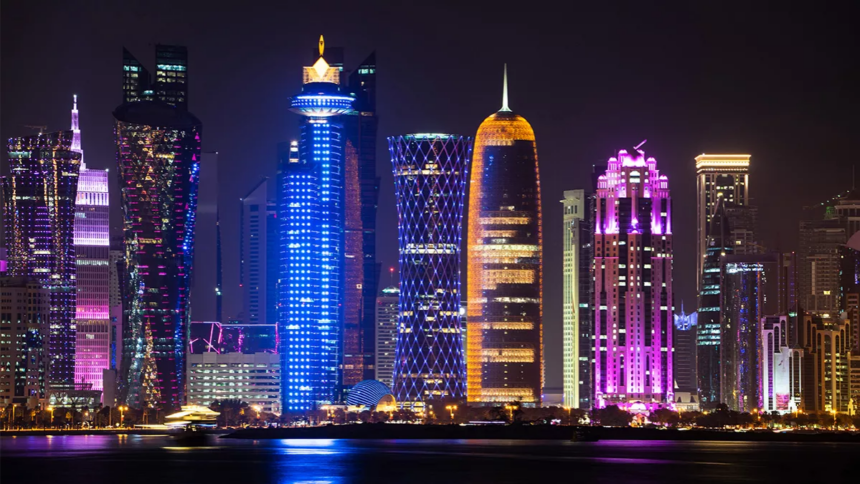
30,000 people, millions in capital, and a message: tech power flows through Doha.
Web Summit Qatar is a fixture, not a fly-by-night operation.
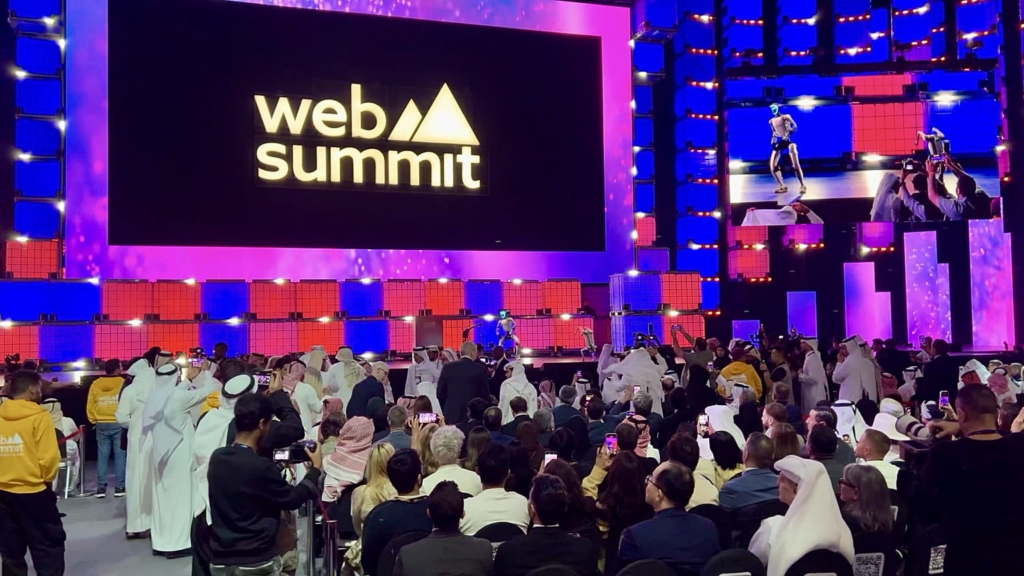
In 2026, the event drew more than 30,000 attendees to Doha. Founders, investors, policymakers, artists, and engineers fill the halls. Startups pitched nonstop as capital scouts loomed. Conversations stretched from artificial intelligence to quantum research to the creator economy.
Web Summit Qatar now proves it can do two things at once. It attracts global attention. It converts that attention into real funding, partnerships, and long-term commitments.
Beyond the associated hype, there was a measurable impact.
What’s Happening & Why This Matters
A Permanent Tech Eye Towards the Gulf
Day one alone was confirmation.
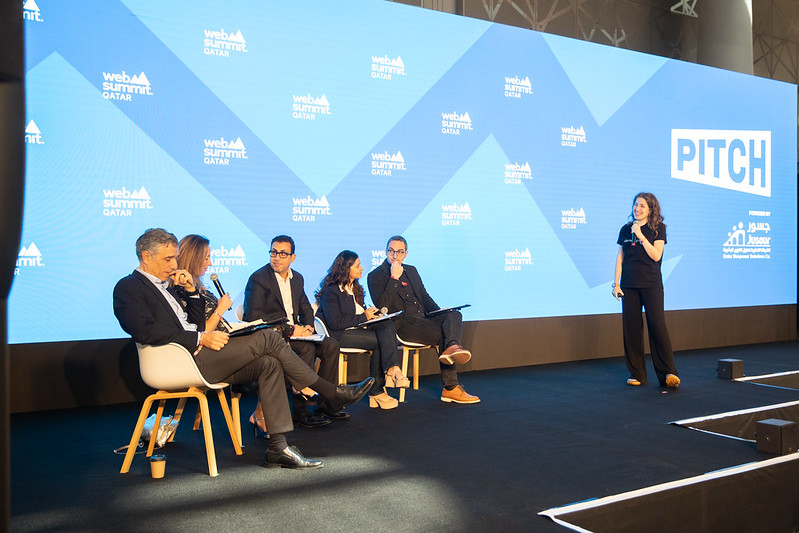
More than 1,600 startups participate — about 85% travel from outside Qatar. Nearly 1,000 investors attend, including well-known global funds such as Amino Capital, Greycroft, and 500 Global. Over 840 international journalists covered the event.
Those numbers place Web Summit Qatar among the world’s top-tier tech gatherings.
For the week, Doha sat at a crossroads between Europe, Asia, and Africa. It offers capital, infrastructure, and political stability. Governments in the region openly court technology investment. Energy access and land availability support large-scale compute ambitions.
In short, the region offers what AI needs next.
That reality pulls people in.
Investment outcomes show the summit converts buzz into money
Attendance alone does not define success. Funding does.
Since Web Summit Qatar 2025, 69 startups from the summit’s Startup Programme have raised a combined $205 million. AI and machine learning lead the way, accounting for $125 million. Data and analytics follow with $41 million. Fintech attracts $26 million.
Those figures matter because they show investor conviction.
Money flows toward applied AI, data infrastructure, and automation. Investors back tools that move from demo to deployment. Robotics and education-focused AI gain attention because they touch daily life.
Beyond startup-only numbers, the broader picture grows even larger.
Companies attending Web Summit Qatar, including startups, speakers, and partners, raised more than $28 billion over the past year. Collectively, participants represent over $463 billion in lifetime funding.
Scale transforms the summit into a deal hub rather than a showcase.
Practical AI Dominates the Conversation
Artificial intelligence remains the headline topic. Yet the tone shifts.
Speakers spoke less about distant futures. They discussed shipping products, scaling infrastructure, and managing risk.
One example comes from Daria Albrecht, founder of Friendsphere. She explained how her company uses AI to help micro-sellers reach local markets and improve their online visibility.
That story lands because it is grounded. AI helps small businesses compete. It supports livelihoods. It solves real friction.
This theme repeats across the floor.
Founders focus on workflow tools, robotics for education, and AI systems embedded into ordinary devices. The message stays consistent. Technology works best when it feels personal and valuable.
Industrial Europe Turns Up Big in Doha
One of the clearest cues came from Germany.
Germany brings its largest delegation ever to Web Summit Qatar. More than 200 startups, investors, and decision-makers attend under a unified pavilion.
Oliver Owcza, the German Ambassador to Qatar, frames the moment clearly. He says Germany feels “very happy to have a strong German representation” and highlights partnerships with the German Mittelstand and multiple federal states.
Christoph Ahlhaus, President of the German Mittelstand BVMW, goes further. “Doha today is the place to be,” he says. He calls the cooperation between Germany and Qatar “a real win-win situation.”
The pavilion spans AI, cybersecurity, deep tech, and industrial innovation. The focus moves beyond visibility toward market entry and long-term collaboration.
That matters because it shows traditional industrial economies now treat the Gulf as a serious innovation partner.
Luma AI Ramps Up Its Global Expansion
Few stories capture the summit’s momentum better than Luma AI.
Fueled by a $900 million funding round led by Saudi AI firm HUMAIN, Luma is ramping up its expansion efforts. The company grew from about 30 employees to more than 160 in a year. It opened offices in London and Seattle.
CEO Amit Jain speaks openly about growth. “Startups that don’t grow shouldn’t exist,” he says.
Luma builds multimodal intelligence across text, audio, video, and images. Its video generation platform, Dream Machine, attracted one million users in four days. The company later launched Ray3, a reasoning video model that pushes generative AI.

Infrastructure is the next bottleneck.
To meet compute demand, Luma partners with HUMAIN on Project Halo, a large-scale AI infrastructure initiative expected to reach two gigawatts of capacity by the early 2030s. The project involves NVIDIA and AMD.
Jain calls it “one of the largest infrastructure build-ups that we know of.”
This story highlights why Doha matters. The region offers energy, land, and capital at scale. AI infrastructure needs all three.
Culture, Representation are in the AI Conversation
Luma’s expansion also highlights a more subtle issue.
Jain points out that AI systems learn from what they see. When cultures lack representation in training data, they risk disappearing from the digital record. He warns that history now lives online, not in archaeology.
To address that gap, Luma works with partners in Saudi Arabia to build what Jain calls the world’s first Arabic world model.
As AI-generated content becomes cheaper and more widespread, cultural visibility becomes a strategic concern. Web Summit Qatar brings that issue to the forefront.
Chips, Robots, and the Hardware Backbone of Innovation
While AI captures attention, hardware quietly powers it all.
Max Mirgoli, EVP at imec, reminds attendees that semiconductors underpin modern life. “If you open up your phone, if you open up any appliance these days, you will see chips,” he says.
He explains how semiconductors drive the renaissance in computing and communication. They now enable AI at scale.
Robotics startups echo the same theme. Yavuzalp Özcan of NCT Robotics explains how his company builds robots to support children with homework and learning. He describes robots as companions, not machines.
The central idea: Technology is not in labs. It lives in homes, schools, and pockets.
TF Summary: What’s Next
Web Summit Qatar draws massive attendance and converts attention into real investment. AI, robotics, and infrastructure dominated. Companies planned to scale by leveraging regional capital and energy advantages.
MY FORECAST: Web Summit Qatar cements its place as a permanent global tech hub, driven by growing attendance and increased capital. The region is critical for AI infrastructure, cultural representation, and applied innovation. Doha, the host city, is becoming a tech power centre.
— Text-to-Speech (TTS) provided by gspeech | TechFyle