


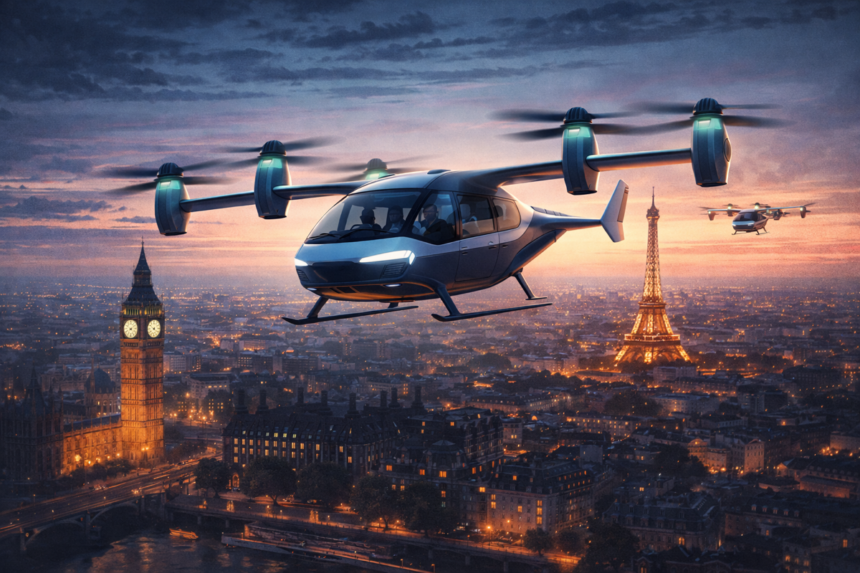
Europe set a decisive, yet ambitious objective. New petrol and diesel cars would end by 2035. That certainty now wobbles. Policymakers soften the target. Carmakers push back. Consumers hesitate. At the same time, a very different idea is gaining attention. Electric air taxis promise to lift travel off crowded roads. The timing feels deliberate. The question is unavoidable.
What’s Happening & Why This Matters
Europe Pulls Back on the 2035 Combustion Ban
The European Commission revised its approach to phasing out combustion engines. The original plan demanded a full ban on new petrol and diesel cars by 2035. The updated proposal allows a carve-out. 10% of new vehicles may still rely on combustion engines or plug-in hybrids. Automakers call the exception pragmatic. Environmental groups see a retreat.
Cars and vans account for roughly fifteen percent of Europe’s greenhouse gas output. That makes transport policy central to climate goals. The rollback caves to political pressure from multiple industries and voters. It also exposes a more in-depth issue. Electrification on roads is progressing far slower than projected. Charging networks vary by country. Costs remain high. Demand is cooling in key markets.
As one environmental advocate warns, easing long-term targets sends a message. Commitments can bend once they start to hurt.
EV Progress Slows on the Ground
Battery electric vehicles still cut lifetime emissions. Manufacturing them costs more carbon upfront. Over time, they pollute less than petrol cars. That math is still sound. The problem lies elsewhere — grid capacity constraints. Charging access frustrates drivers. Price parity is uneven. Automakers are rethinking timelines and investments.
A slowdown creates a vacuum. If ground transport stalls, alternatives gain oxygen.
The Rise of Electric Air Taxis
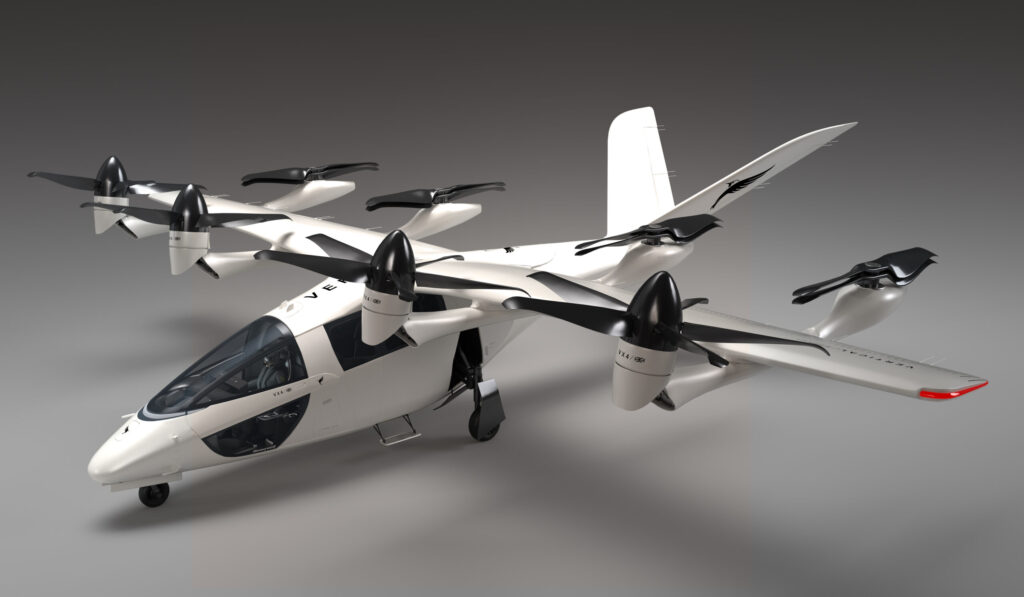
But there is light on the horizon. Electric vertical take-off and landing aircraft, known as eVTOLs, pitch a clean escape from gridlock. Instead of widening roads, they rise above them. Companies like Vertical Aerospace are learning into this vision — hard. Their latest aircraft targets short hops, airport transfers, and dense city corridors.
VA’s pitch is bold but simple. With urban mobility stagnating, airspace is underused. Electric propulsion cuts noise and emissions compared to helicopters. Automation lowers pilot workload. Developers claim fares may rival premium ride-hailing trips.
Vertical’s engineers see eVTOLs as unlocking a “third dimension” of transport. The aircraft reaches speeds near 241 kmph (150 mph). Range targets hover around 160 km (100 miles). That covers most metro-to-airport routes.
Skepticism Still Flies Close
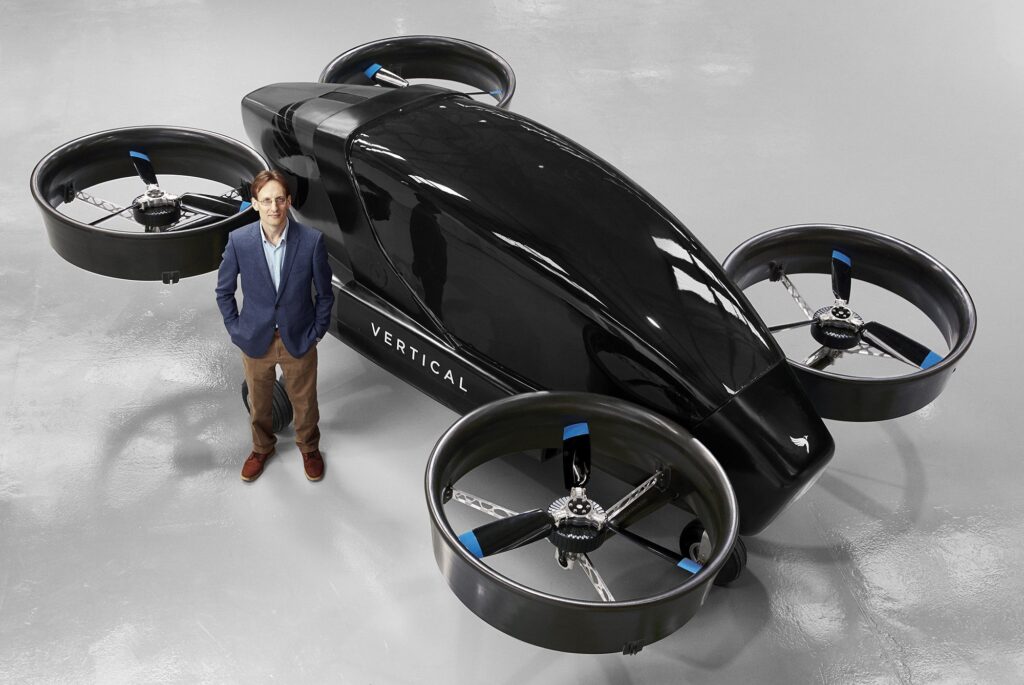
Aviation analysts are cautious. Vertical flight costs money. Always has. Aircraft prices reach several million dollars. Maintenance is a complicating factor. Regulations proceed slowly. Critics warn that the economics resemble helicopters more than buses.
One industry analyst puts it bluntly. Vertical flight looks exciting. It rarely scales cheaply.
Yet airlines already placed early VA orders. Cities are dabbling with pilot programs. Even regulators are drafting new airspace rules. There is still momentum even amidst doubt.
Timing Matters
Europe’s hesitation on road electrification creates space for experimentation elsewhere. If the car policy loses clarity, urban planners hunt for other wins. EV air taxis promise visibility. They symbolize innovation. They shift the debate from compromise to possibility.
This does not mean air taxis replace cars. It means they may complement stalled ground solutions. Short flights reduce congestion pressure. They serve premium routes first. Over time, costs may fall.
TF Summary: What’s Next
Europe’s softened combustion ban exposes a reality. Transport decarbonization remains politically fragile. Electric cars alone do not solve congestion, cost, or infrastructure gaps. As ground strategies stall, attention drifts upward.
MY FORECAST: EV air taxis move from concept to limited reality within some European cities. They serve airports and business corridors first, but remain expensive. They gain acceptance faster than expected. While not a cure-all, they become a visible symbol of what transport innovation still looks like when policy falters.
— Text-to-Speech (TTS) provided by gspeech