



Archer’s Pitch Flies into Miami’s Airspace
Miami spent the past few years chasing crypto, courting billionaires, and imagining fleets of robotaxis gliding through the sun-bleached sprawl. Instead, something else arrived first: electric air-taxis.
Archer Aviation stepped onto the stage and told Miami to look up rather than wait for ground-based automation that never quite materialized. The company rolled out a plan that mixes futuristic mobility, real estate deals, vertiport construction, and a healthy dose of Miami-grade optimism.
The proposal brought excitement and skepticism in equal measure. It introduced a network that spans Miami, Boca Raton, Fort Lauderdale, and West Palm Beach, yet left out a crucial detail: when regular people can actually fly. Even so, the vision created an undeniable gravitational pull. Miami loves a bold idea — especially one that promises a fast escape from traffic that feels almost mythological in its cruelty.
What’s Happening & Why This Matters
Archer Aviation unveiled a new electric vertical takeoff and landing network covering South Florida’s busiest corridors. The company signed development partners, including Related Ross and others, to build new vertiports in Miami’s Little Haiti and West Palm Beach. Existing helipads near Hard Rock Stadium and the Apogee Golf Club in Palm Beach are slated for relocation in the conversion pipeline.
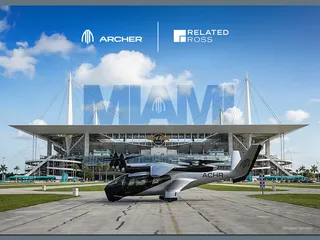
Archer describes the project as a mobility layer that integrates Miami International, Fort Lauderdale-Hollywood, and Palm Beach International, plus five smaller airports. The idea: hop over clogged interstates and arrive in minutes, not hours.
Miami Mayor Francis Suarez, a longtime evangelist for futuristic tech, praised the plan:
“We’re a city that attracts visionaries, embraces breakthrough technology, and turns bold ideas into real impact.”
Suarez loves dramatic promises, and this project fits his style.
The Vision’s Reality Checks
Archer’s announcement arrived heavy on infrastructure buzzwords and light on timeline clarity. The Midnight aircraft — a four-passenger, battery-electric eVTOL — is still awaiting FAA type certification. Archer began that process in 2022 and says the finish line is in sight, but certification processes for new aircraft often stretch from 5 to 9 years.
The Wall Street Journal reported that service “could begin next year,” yet nearly every aviation expert raises an eyebrow at that assessment. Miami traffic is bad, but getting FAA approvals is even harder.
There’s also a legal storm cloud:
Joby Aviation filed a lawsuit alleging Archer recruited an executive to steal trade secrets and derail an exclusive deal with a property developer. Archer denied the claims.
Meanwhile, Archer continues burning cash while scaling ambition. It recorded a $130 million net loss on $45 million in Q3 2025 income and still announced expansion into Saudi Arabia, the UAE, Los Angeles for the 2028 Summer Olympics, and Manhattan airport corridors. The Manhattan and Chicago plans, announced years earlier with United Airlines, have yet to launch.
Why Miami, Why Now?
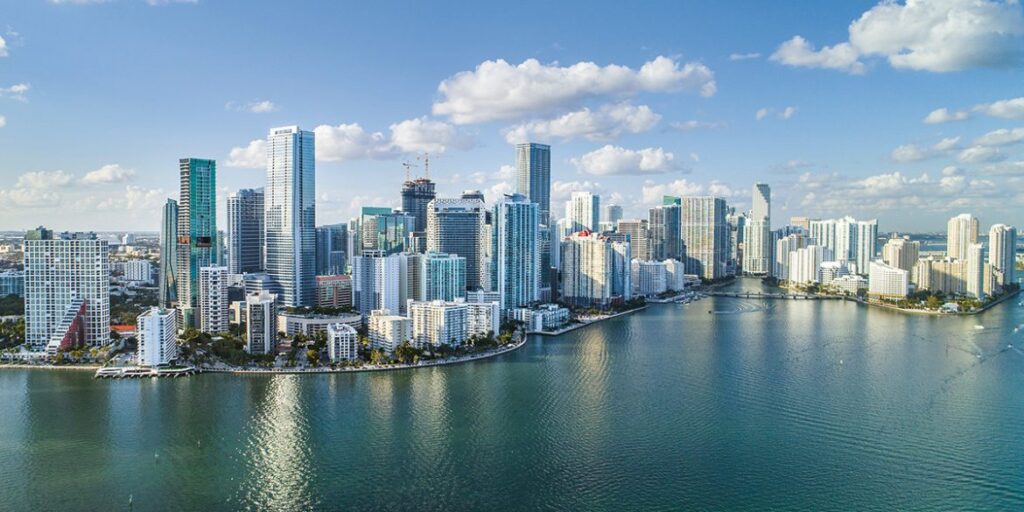
Miami remains a prime laboratory for air-mobility experiments. The traffic is brutal, the public transportation options are thin, and the region’s density pushes commuters to seek alternatives. A 30-minute eVTOL hop from Miami to West Palm Beach reportedly targets a fare around $200 — expensive, but competitive with the Uber Black crowd who pay for saved minutes.
Miami also loves spectacle. Air taxis deliver spectacle by the ton.
TF Summary: What’s Next
Miami is now in a waiting period. The vertiport deals are real. The ambition is bold. The aircraft certification is the bottleneck. Archer believes its vision turns “sci-fi mobility” into routine transportation. Yet the project hinges on regulatory success and technical readiness beyond the public’s control.
MY FORECAST: Archer’s Miami plan turns into a multiyear rollout, not a near-term launch. Ground infrastructure may rise first, followed by limited demonstration flights. Commercial routes come later, with pricing that targets high earners until scaling pushes down costs. Miami, however, is central to the air-mobility race — and a North American testbed for urban flight.
— Text-to-Speech (TTS) provided by gspeech