


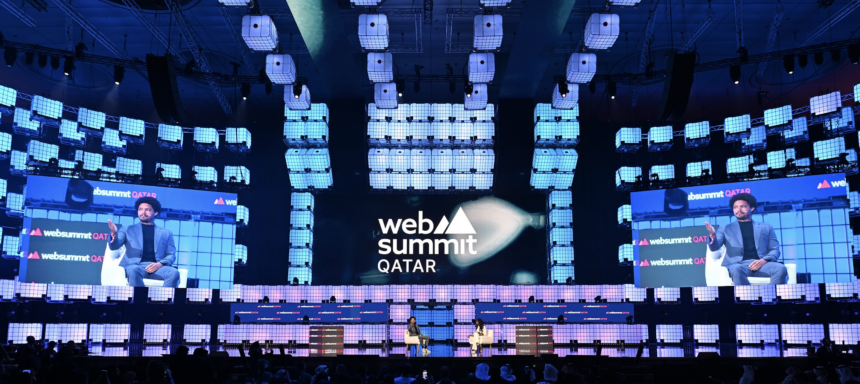
AI, startups, creators, and wearables collide in Doha as tech culture turns more practical and more human.
Web Summit Qatar 2026 does not feel like a single conference. It feels like a moving city of ideas.
More than 30,000 people gathered in Doha. Startups are pitching nonstop while investors roam like talent scouts. Journalists track every buzzy, noteworthy tidbit. Conversations swing from AI chips to quantum research to creator tools in a matter of minutes.
This year’s summit offers a different vibe. The tech world isn’t so dreamy. It’s about operational products and services. People talk about shipping, trust, and what actually works.
The buzz is real with sharp lessons. And Web Summit 2026 continues to reinforce the same theme: technology touches everything. Work. Health. Creativity. Politics. Daily life.
Permalinks (deep links):
Web Summit: https://websummit.com/
Web Summit Qatar:
Qatar Government: https://www.gco.gov.qa/en/
Oura Ring:
WHOOP: https://www.whoop.com/
Euronews Next: https://www.euronews.com/next
TechFyle: https://techfyle.com/
What’s Happening & Why This Matters
Doha: A Global Tech Crossroads
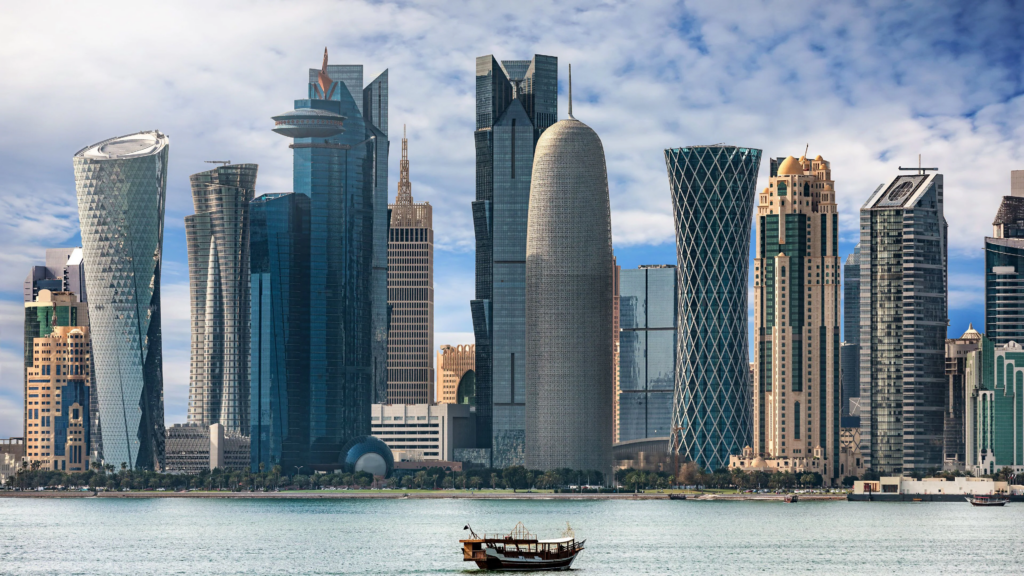
Web Summit Qatar is scale… grand scale. The event hosts more than 1,600 startups. About 85% come from outside Qatar. Nearly 1,000 investors attend, including leading global funds like Amino Capital, Greycroft, and 500 Global. The mixture creates collisions and instant opportunities.
A founder meets capital in the hallway. Policymakers hear pitches. A journalist finds a new trend. Doha is a live marketplace for the next wave of products.
The topics cover the entire frontier. Speakers debate artificial intelligence, chip competition, tech geopolitics, quantum breakthroughs, and the creator economy. More than 840 international journalists cover the summit.
So Web Summit 2026 is more than a stage. It is an ecosystem snapshot showing where money flows. Web Summit showcases what founders build and what governments want next.
Startup Reality: Founders Focus on Practical Problems
The strongest startup energy this year feels grounded. One founder, Daria Albrecht of Friendsphere, uses AI to help micro sellers reach local markets and gain visibility online. That is not science fiction, but actualized commerce.
Today, AI is progressing from “wow demos” into everyday tools for people and businesses. That is where adoption is growing fastest. Days 2 and 3 maintained that theme.
Krista Ambaine, founder of Busy Tag, explains her device for open offices. Busy Tag signals availability status. It also indicates whether meeting rooms are occupied or available.
Again, simple. Useful. Clear.
This is what Web Summit teaches in 2026. Startups win when they address human conditions, not when they chase abstract disruptions.
Creativity on the Main Stage: music and tech merge
Web Summit Qatar also hit a cultural touchstone. Technology is remaking the arts.
American singer Aloe Blacc discussed how new tools are transforming live performance. He spoke about instruments that respond to physical movement. Artists no longer need to touch keys or pads. The performance is energy-driven.
Blacc explained it thusly: “Tech lets musicians experiment in ways we couldn’t before… and it opens up a whole new world of creativity on stage.”
That quote captures the creator economy’s new dynamic.
Creators build with AI. Musicians perform with sensors. Artists treat software like an instrument. They are embracing more and more each day.
The boundary between engineer and performer keeps dissolving. That is one of the summit’s clearest lessons.
Technology: Changing Power and Economics
Not every conversation is upbeat, though. Some speakers press deeper into politics and economics. Former Greek finance minister Yanis Varoufakis delivered a provocative line: “Capitalism has already ended and we don’t even know it.”
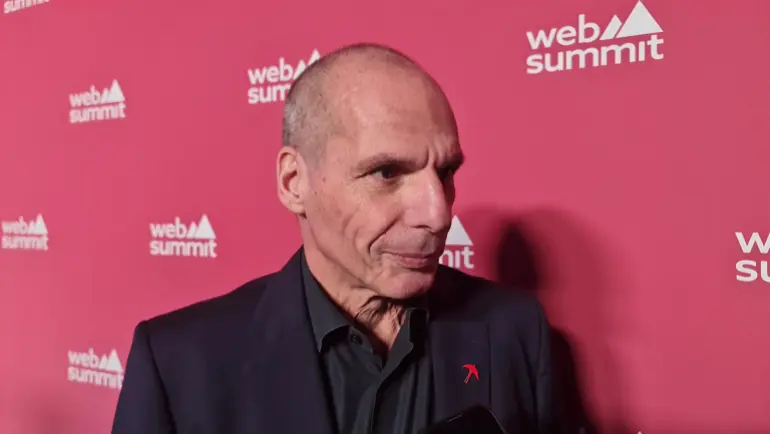
That is classic Varoufakis. Sharp. Dramatic. Intentionally unsettling. His point aligns with the greater mood.
Tech restructures markets faster than laws can respond. AI changes labour. Platforms change speech. Chips change geopolitics.
So Web Summit is not only about products. It is about systems. The summit is a place where founders and policymakers wrestle with the same question: Who controls the future infrastructure?
Germany: Industrial Europe Shows in Force
One of the most striking national signals comes from Germany. Germany brings its largest delegation ever. More than 200 startups, investors, and decision-makers are participating.
German Ambassador Oliver Owcza expressed excitement about the strong representation. He notes partnerships with the Mittelstand and multiple federal states.
Christoph Ahlhaus, President of the German Mittelstand BVMW, calls Doha “the place to be.” He cites the cooperation between Germany and Qatar “a real win-win situation.”
Europe’s industrial core wants a seat in the next tech era. AI is not limited to Silicon Valley stories. It is a manufacturing story, a logistics story, and, evermore so, a sovereignty story.
Germany’s pavilion spans AI, cybersecurity, deep tech, and industrial innovation. Web Summit is a bridge between legacy industries and new software.
Wearables and health: the quiet revolution on your finger
One of the most practical future signals comes from health technology.
Oura Ring CEO Tom Hale explains how wearables unlock constant monitoring. He calls biometric wearables powerful because “your health changes all the time.”
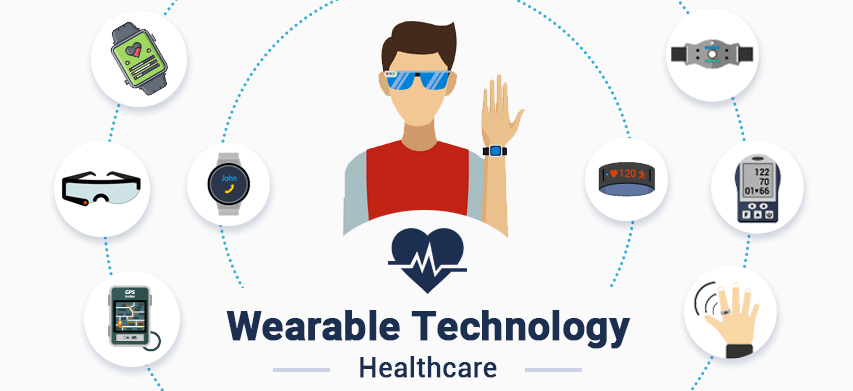
Oura begins with sleep tracking. Hale calls sleep a “Trojan horse.” If people wear the ring at night, the device can observe the body at rest and generate long-term insights.
Oura now tracks stress, recovery, metabolic health, women’s cycles, and more. The ring sits between wellness and clinical use. It is not classified as a medical device, yet it appears in over 200 studies.
The next frontier is blood pressure.
Hale says blood pressure is the “silent killer.” Oura is running an extensive study with about 100,000 users to test accuracy against arm cuffs.
That is huge. It signals wearables moving closer to real preventive medicine.
AI plays a key role. Hale explains that users do not want raw numbers; they want meaning. He says, “They don’t want the data, they want the insight.”
This is where AI is quietly transformational. Generative models translate biometric streams into simple guidance. They turn “metrics” into “understanding.”
That is one of the summit’s most human lessons. Tech succeeds when it reduces confusion, not when it increases complexity.
TF Summary: What’s Next
Web Summit Qatar 2026 shows tech becoming more grounded. Startups focus on practical tools. Creators blend music with sensors. Wearables push deeper into health prediction. Investors and governments treat Doha as a serious innovation crossroads.
MY FORECAST: Web Summit 2027 will lean even further into applied AI, health monitoring, and creative tooling. The winners stop chasing hype cycles. They build trust, usability, and measurable outcomes. Tech becomes less experimental. It becomes infrastructure.
— Text-to-Speech (TTS) provided by gspeech | TechFyle