


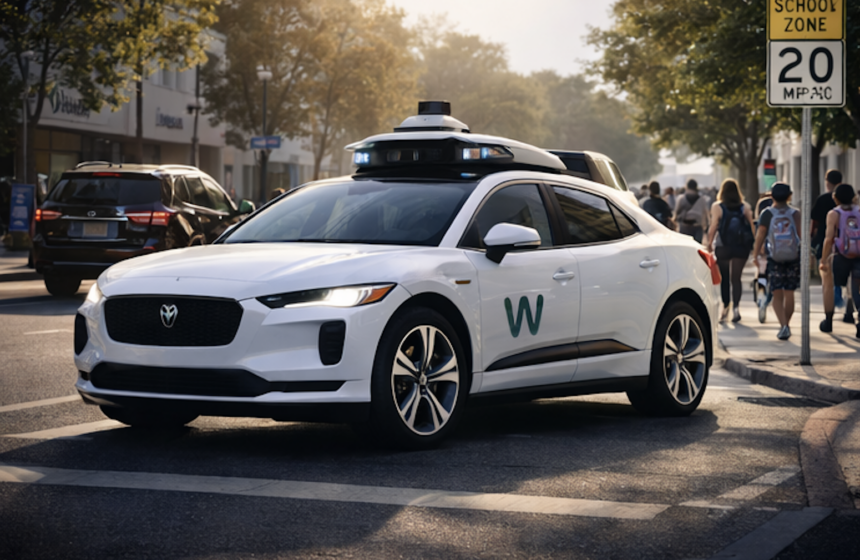
A real-world safety test of autonomous driving occurred near the most unpredictable place on Earth: a school zone.
A self-driving car is supposed to reduce human error. That is the pitch and promise — the billion-dollar bet behind robotaxis.
This week, that promise ran into a very human moment.
A Waymo robotaxi struck a child near a school in California. The child suffered minor injuries. The incident triggers fresh questions about how autonomous vehicles behave in the one environment no algorithm fully controls: kids, traffic, and school chaos.
Waymo reports the vehicle deployed its brakes quickly. Regulators are reviewing the case, which does not alleviate parents’ worries.
The real issue is bigger than one crash: Do robotaxis truly belong near schools, yet?
What’s Happening & Why This Matters
Waymo Confirms the Incident Near a Santa Monica School
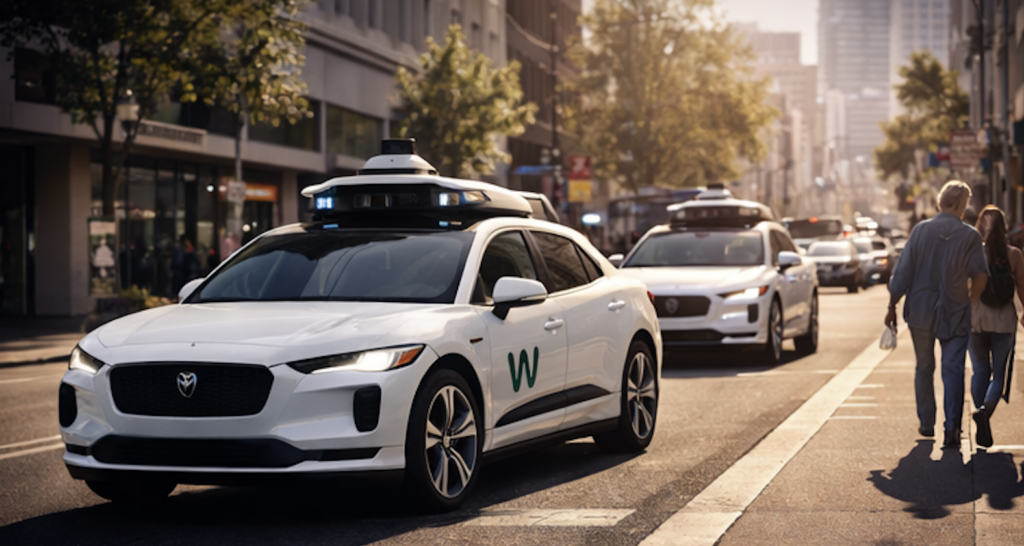
Waymo, the autonomous driving unit under Alphabet (Google’s parent company), confirms that one of its robotaxis hit a child near a school zone in Santa Monica.
The driverless tech company states that the child stepped into the vehicle’s path from behind a stopped SUV. Waymo says its system detected the pedestrian instantly. The car braked hard, but contact still happened.
Waymo explains the incident in a statement similar to past safety disclosures:
Our technology immediately detected the pedestrian and began braking before impact.”
Because detection alone does not equal prevention. School zones demand perfection. Real life does not always cooperate.
The incident is among the most emotionally charged scenarios for autonomous driving: children crossing streets unpredictably.
Why School Zones Break Every Driving Model
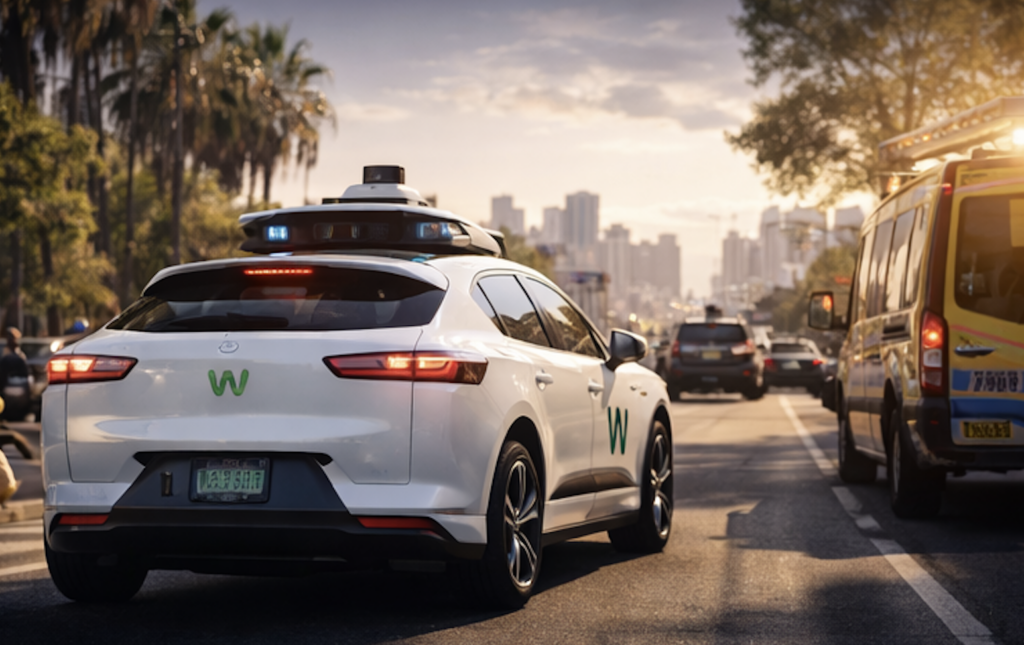
Robotaxis perform well in structured environments.
They handle:
- predictable lanes
- mapped intersections
- controlled traffic patterns
- repeatable behaviors
But school zones contain none of that. Children are unpredictable. They appear suddenly. Run. Hesitate. They reverse direction.
Even human drivers struggle. Autonomous systems rely on probabilistic prediction. That works until behavior is non-uniform and chaotic.
A former U.S. traffic safety advisor once summarized the challenge: “Driving is easy until humans behave like humans.”
That is the core problem here. Robotaxis must operate safely not only in average conditions but also in worst-case scenarios. A school zone is, by definition, a worst-case scenario.
Regulators Watch Closely as Robotaxis Expand
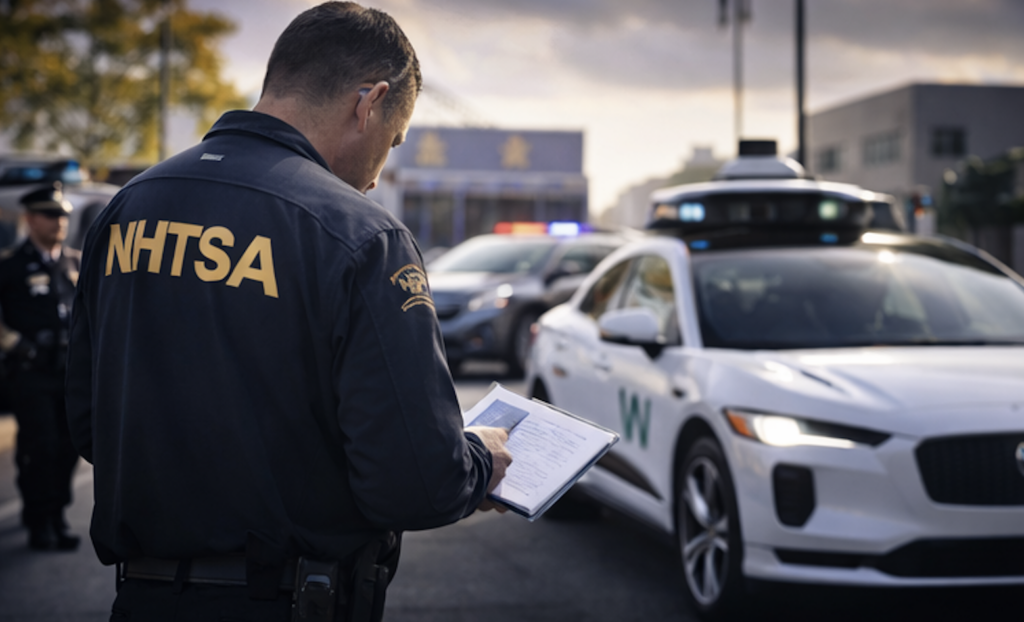
The National Highway Traffic Safety Administration (NHTSA) monitors autonomous vehicle incidents across the U.S. Each crash becomes part of a growing regulatory record.
Waymo already operates commercial robotaxi services in:
- Phoenix
- San Francisco
- Los Angeles
- Austin
Expansion continues. Cities want innovation. Companies want scale. But regulators want proof.
NHTSA has repeatedly stated that autonomous developers must meet the same safety expectations as human drivers.
The agency often reminds companies: “Safety is not optional. It is the baseline.”
That is why this case matters. A minor injury near a school is the leading policy issue.
The Public Trust Problem Gets Bigger Every Time
Robotaxi adoption depends on trust. Not just technical performance. Not just regulatory approval.
Trust. A single incident involving a child damages confidence far beyond the injury itself.
Parents do not think in terms of braking distance. They think in terms of risk.
Communities ask simple questions:
- Why is a driverless car near a school?
- Who takes responsibility?
- What happens next time?
Autonomous vehicle companies often respond with statistics. But the public reacts with emotion. And emotion drives policy faster than data.
Waymo’s Safety Record Faces a New Kind of Scrutiny
Waymo regularly publishes safety claims. The company argues its vehicles reduce serious crashes compared to human drivers. It enables millions of autonomous miles to be driven. Accidents result in fewer injuries.
But safety perception changes when the victim is a child. This is not a highway fender-bender, but a school zone incident. Even if Waymo performs correctly, society still asks:
Is “correct” good enough? Or does autonomy require a higher bar?
The Industry: Edge Cases Are the Whole Game
Autonomous driving fails or succeeds on edge cases. Edge cases include:
- children darting between cars,
- cyclists swerving unexpectedly,
- emergency vehicles approaching from blind spots,
- pedestrians ignoring crosswalk rules.
Robotaxis handle routine well. But the world is not routine.
School zones produce edge cases every hour. That is why critics argue autonomy remains incomplete. A transportation researcher recently said:
The hardest part is not driving. The hardest part is predicting humans.”
This incident proves that again.
What This Means for Cities Considering Robotaxi Growth
Many cities now face pressure to allow autonomous fleets. Companies promise:
- fewer crashes
- lower emissions
- cheaper mobility
- fewer drunk driving deaths
Those benefits are real possibilities. But incidents like this force local leaders to slow down. Expect cities to demand:
- stronger school-zone restrictions
- clearer reporting requirements
- better pedestrian protection systems
- faster regulatory response
Robotaxis may still expand. But school zones become the first political battlefield.
AI Mobility Meets Human Reality
Robotaxis represent AI in physical space. That is different from chatbots. A chatbot mistake annoys you. A robotaxi mistake injures someone. That is why autonomous mobility carries heavier consequences.
The incident is part of a broader question: How quickly should we deploy AI in the real world?
The technology moves quickly. Society moves carefully. The gap between those speeds creates tension.
TF Summary: What’s Next
Waymo’s robotaxi hitting a child near a California school becomes a defining moment for autonomous driving in public spaces. The child suffers minor injuries, but the impact on trust and regulation feels much larger. School zones test robotaxis more brutally than any mapped downtown street.
MY FORECAST: Robotaxi growth continues, but regulators tighten rules around children, schools, and pedestrian unpredictability. The next phase of autonomy focuses less on expansion and more on demonstrating safety in the hardest environments first.
— Text-to-Speech (TTS) provided by gspeech | TechFyle