



The global AI race took another sharper turn. Leading U.S. labs are accusing several Chinese competitors of siphoning off model capabilities at an industrial scale. The claims centre on a controversial technique called distillation — essentially teaching a smaller AI by interrogating a more advanced one thousands or millions of times. Critics say that it crosses from clever engineering into outright intellectual property theft. Supporters say it is just how the field advances.

Either way, the stakes stretch far beyond corporate rivalry. Governments see frontier AI as strategic infrastructure. Companies see billions in investment at stake. Users see faster progress — or potentially fewer safeguards. The debate blends economics, national security, and ethics into one volatile mix.
What’s Happening & Why This Matters
Allegations Of Large-Scale Capability Extraction
U.S. developer Anthropic claims several Chinese labs — including DeepSeek, MiniMax, and Moonshot AI — conducted extensive campaigns to extract capabilities from its Claude chatbot. According to the company, the operations relied on tens of thousands of fake accounts and millions of interactions.
Anthropic reported roughly 16 million exchanges with Claude tied to these efforts, along with more than 24,000 fraudulent accounts. The goal, it says, was to train competing models using outputs generated by Claude without building equivalent capabilities independently.
In plain language, imagine a student who never attends class but records every answer from the smartest kid in school and memorises them. You end up with a convincing performance without the original work.
Anthropic warns the campaigns are “growing in intensity and sophistication,” suggesting the incidents are not isolated; they are part of a systemic approach.
Distillation: Legit Tool Or Shortcut?
Distillation itself is not inherently shady. It is a common method in AI research. Labs often distil their own models to create smaller, cheaper versions that run on consumer hardware. The controversy arises when one company distils another company’s proprietary model without permission.
According to Anthropic, the accused firms allegedly focused heavily on advanced areas such as coding, reasoning, and tool use — domains where Claude excels. By extracting performance patterns rather than training from scratch, competitors could leapfrog development timelines.
Rival U.S. firm OpenAI has presented similar concerns. It previously warned lawmakers that foreign labs were attempting to “free-ride” on American innovation. The implication is clear: the cost advantage gained through distillation could undermine companies investing billions in computing and research.
DeepSeek’s rise intensified the quarrel. Its low-cost model reportedly matched top systems with far fewer resources, challenging assumptions that cutting-edge AI requires enormous computing power.
National Security Concerns
The issue escalates quickly when governments enter the conversation. Anthropic argues that models built through unauthorised distillation may lack safety guardrails — the built-in restrictions that prevent harmful uses.

Without those constraints, such systems might assist cyberattacks, misinformation campaigns, or even dangerous scientific applications. The company also warns that authoritarian governments could deploy advanced AI for surveillance or offensive operations.
The practices transform a corporate dispute into a geopolitical one. AI capabilities increasingly resemble nuclear technology or encryption systems — dual-use tools with civilian benefits and military implications.
U.S. export controls already restrict advanced chips from reaching certain countries. Anthropic argues the alleged distillation efforts validate those policies rather than undermine them. According to its analysis, high-performance models still depend on access to cutting-edge hardware, even when knowledge extraction accelerates development.
The Proxy Problem

Another wrinkle involves access restrictions. Claude is not officially available in China. Anthropic says the campaigns bypassed the limitation using proxy services that masked the origin of traffic.
That tactic mirrors patterns seen in other tech conflicts. When direct access is closed, determined actors find ways around the barrier. The internet treats borders as suggestions, not walls.
From a security standpoint, the choices allude to uncomfortable questions. If AI services can be accessed indirectly, enforcing national policies is far harder. It also complicates corporate compliance efforts, since companies may unknowingly interact with prohibited users.
Industry Calls For Coordinated Action
Anthropic states that no single company can address the issue alone. It calls for coordinated responses involving governments, industry groups, and research organisations.
Here is the reality. AI competition increasingly resembles an ecosystem problem rather than a single-firm challenge. Hardware suppliers, cloud providers, model developers, and regulators all influence outcomes.
Meanwhile, the accused companies have not publicly confirmed wrongdoing. Distillation resides in a grey zone between legitimate research and intellectual property misuse. Proving intent — especially across borders — is notoriously difficult.
Why The Timing Matters
The allegations come as global AI adoption is on the rise. Businesses are integrating AI into core operations. Governments are deploying it in defence and infrastructure. Consumers rely on it for daily tasks.
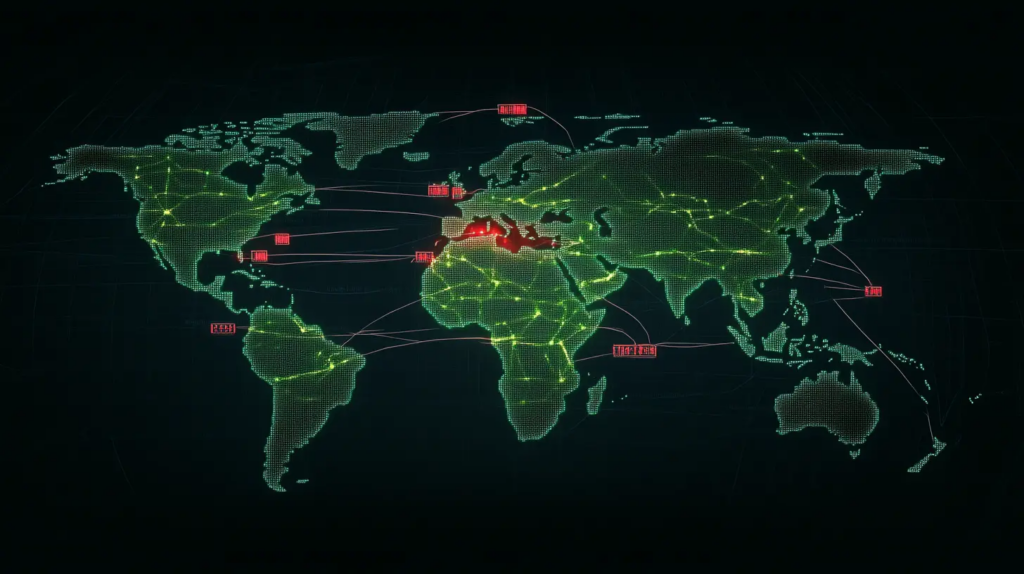
In this environment, leadership in AI grants economic power and strategic leverage. Losing that edge could alter global influence patterns for decades.
The situation further exposes a paradox. The same openness that fuels innovation makes protection difficult. Publishing research speeds up progress worldwide, including among competitors. Locking down knowledge slows collaboration but preserves advantage.
Think of it as trying to invent electricity while keeping the concept secret. Once discovered, the idea spreads inevitably.
TF Summary: What’s Next
Expect tighter controls, stronger monitoring, and louder rhetoric. U.S. labs will likely harden defences against automated scraping and proxy access. Governments may expand export rules or push for international agreements on AI development norms.
At the same time, technical innovation will continue. Distillation techniques are not going away. The real question is whether the industry can establish clear boundaries between acceptable reuse and theft. Until then, every breakthrough risks becoming a geopolitical flashpoint.
MY FORECAST: The AI competition will increasingly resemble an arms race disguised as a tech boom. Instead of a single decisive winner, we will see parallel ecosystems emerge — each with its own models, standards, and alliances. The world may not converge on a single dominant AI platform but instead fragment into competing digital spheres.
— Text-to-Speech (TTS) provided by gspeech | TechFyle