


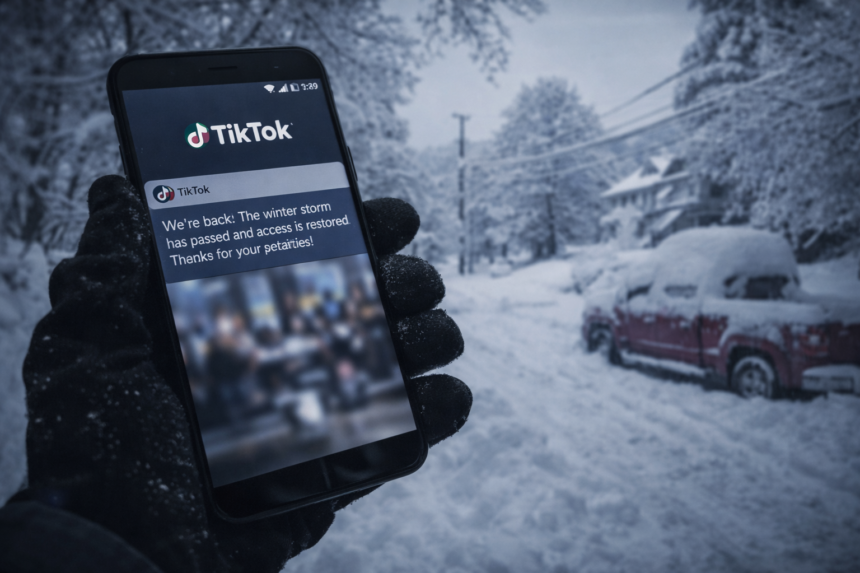
A data center outage breaks core features. TikTok restores service. Users are closely watching the new US setup.
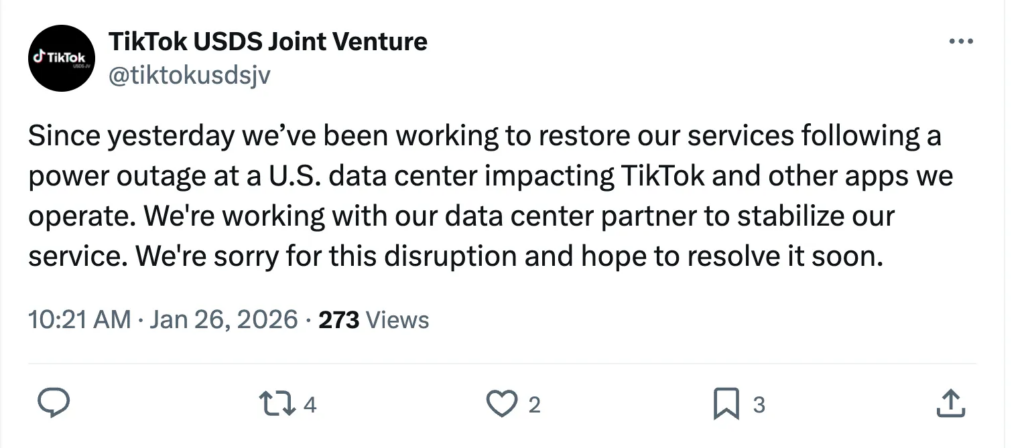
A winter storm slammed portions of the U.S., including network infrastructure. During the weather event, a critical U.S. data center lost power and TikTok users felt its absence.
Videos barely loaded. Uploads lagged. Even like and view counts vanished. The For You Page repeated clips. Some users blamed the algorithm. TikTok linked the mess to a data center outage tied to the inclement weather.
On Sunday, 01 February, TikTok’s new operating arm said the app’s service is back to normal. The statement also cited a primary U.S. data centre operated by Oracle. TikTok says teams are restoring systems and stabilising service.
What’s Happening & Why This Matters
USDS Restores Service After Oracle Data Center Outage
TikTok’s statement pins the disruption on winter weather. It says the storm “took down a primary U.S. data center site operated by Oracle.” TikTok says it restores the app “back to normal” at 5:15 p.m. ET on Sunday, 1 February.
That one line matters because it names the failure point. It also names the partner that runs the site. A “weather outage” sounds like fate. A “primary data center site” sounds like an architectural term. Architecture definition means there are choices.
TikTok says its teams work “around the clock with Oracle” to restore systems. That detail signals a hands-on recovery effort. It also signals a hard problem. The outage impacts “tens of thousands of servers.” TikTok uses those servers to run U.S. core features.
This type of incident often creates two battles. The first battle is power and hardware. The second battle is confidence. Users notice glitches right away. Creators notice metrics even faster. Brands and agencies also watch. If analytics wobble, revenue wobbles too.
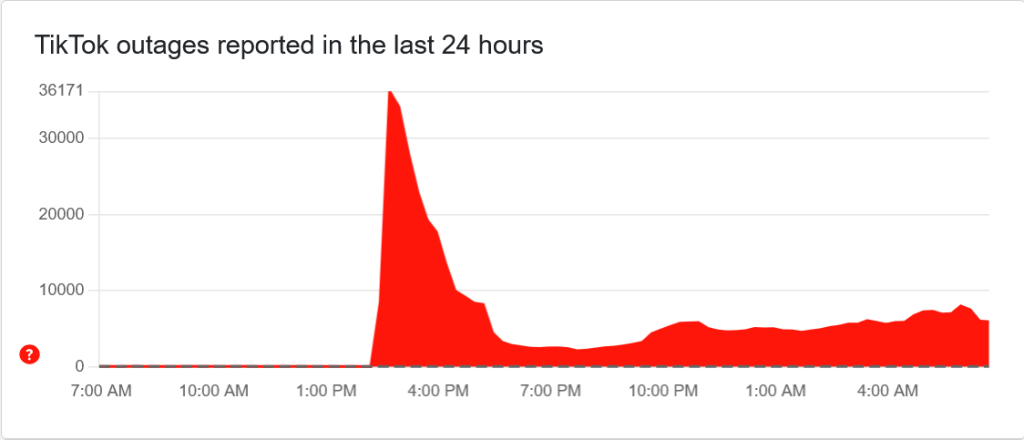
TikTok also points to external signals. It says Downdetector shows no current reports of disruption after restoration. That helps calm the room. It also gives the public a neutral reference point.
New U.S. Ownership Faces First Reliance Test
The timing stings. The file states that TikTok U.S. business is under a new ownership structure. A group of investors owns the US operation through a joint venture called TikTok USDS Joint Venture LLC. The investors include Silver Lake and Abu Dhabi-based MGX, plus Oracle.
This detail changes how people interpret a glitch.
Before the deal, users blamed “TikTok.” After the deal, users blame “the new owners.” That shift occurs even when the root cause is a power event. TikTok sees that dynamic in real time. The file notes that many users think the new owners manipulate the algorithm. TikTok later blamed a data center power outage.
The joint venture structure also carries a technical twist. The file states the venture has the right to access U.S. user data and to use the U.S. algorithm in Oracle’s cloud environment. That design increases political trust in U.S. data handling. It also concentrates on operational risk. If a “primary” site fails, users feel it fast.
An outage, therefore, is a systems test — of resilience, incident response, and communications, too.
The file points out that TikTok offers limited updates during restoration. Then it shares more details after the fix completes. That pattern frustrates users. It also fits how many reliability teams behave. Engineers fix first. Comms catch up later. That approach can backfire on a consumer platform.
Creators do not just want uptime. They want clarity. They also want reassurance about ranking behavior. When view counts disappear, people assume suppression. When the For You Page repeats, people assume the algorithm has changed. In reality, outages often break the measurement pipeline before they break the feed.
That is the weird truth of modern apps. “The algorithm” is not a single thing. It is a network of services, including caching, metrics, storage, and ranking systems. When a big chunk fails, the app can limp along in strange ways.
Trust, Moderation, and Competitors get a window
TikTok says full restoration takes days. That detail matters. A short outage hurts. A multi-day degradation hurts more. It changes creator behavior and user habits. It also gives rivals oxygen.
The file highlights one immediate effect. During the downtime, some users try an alternative app called UpScrolled. It briefly hits the number one spot on the U.S. App Store chart. That kind of spike often fades. Still, it proves a point. Distribution depends on reliability.
Then there is the policy layer. The file says Gavin Newsom launches a review after complaints about content suppression tied to anti-ICE posts.
That detail combines with the outage narrative in a messy way. People already suspect algorithm tampering. Then they see a political review. They connect dots. They create a story. The story spreads faster than the fix.
This is the core “why it matters” for TikTok’s new US structure.
Reliability problems now mix with governance questions. An outage triggers distrust. Distrust triggers scrutiny. Scrutiny triggers more public pressure. The platform then needs stronger transparency habits to break that loop.
TikTok also faces a simple math problem. Outages hit different groups in different ways.
Casual viewers feel annoyance. Power users feel anger. Creators feel risk. Brands feel uncertainty. Regulators feel an opportunity. Competitors feel momentum. Every minute of instability moves at least one of those groups.
This incident also teaches a practical lesson about cloud and “primary” sites. Weather events keep rising. Infrastructure teams already plan for this reality. Users do not care about your architecture diagram. They care about the scroll. So TiU.S.ok’s US operation now needs visible reliability wins. It needs redundancy. It needs a failover that feels boring.
Boring is the goal. Boring pays the bills.
TF Summary: What’s Next
TikTok restored US service after winter weather knocked out power at a pU.S.mary US data centre site run by Oracle. The outage breaks key features. It slowed downloads, disrupted metrics, and repeated videos. TikTok says teams worked nonstop to restore systems. Downdetector then indicated further disruption reports.
The real test begins. TikTok USDS needs cleaner incident updates and stronger redundancy to protect trust.
MY FORECAST: Tiktok’s U.S. owners invest in reliability and transparency. They treat uptime as a brand feature. They also face heightened scrutiny over moderation and ranking as more users attribute outages to “algorithm control.”
— Text-to-Speech (TTS) provided by gspeech | TechFyle