


Nuclear power has many enemies, but one of the nastiest has always been time. Software might change that.
Advanced nuclear power keeps promising cleaner electricity, steadier grids, and a way out of the power crunch. It still drags one heavy chain behind it: design time. Early-stage nuclear plant planning can swallow 18 months before crews even get close to pouring real concrete. TerraPower says it has found a way to compress that phase into 8 weeks by pairing its reactor work with a new AI-driven digital engineering platform.
That is a big claim, and it lands at the right moment. Electricity demand is rising fast. Data centres are hungry. AI infrastructure keeps gulping power. Grid planners want cleaner capacity that runs day and night. Nuclear firms keep saying they can help, but the sector has struggled with delay, cost drift, and endless planning loops. Cut a year or more out of site engineering and the whole conversation starts sounding less theoretical.
What’s Happening & Why This Matters
TerraPower Is Attacking One of Nuclear’s Slowest Bottlenecks
TerraPower and SoftServe say a new AI-powered design platform can shrink early site-specific engineering work from 18 months to 8 weeks. That is the headline, and it deserves attention because early-stage plant design has long been a quiet killer in nuclear development.
This phase includes geotechnical review, site layout planning, grid interconnection study, and cross-team coordination. None of that sounds glamorous. It still decides whether a project moves quickly or gets buried under paperwork and rework. Nuclear projects often slow down long before the public sees cranes, steel, or turbines. They lose time in engineering loops, approvals, layout conflicts, and late-discovered constraints.
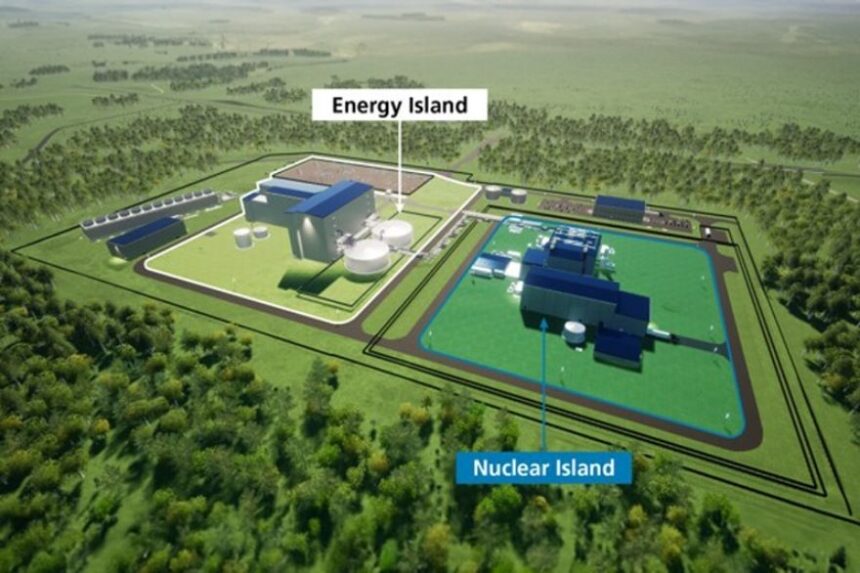
The new platform uses NVIDIA Omniverse and digital-twin methods to model thousands of variables at once. TerraPower says that lets engineers see conflicts much earlier and compare site options in real time. Instead of pushing work through long sequential teams and slow manual review, the system gives designers a faster way to test, reject, and refine plant layouts before construction money gets committed.
That matters because speed in nuclear is not only convenience. Speed shapes cost, political confidence, and whether a plant ever gets built.
The Real Promise Is Not AI Hype. It Is Earlier Visibility.
The smartest part of this story is not the AI buzzword. It is the operational benefit behind it. TerraPower and SoftServe are pitching better visibility, not magic.
The platform combines plant layouts with terrain constraints, exclusion zones, cost trade-offs, and grid connections in a shared 3D environment. That means engineers can see problems earlier instead of discovering them after one team has already committed to a layout that another team cannot support.
Dennis Loktinov of SoftServe put the point clearly in the project announcement. Nuclear site engineering is expensive to get wrong. Until now, teams could not really see all the constraints before they were already committed. That sentence is dull in the best way. It describes the kind of practical failure that wrecks capital projects.

This is why the reported 18-month to 8-week cut hits hard. It is not only a matter of designers moving faster. It is a matter of reducing bad decisions earlier, before they harden into delays, redesigns, and budget pain. In infrastructure, one early blind spot can cost more than a year of neat presentations.
So yes, AI is part of the pitch. The deeper attraction is clearer planning, fewer late surprises, and a shorter path from concept to confident execution.
TerraPower’s Natrium Design Makes the Timing More Interesting
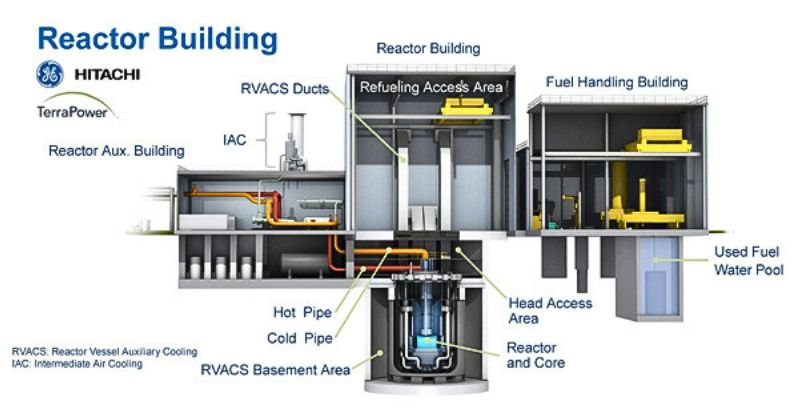
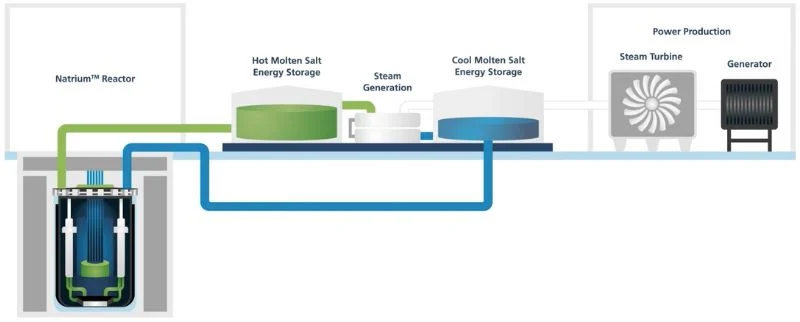
This platform is tailored for TerraPower’s Natrium system, which mixes a sodium-cooled fast reactor with energy storage. That design matters because TerraPower is not floating vague future ideas anymore. It already has a specific commercial project under way in Kemmerer, Wyoming.
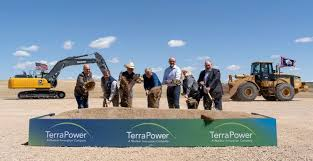
The U.S. Nuclear Regulatory Commission has approved construction for Kemmerer Unit 1, a 345-megawatt advanced reactor. Reporting says construction is expected to begin in the coming weeks, with operations targeted for the early 2030s. That gives the AI design platform more weight. It is not a lab toy searching for a mission. It sits next to a real project pipeline.
TerraPower says the broader Natrium architecture can scale from single-unit to quad-unit configurations delivering between 500 megawatts and 2 gigawatts of carbon-free power. That range matters because utilities are not only hunting for one heroic demonstration plant. They want repeatable systems that can fit different site conditions and grid needs.
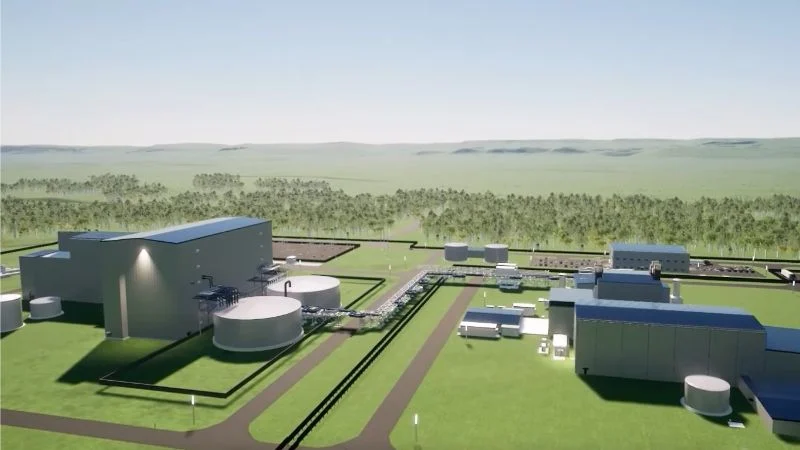
If design work gets faster while the reactor package stays modular enough to adapt, TerraPower gains a much stronger commercial story. It can stop sounding like a clean-energy aspiration and start sounding more like a buildable business.
That is where advanced nuclear has often stumbled. The engineering may impress. The deployment story has lagged. TerraPower is clearly trying to fix the second problem.
Nuclear’s Biggest Enemy Has Often Been Trust in the Schedule
Nuclear already has a reputation problem. People hear “nuclear project” and imagine cost overruns, missed deadlines, legal fights, and political panic. Some of that reputation is deserved. Some of it is inherited from large traditional projects with brutal complexity and poor discipline.
Either way, time has become one of the sector’s biggest credibility issues. Investors hate uncertainty. Regulators move carefully. Utilities do not enjoy decade-long suspense. Politicians love ribbon cuttings, not endless design meetings.
That is why compressing design time matters beyond engineering. It helps reduce the “time to trust the design,” as the project team described it. That phrase is important. Trust sits at the centre of every nuclear argument. Can the design work? Can it be licensed? Can it be built on budget? Can it integrate with the grid? Can the team prove that before the money panic begins?
If digital-twin systems make that trust easier to earn, advanced nuclear may get a better shot with investors, utilities, and policymakers. Nobody needs to pretend eight weeks solves every delay. It still changes the emotional shape of the project. Faster confidence often unlocks faster decisions.
And in nuclear, decisions have a habit of dragging harder than concrete.
AI Data Centre Demand Is Quietly Helping Nuclear’s Case
There is another reason this story lands well in 2026. AI is chewing through electricity at a stunning pace. Hyperscalers, chip firms, and data centre operators all want more steady power. Renewables matter. Batteries matter too. Yet companies hungry for around-the-clock electricity keep circling back to nuclear because the output is stable and carbon-free.
That does not mean every AI company is about to build a reactor beside its servers. It does mean the market is suddenly more willing to entertain advanced nuclear as part of the future power mix. When electricity demand spikes and carbon targets stay in place, old objections to nuclear lose some swagger.
So TerraPower’s timing is shrewd. It is offering a way to make nuclear feel more buildable just as the market is rediscovering why firm baseload-style power still matters. That makes the software story stronger. This is not AI for decoration. It is AI used to attack a bottleneck in a sector that suddenly has fresh strategic relevance.
The spicy point is obvious. AI may help create the energy crunch, and AI may now help design one answer to it.
The Hard Part Still Starts After the Design Phase
It is worth staying grounded. Cutting design time does not mean nuclear suddenly becomes easy. The platform can shorten engineering work. It does not erase licensing, procurement, construction risk, local politics, supply-chain pressure, or the brutal consequences of one bad weld at the wrong moment.
Advanced nuclear firms still have to prove they can build on time, commission safely, and operate economically. A cleaner design phase is a serious gain. It is still one piece of a long project chain.
Yet one piece can change a lot if it sits at the front. Early design delays tend to infect everything that follows. If teams can make smarter siting decisions faster and see conflicts before construction, downstream risk can shrink. Not disappear. Shrink.
That is enough to matter. Infrastructure projects do not need perfection to improve. They need fewer blind corners and less wasted time. TerraPower’s platform sounds like a tool for exactly that.
TF Summary: What’s Next
TerraPower and SoftServe say their new AI-driven digital-twin platform can cut nuclear plant design work from 18 months to 8 weeks. The system uses NVIDIA Omniverse to analyse site conditions, plant layouts, grid connections, terrain limits, and cost trade-offs in one shared environment. For advanced nuclear, that is not a cosmetic improvement. It attacks one of the slowest and most expensive early bottlenecks in the whole process.
MY FORECAST: This will not make nuclear easy, but it can make advanced nuclear feel far less sluggish and far more investable. Other reactor firms will chase similar tooling fast. Utilities and policymakers will pay attention if TerraPower can prove the speed gain on real projects, not only demos. The next big step is obvious: a faster design phase must lead to faster, cleaner construction. If that link holds, nuclear’s commercial story gets much stronger.
— Text-to-Speech (TTS) provided by gspeech | TechFyle