


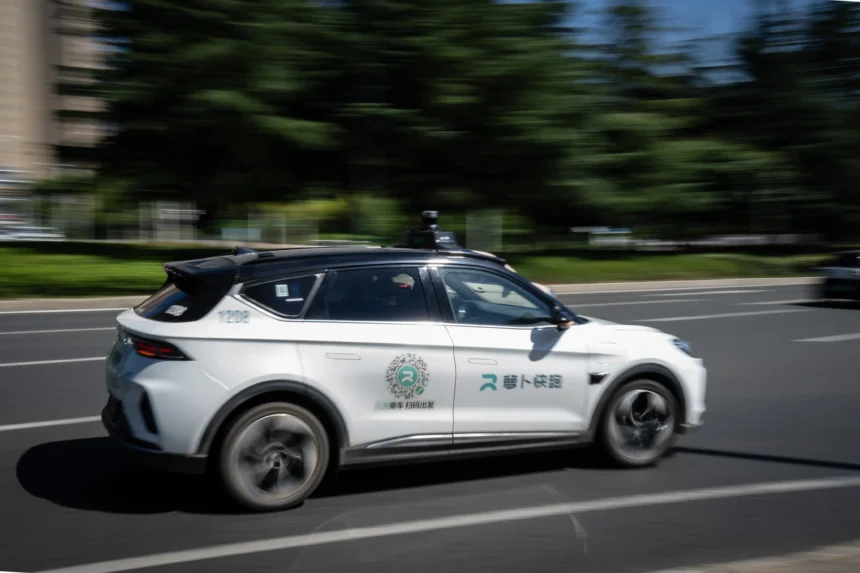
Baidu’s robotaxi travel hit a very public pothole, and the timing could not be worse for selling autonomy.
Baidu’s Apollo Go robotaxi network has suffered a serious outage in Wuhan, where more than 100 driverless cars reportedly stopped in traffic after what police described as a “system malfunction.” Passengers were left stranded in moving lanes, some for long stretches, while police and support staff tried to clear the mess. No injuries were reported. That part is fortunate. The optics are still rough.
Robotaxis are supposed to sell reliability. They promise fewer human errors, smoother traffic flow, and cleaner urban transport. Yet one software or systems failure can flip that promise in seconds. Instead of a neat display of future mobility, the public sees helpless passengers, stalled cars, blocked roads, and emergency response teams cleaning up after code. That is not a small branding bruise. It cuts into trust, and trust is the whole product.
What’s Happening & Why This Matters
Wuhan’s Outage Turned a City Into a Stress Test
Wuhan has been one of the biggest public stages for Apollo Go. Baidu has used the city to show how scaled robotaxi deployment can work in real urban traffic. That is why the outage landed so hard. This did not happen in a tiny trial zone hidden from daily life. It struck one of the most visible robotaxi markets in China.
Police said they began receiving reports late Tuesday evening, around 8:57 p.m., that Apollo Go cars were stopping in the middle of roads and refusing to move. A preliminary investigation pointed to a “system malfunction.” At least 100 vehicles were affected. Some cars stalled on busy roads. Others blocked intersections or high-speed routes. Police, traffic authorities, and Apollo Go staff were sent out to respond.
The failure was not isolated to one car or one route. It looked like a fleet-level event. A single autonomous car that freezes is a local headache. A large network of them freezing at once is a systems credibility problem.
Robotaxi companies love to talk about scale. Fine. Scale works both ways. A small bug in a small fleet is an annoyance. A small bug in a big fleet is city infrastructure drama.
The Safety Problem Was Being Stuck
No serious injuries were reported, which is the best line in the entire story. Yet the safety concern did not vanish because the metal did not fold. The danger came from where the vehicles stopped and how long passengers were left waiting.
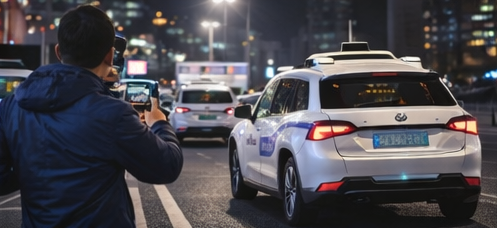
Some riders reportedly found themselves stranded in middle lanes or on elevated roads with fast-moving traffic on both sides. One passenger described seeing an in-car alert saying the driving system had malfunctioned and that staff would arrive in five minutes. When no one came quickly, the passenger used the SOS function, waited again, and eventually exited alone.
That is a terrible user experience. It is worse than inconvenient. A robotaxi passenger is not just a rider. In a failure case, that person is a trapped customer inside a machine built to remove human control. If the system fails in a bad location, the person may not know whether to sit tight, force an exit, or trust remote help that has not yet shown up.
That kind of uncertainty can poison public confidence fast. People will forgive a delay. They do not forgive feeling abandoned in live traffic by a car that was supposed to be smarter than a human driver.
Baidu’s Silence
At the time of the initial reporting, Baidu had not given a detailed public explanation of the cause. That silence is risky in a story like this. When a company offering autonomous transport does not move quickly with specifics, the vacuum fills with worst-case guesses.
Was it a cloud connectivity failure? A fleet-management software bug? A map synchronization error? A remote-operations breakdown? A bad update pushed too hastily? The public does not know. That uncertainty makes the event larger and scarier than it might be technically.
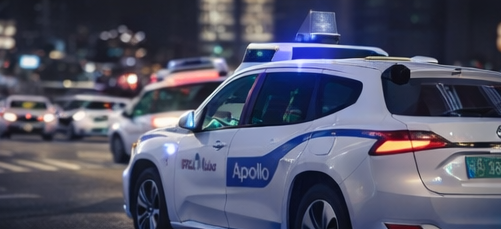
Autonomous vehicle companies still struggle here. They like to market smooth inevitability. They do not always communicate failure with equal speed and clarity. Yet the latter is how trust survives.
A robotaxi network is not a normal app. If a streaming app breaks, a viewer gets annoyed. If a robotaxi fleet freezes in live traffic, the company owes the public something sharper than vague reassurance.
The irony is brutal. A business built around removing driver error can still trip over system management. Humans were not the weak point here. The network was.
Apollo Go Is Growing and Under the Microscope
The outage occurred during a period of rapid expansion for Baidu’s autonomous driving effort. Apollo Go is already one of China’s largest robotaxi operators. The company has spread commercial operations across major Chinese cities and has extended overseas into markets such as Abu Dhabi and Dubai. It has even outlined expansion plans tied to Britain and Switzerland.
That wider growth gives Baidu real momentum. It raises the stakes for every failure. Once a company markets itself as a global-scale autonomous mobility player, each outage is more than a local story. Regulators abroad notice. Partners and rivals also notice. So do skeptical citizens who are already uneasy about letting software drive them through real streets.
The timing is particularly awkward because the wider robotaxi sector is still arguing that autonomous fleets are ready for heavier public use. Incidents like this hand ammunition to every critic who says the industry is scaling faster than its safety culture can keep pace.
It is one thing to tell the world you plan to deploy thousands of vehicles. It is another to explain why over a hundred cars in one city suddenly forgot how to keep going.
China’s Robotaxi Boom vs. Reliability
China has embraced robotaxi experimentation more aggressively than many markets, especially at city scale. That openness has helped companies like Baidu, Pony.ai, and WeRide champion commercial operations faster than many Western rivals. The country is one of the most important proving grounds for autonomous mobility.
Yet the event shows the same uncomfortable truth that shadows the whole sector. Reliability outweighs novelty.
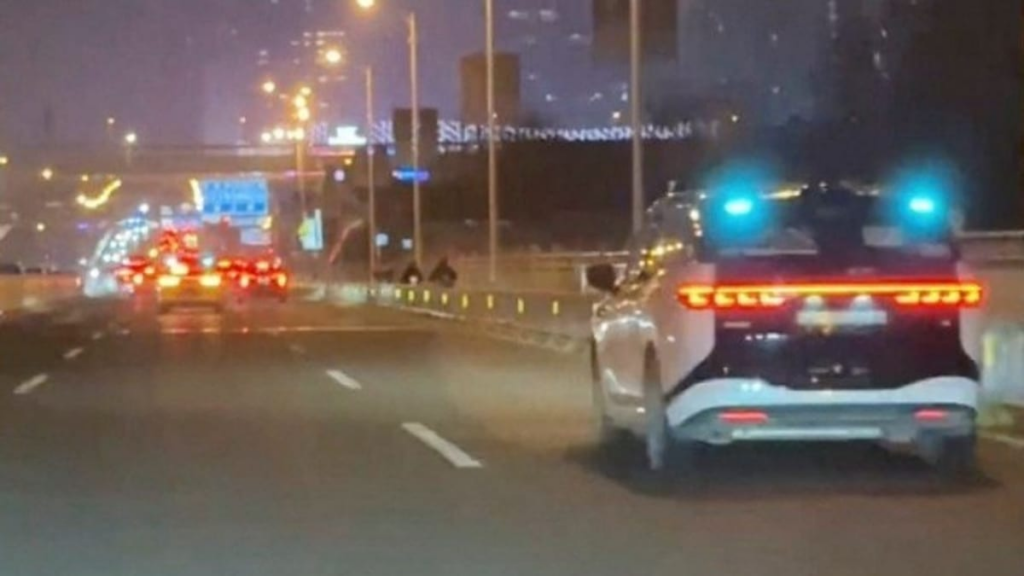
A robotaxi does not need to crash dramatically to trigger backlash. It only needs to stop in the wrong place at the wrong time. A network does not need a Hollywood cyberattack to fail publicly. It only needs one fleet-wide technical issue during peak use.
That is why the Wuhan event is heavier than a one-off roadside bug. It reminds everyone that autonomy is not about perception stacks, lidar, or route planning. It is about operations and their support systems. Autonomy is about fault tolerance. Fault tolerance happens when things go wrong, and whether passengers feel protected instead of discarded.
The robotaxi business sells magic. The public judges it by boring things like uptime, response time, and whether the doors open when panic starts to rise.
Pressing Forward Unless Regulators Do Not
One likely outcome is easy to predict. Baidu and other autonomy firms will say the industry must keep improving, not retreat. That argument is fair up to a point. Early aviation had failures. Early rail had failures. Complex transport systems often improve through public friction and uncomfortable lessons.
Yet regulators do not respond only to theory. They respond to visible incidents. A fleet-wide stoppage involving over 100 cars gives transport authorities a fresh reason to demand more reporting, more fail-safe layers, more remote support capacity, and clearer customer-protection rules.
The danger for the sector is cumulative. One outage can be absorbed. A pattern of outages, fires, construction-pit incidents, or pedestrian collisions creates a story bigger than any single company wants to carry.
Baidu will not be the only firm feeling that heat. Every robotaxi operator is working under the same shadow question: if a city hands you the roads, what happens when your network has a bad night?
That is where the industry still is fragile. The hype says autonomy is ready. The incidents keep insisting that readiness is still conditional.
TF Summary: What’s Next
Baidu’s Apollo Go outage in Wuhan has turned one of China’s flagship robotaxi markets into a cautionary case. More than 100 vehicles reportedly came to a stop after a “system malfunction,” leaving passengers stranded in live traffic and prompting police and support teams to intervene. No serious injuries were reported, but the event still cut straight to the core question hanging over robotaxis: Can the systems stay dependable when scaled?
MY FORECAST: Baidu will restore service, tighten diagnostics, and try to shift the narrative toward a “rare technical fault” rather than a “systemic weakness.” The bigger consequence will still linger. Regulators, partners, and the public will want stronger proof that robotaxi fleets can fail safely, recover fast, and protect passengers when autonomy stops being autonomous. Robotaxis are not being judged as clever prototypes anymore. They are being judged as transport infrastructure. That is a much harsher exam.
— Text-to-Speech (TTS) provided by gspeech | TechFyle