



A Los Angeles courtroom is testing whether Instagram and YouTube hook kids by design, not by accident.
The social media industry has spent years insisting that its platforms are tools. Neutral tools. Helpful tools. Tools that somehow keep downloading into children’s hands for hours at a time. The act shocked when parents, schools, and therapists started asking darker questions.
Now, a jury in Los Angeles is being asked to decide whether Meta and YouTube built products that are not only sticky but harmful to young users. The case centres on a young woman identified as KGM, who says she became hooked on YouTube at age six and Instagram at age nine, then developed depression, self-harm behaviours, suicidal thoughts, body dysmorphic disorder, and social phobia as her social media use intensified. Deliberations are beginning after a six-week trial.
The case matters far beyond one family. It is the first jury trial in a huge wave of litigation over the mental health impact of social platforms on young people. If the plaintiffs win, the verdict may financially hit Meta and YouTube, and it may also pressure them to change core product features that critics say are built to capture attention first and worry about consequences later.
What’s Happening & Why This Matters
The First Big Jury Test Begins
The case is the first-ever jury trial over the alleged harms of social media addiction, according to the reporting in the uploaded file. It also serves as the first in a consolidated group of cases against Meta, TikTok, YouTube, and Snap, representing more than 1,600 plaintiffs, including more than 350 families and 250 school districts. TikTok and Snap settled KGM’s specific lawsuit before trial.
The legal structure matters. KGM’s case is also the first of more than 20 bellwether trials planned over the next few years. The test cases are designed to show how juries react to the evidence and to help shape legal precedent for the rest of the litigation wave. The next bellwether trial is scheduled for July.
That means the courtroom drama is not only about one verdict. It is a preview of how future courts may treat claims that social platforms knowingly designed addictive systems for children and teens. If the jury sides with the plaintiff, lawyers around the country will treat that outcome like a starting gun. If the jury sides with the companies, the industry will still face a problem: the evidence is already out in the public, and it is ugly.
KGM’s Story Is the Case. Plaintiffs Send a Bigger Message
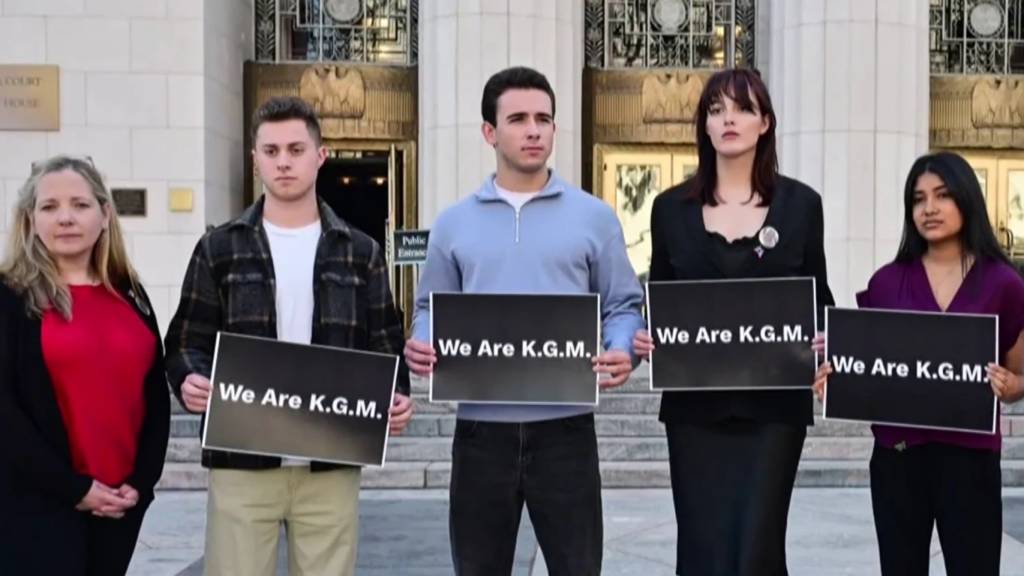
KGM testified that she got hooked on YouTube starting at age six and on Instagram at age nine. By age 10, she said she was depressed and engaging in self-harm. She told the court she experienced strained family and school relationships, suicidal thoughts, and cutting as a coping mechanism. When she was 13, her therapist diagnosed her with body dysmorphic disorder and social phobia, which KGM attributes to her use of Instagram and YouTube.

Her lawyers say her experience reflects what “tens of thousands” of young people have faced online and in offline life. That framing matters because the plaintiffs are not presenting this as a freak case. They are presenting it as a pattern. Their argument is that the platforms are built around an attention economy, where the product is not only content. The product captures focus, prolonged engagement, and repeated return behaviour. During closing arguments, plaintiffs’ attorney Mark Lanier asked, “How did they become such behemoths?” Then he answered his own question: “It’s the attention economy. They’re making money off capturing your attention.”
That quote cuts through the legal varnish. The plaintiffs are trying to show that social platforms are not compulsive by accident. They became massive because compulsive use is good business. In that story, teenage vulnerability is not a bug. It is a market condition.
The Trial Surfaced Brutal Internal Messages Publicly
One reason the case has drawn so much attention is the release of previously sealed internal documents and emails from inside Instagram and YouTube. According to the file, the materials suggest some employees viewed the platforms as addictive or doubted whether the companies were doing enough to protect young users.
One internal YouTube document from 2021 reportedly asked, “How are we measuring wellbeing?” and answered, “We’re not.” Another document described children under 13 as the fastest-growing internet audience worldwide and framed YouTube as a possible “digital babysitter” for kids as young as eight. One line in the material is especially grim: “[The] goal is not viewership, it’s viewer addiction.”
Meta’s internal material is no better. In one 2017 email, an employee reacted to the idea of targeting children under 13 by writing, “oh good, we’re going after <13 year olds now?” A colleague replied that “zuck has been talking about that for a while,” prompting the first employee to answer, “yeah it was gross the last time he mentioned it”. In a separate 2020 exchange, one Meta employee wrote, “oh my gosh yall IG is a drug”. A colleague replied, “Lol, I mean, all social media. We’re basically pushers.” The exchange continued by comparing social media’s reward patterns to gambling and saying reward tolerance can get so high that users “can’t feel reward anymore,” before ending with: “It’s kind of scary.”
Those lines are devastating because they do not sound like outside critics. They are insiders speaking candidly before they expected the world to read along. Jurors may forget expert jargon. They are much less likely to forget “we’re basically pushers.”
Meta and YouTube: The Platforms Are Not the Cause
Meta and YouTube deny wrongdoing. A YouTube spokesperson, José Castañeda, said the allegations are “simply not true” and insisted that providing young people with a “safer, healthier experience has always been core to our work”. A Meta spokesperson argued that KGM’s mental health problems came from a difficult home life and said the jury’s task is to decide whether those struggles would have existed without Instagram.
That defence is legally strategic. The companies do not only need to dispute harm in the abstract. They need to challenge causation. The jury must find both negligence and causation before damages can be imposed. That means the plaintiffs must do more than prove social media can be addictive or harmful in general. They must persuade jurors that the companies’ design choices contributed materially to KGM’s injuries.
This is the hinge of the case. Almost nobody in 2026 seriously argues that social media has no negative effect on some kids. The live question is legal accountability. How much of the harm belongs to the platform, and how much belongs to family history, mental health history, peer dynamics, or everything else swarming around adolescence? Meta and YouTube are betting the jury will hesitate on that question. The plaintiffs are betting the design evidence is strong enough to close the gap.
The Industry Forced Into the Open
One of the more revealing quotes in the file comes from Matthew Bergman, founder of the Social Media Victims Law Center and an attorney for the plaintiffs. He said, “Four years ago, when we started suing social media companies, nobody thought that we would ever get to this point.” He added that win or lose, victims have already won because “social media companies can and will be held accountable before a fair and impartial jury.”
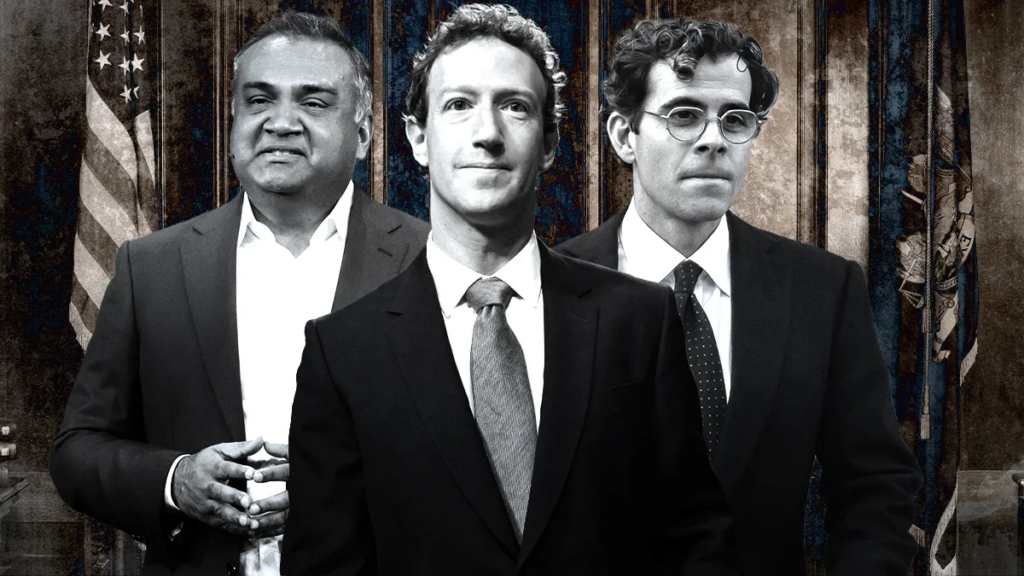
That captures the significance well. The trial has already done something rare: it has forced a major social media harm debate out of policy papers and into a courtroom where executives, internal documents, and product choices face public scrutiny. Witnesses included Mark Zuckerberg, Adam Mosseri, Cristos Goodrow, KGM, her therapist, whistleblowers, and experts on addiction and social media.
And because the case focused on features such as infinite scroll, video autoplay, like buttons, and beauty filters, it also translated a wide cultural argument into concrete product mechanics. The plaintiffs say the features help keep users on the apps, feed validation-seeking behaviour, and distort young people’s self-image. That is a much harder allegation for the companies to wave away than the usual hand-wringing about “screen time.”
The social question is unavoidable: if platforms knew enough internally to describe themselves in drug and gambling language, what duties did they owe to young users, and when did they start failing those duties?
TF Summary: What’s Next
The jury in Los Angeles is weighing the first major verdict in a social media addiction trial built around claims that Meta and YouTube designed products that hook young users and contribute to mental health harm. The plaintiffs have pushed hard on internal documents, addictive design features, and KGM’s testimony about self-harm, depression, suicidal thoughts, and diagnoses tied to her years of social media use. Meta and YouTube are countering that the platforms are safe for the vast majority of young people and that KGM’s struggles came from a more difficult personal background rather than platform design alone.
MY FORECAST: Whatever the jury decides, this trial will shape the next wave of social media litigation. If the plaintiff wins, expect tougher settlement pressure, louder calls for youth design reform, and far more aggressive scrutiny of features tied to endless engagement. If the companies win, the legal fight will continue because the internal evidence is public, and other bellwether cases are already lined up. The old argument that the platforms are passive pipes is weaker every time another internal message reads like a confession.
— Text-to-Speech (TTS) provided by gspeech | TechFyle