



AI stumbled into two areas that usually make people tense: the prescription pad and the newsroom.
Artificial intelligence keeps barging into corners of public life where the stakes are not trivial. In Utah, a state-approved pilot is letting an AI system help renew certain psychiatric medications for eligible patients. In a separate move, OpenAI has bought the fast-rising tech talk show TBPN, adding a media channel to a company already trying to steer the global AI conversation.
Neither development is minor. One story touches mental health, clinical judgment, and patient safety. The other drags OpenAI deeper into influence, messaging, and media power. Put the pair together, and a blunt theme appears. AI firms are not only building tools anymore. They are moving closer to medicine, public narrative, and the institutions that shape trust.
What’s Happening & Why This Matters
Utah Approves AI-Backed Psychiatric Refills
Utah has approved a one-year pilot that lets an AI chatbot participate in renewals for a limited set of psychiatric medications. The program runs through Legion Health using technology from Doctronic, under state oversight tied to Utah’s AI regulatory sandbox. The system is aimed at maintenance refills rather than first-time treatment.
That distinction carries weight. The pilot does not hand a chatbot free rein to diagnose complicated psychiatric conditions or hand out powerful controlled substances like candy. The approved use is narrower. Eligible patients must already have an existing prescription. The system focuses on a list of lower-risk psychiatric medications tied to depression, anxiety, and sleep support. Public reporting says the list includes common drugs such as Prozac, Zoloft, Wellbutrin, Trazodone, and Mirtazapine.
The operators say the point is access. Utah has argued that mental health shortages are real and that refill delays create their own harm. Legion Health is selling convenience, too. Patients can get support faster, at lower cost, and without the same appointment drag that often comes with routine refill management.

That sales pitch is easy to understand. A stable patient seeking a refill is not the same as a crisis case. A lot of mental-health bureaucracy involves repeating the same maintenance steps. AI companies see that friction and smell opportunity.
Operating in a Narrow Scope
The program still rattles people for obvious reasons. Psychiatric medication is not a food-delivery app. A refill can sound simple until one mood swing, one missed symptom, or one hidden side effect turns “routine” into something darker.
Utah’s pilot tries to contain that risk. Public reporting says the system cannot issue new prescriptions, cannot change dosages, cannot touch controlled substances, and cannot manage higher-risk cases. Human escalation is in place for flagged cases. Early waves reportedly include physician review for an initial batch before any wider expansion.
That structure is more cautious than the headline suggests. Even so, caution does not erase the larger worry. Psychiatry often depends on nuance, context, tone, and human reading of instability. A stable refill case on paper can still hide a rougher reality. A patient may underreport symptoms. A chatbot may miss fragility. A screening flow may catch the obvious and still miss the dangerous.
That is why psychiatrists and mental-health professionals are uneasy. Efficiency sounds lovely right up until software misses the part a human clinician would have noticed in thirty seconds of real conversation.
The blunt truth is ugly. AI in mental health sounds innovative until the first bad miss is made public. Then the sales copy dies fast.
Utah: In the Regulation Test Lab
Utah’s role here deserves close attention. The state is not only approving one startup experiment. Utah is using its sandbox model to position itself as a live testing ground for AI systems in sensitive industries. A January state announcement described the prescription-renewal model as the first state-approved program in the country that allows an AI system to legally participate in medical decision-making for renewals of chronic-condition drugs.

That posture matters because regulation in the U.S. has looked messy, fragmented, and hesitant across much of the AI boom. Utah is trying something different. Rather than waiting for Washington to deliver clean national rules, the state is building a supervised lane where companies can test models under closer local oversight.
Supporters will call that practical. Critics will call Utah a willing launchpad for risky experiments dressed in policy language. Both readings have some truth.
One political calculation is obvious. A state that helps shape high-profile AI pilots can attract startups, headlines, and influence. Another calculation is rougher. When public systems lead in medicine, reputational risk can spread quickly if the pilot stumbles.
For Utah, the upside is national attention and a reputation for being open to AI-led service models. The downside is obvious, too. If anything goes badly wrong, the state will not get to hide behind abstract innovation slogans.
OpenAI Buys a Megaphone

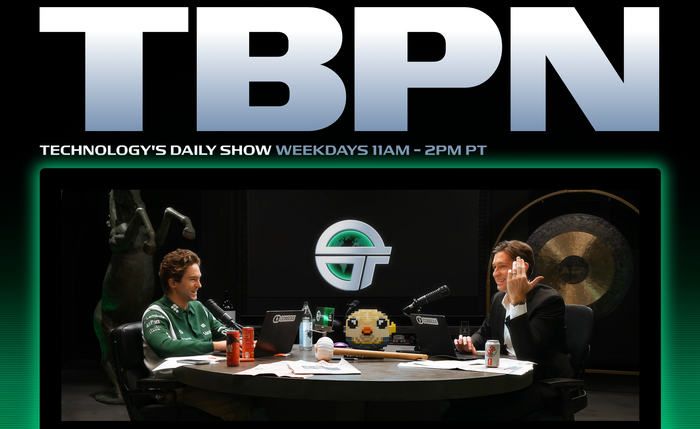
Meanwhile, OpenAI has stepped into a different power lane by acquiring TBPN, the daily tech talk show hosted by John Coogan and Jordi Hays. OpenAI says the show will stay in Los Angeles and retain editorial independence. The company framed the acquisition as part of an effort to improve how AI gets discussed in public.
That language sounds tidy. The move is still loaded.
TBPN is not some sleepy niche podcast recorded in a garage with bad audio. The show became one of Silicon Valley’s fastest-rising media platforms, with weekday live programming, strong appeal to builders, and regular access to major tech executives. OpenAI did not buy a hobby. OpenAI bought attention, distribution, and a foothold in one of the conversations shaping elite tech opinion.
OpenAI’s official message says standard communications playbooks do not fit a company driving such a large technological shift. Fair enough. Yet another reading is staring everyone in the face. OpenAI wants more influence over how AI gets discussed, debated, sold, defended, and normalised.
That does not mean TBPN suddenly turns into a puppet show. Still, corporate ownership always changes the weather in the room.
Maintaining “Editorial Independence”
OpenAI and TBPN both insist the show will keep editorial independence. That phrase is doing heroic work.
Maybe the hosts will continue to choose guests freely, and the producers will still criticise OpenAI when deserved. Maybe the tone survives intact. Plenty of people in tech media have heard the promise before. Corporate ownership and editorial autonomy can coexist for a while. The tension never vanishes.
The harder question is not whether OpenAI will issue daily scripts to the hosts. The harder question is whether ownership changes access, incentives, and boundaries in subtler ways. Will rival executives keep showing up? Will criticism stay sharp when the employer is the subject? How will audiences trust the same edge once OpenAI owns the set?
Those are not fringe concerns. TBPN’s rise came from a sense that the show was plugged into the conversation rather than staged by a comms team. OpenAI is betting that the audience will keep believing that after the acquisition.
Maybe the bet pays. Maybe the room gets awkward.
The Shared Pattern
Put Utah’s refill pilot beside OpenAI’s media buy, and a rougher picture emerges. AI companies are spreading through institutions that command heavy trust: health care, public communication, journalism-adjacent platforms, education, infrastructure, and government.
The older AI news cycle loved benchmarks, demos, and spectacle. The newer cycle is rougher. Who gets to authorise a refill or gets to shape public conversation? Who controls the narrative when the same company builds the tool and buys the microphone?
That pattern is worth watching because trust is the main currency in AI. Raw model power still gets headlines. Institutional access gets real power. A company that enters care pathways or buys media channels is no longer only selling software. A company like that is entering systems where public confidence is hard to win and easy to shred.

One more blunt assessment here. AI companies love to describe their choices as helpful. Sometimes the decisions help. Sometimes they are leveraged to better effect through branding.
The Next Backlash…
Neither story hinges on whether AI can perform a narrow task. The Utah pilot suggests a chatbot can guide a refill process under tight limits. OpenAI’s TBPN purchase suggests a major AI firm can own a media outlet while promising autonomy.
Capability is not the loudest issue anymore. Trust is.
Can a patient trust an AI system with part of a psychiatric refill pathway? Or can an audience trust a talk show owned by the company driving one of the largest AI power grabs in the world? Can regulators trust startups not to stretch pilot programs beyond their safe scope? How about journalists trusting a tech-media scene where the richest AI player is buying channels rather than merely pitching them?
Those questions will define more of the next AI phase than any other model benchmark chart ever will.
TF Summary: What’s Next
Utah’s psychiatric refill pilot and OpenAI’s TBPN acquisition reveal the same larger movement from two very different angles. AI is moving deeper into systems that shape trust. In Utah, a tightly limited program allows an AI system to handle certain psychiatric medication renewals for already-stable patients under state oversight. In California, OpenAI has bought one of Silicon Valley’s liveliest talk shows while promising editorial independence and a healthier global conversation around AI.
MY FORECAST: More AI companies will chase institutional proximity, not only product growth. More pilots will target health care workflows in which “routine” tasks seem cheap to automate. More AI firms will pursue media reach rather than wait for coverage. That trend will raise one ugly question over and over again: Who gets trusted first, the software or the people watching the software? The next AI backlash will probably come from that gap.
— Text-to-Speech (TTS) provided by gspeech | TechFyle