


Silicon power plays reshape the AI battlefield as Meta bets big on custom chips and infrastructure.
The artificial intelligence arms race just gained another nuclear-grade fuel source: silicon. Meta is pouring tens of billions into advanced chips as it transforms from a social network company into an AI infrastructure titan. In a sweeping partnership with Advanced Micro Devices (AMD), the tech giant secures massive computing capacity while potentially gaining a sizable ownership stake in the chipmaker itself.
The deal closed amid soaring AI demand, supply constraints, and investor anxiety about an overheated market. It represents a strategic pivot. Instead of merely building smarter apps, Meta can build the physical backbone that powers AI systems worldwide. In short, the social media giant wants to run the factories of intelligence, AND sell the gadgets.
What’s Happening & Why This Matters
A $60 Billion Bet On Silicon Supremacy

Meta agreed to purchase roughly $60 billion worth of AI chips from AMD over five years, an order of staggering volume even by Big Tech standards. The structure reportedly includes warrants that could give Meta ownership of about 10% of AMD. The provisions tie the companies together far beyond a simple supplier relationship.
The arrangement matches similar deals across the AI ecosystem, where chip supply is the primary bottleneck to progress. Demand for graphics processing units (GPUs) and specialized AI processors exceeds manufacturing capacity. Analysts note that the industry is shifting toward multi-vendor strategies to reduce reliance on a single supplier.

AMD chief executive Lisa Su frames the partnership as a long-term alliance, stating that the structure ensures her company maintains “a clear seat at the table” as Meta’s needs grow.
Meta CEO Mark Zuckerberg likewise signals a durable relationship, calling AMD “an important partner for many years to come.”
The message is unmistakable: this is not a procurement deal. It is strategic interdependence.
Diversifying Beyond Nvidia’s Shadow
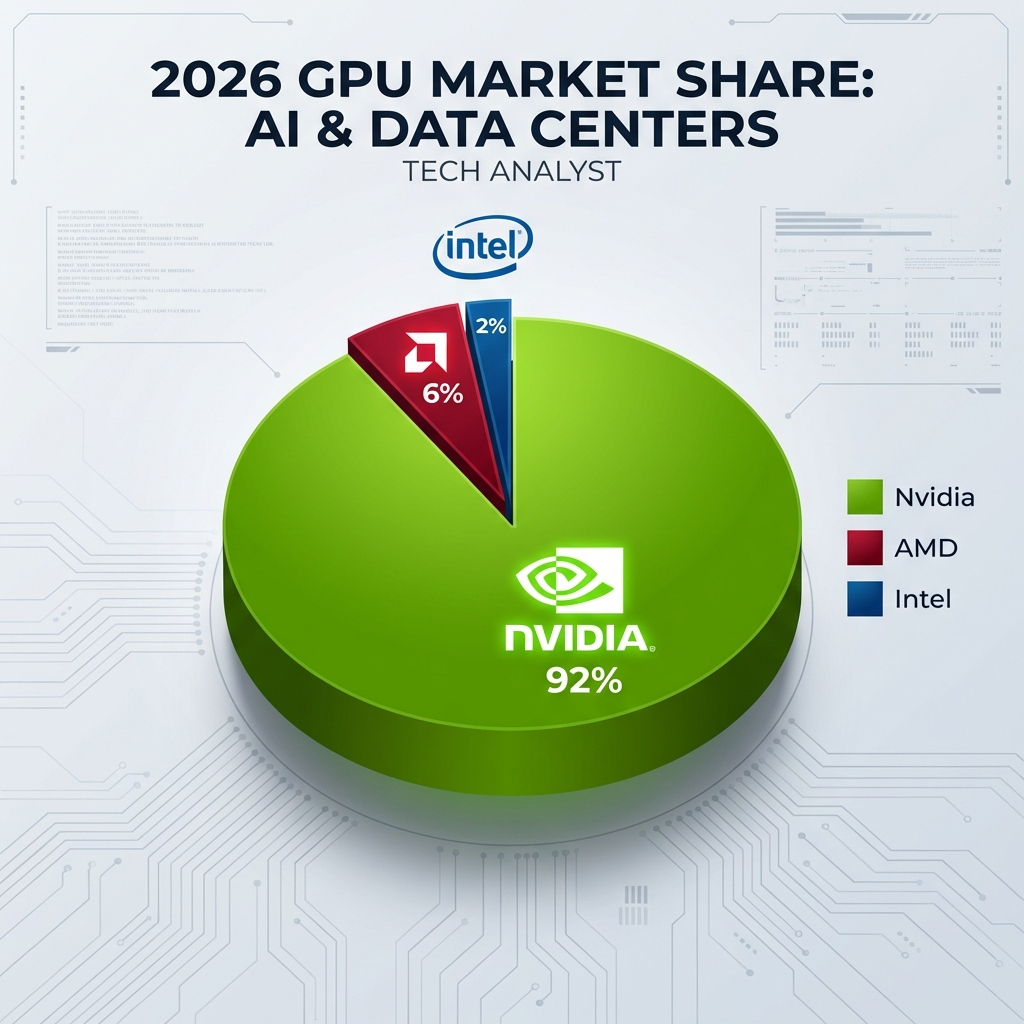
For years, Nvidia dominated the AI chip landscape. Its GPUs power most large-scale training systems, creating both technical advantages and supply constraints. As AI adoption accelerates, relying on a single supplier is risky.
Meta already purchases large volumes of Nvidia hardware. However, executives note that no single architecture can handle every workload efficiently. The company plans to combine Nvidia GPUs, AMD chips, and custom in-house silicon.
“We don’t believe that a single silicon solution will work for all of our workloads,” said Meta infrastructure chief Santosh Janardhan.
The diversification mirrors an industry trend. Leading AI developers are increasingly adopting hybrid hardware stacks to enhance performance, energy efficiency, and availability.
AMD’s upcoming MI450 accelerators will play a key role, particularly for inference tasks. Inference is the phase where trained models generate answers, images, or predictions. It consumes enormous computing power because billions of users interact with models simultaneously.
Infrastructure Over Apps: Meta’s Strategic Pivot
The partnership is a paradigm shift in Meta’s ambitions. Rather than competing solely on chatbot capabilities, the company appears focused on becoming a serious AI infrastructure provider.
Analysts suggest that Meta is increasingly positioning itself as a host for AI workloads. Massive data centers under construction reinforce that interpretation. One facility in Louisiana alone carries an estimated price tag in the tens of billions.
The company’s infrastructure spending could reach roughly $135 billion this year as it races to build capacity for training and deploying models globally.
That spending spree extends beyond chips. Meta is also designing custom CPUs tailored to its platforms, optimizing performance while reducing energy consumption. Such efficiency gains matter enormously because data centers already strain power grids.
The planned AMD supply totals around 6 gigawatts of computing capacity — comparable to the electricity used by millions of households annually.
The level of consumption underscores a sobering reality: modern AI runs on industrial-scale energy.
Financial Engineering And AI Bubble Fears
Deals of this magnitude raise eyebrows on Wall Street. Global technology companies are projected to spend hundreds of billions on AI infrastructure in the year alone. Critics worry about overcapacity, declining returns, and speculative investment bubbles.
Some funding structures appear increasingly complex. Chipmakers sometimes support financing arrangements to help data center builders secure loans, effectively guaranteeing future demand. Observers warn that such circular financing could amplify systemic risk if growth slows.
Meanwhile, tech giants face pressure to balance shareholder returns against capital expenditures. Massive borrowing and bond issuances fund projects that produce uncertain short-term revenue.
Still, proponents argue that AI infrastructure resembles early investments in the internet backbone. Those who built the pipes ultimately controlled the flow of digital commerce.
Why This Changes The Competitive Landscape
Meta’s investment reshapes multiple fronts simultaneously. It strengthens AMD’s position against Nvidia, ensures Meta receives priority access to hardware, and accelerates the shift toward vertically integrated AI ecosystems.
Owning a stake in a supplier also gives Meta influence over product roadmaps. Future chips may incorporate features optimized specifically for Meta’s platforms, from recommendation engines to virtual worlds.
The deal also signals that AI competition increasingly revolves around compute capacity rather than algorithms alone. Many leading models perform similarly, but the ability to train larger versions faster is decisive.
In practical terms, whoever controls the most efficient silicon and power infrastructure gains a structural advantage that competitors cannot easily replicate.
TF Summary: What’s Next
Meta’s multibillion-dollar partnership with AMD marks a pivotal moment in the AI race. The company is evolving from social media giant to industrial-scale computing powerhouse, securing the raw materials of intelligence: chips, electricity, and data centre capacity. By diversifying suppliers and investing directly in silicon production, Meta reduces risk while increasing influence across the hardware stack.
MY FORECAST: Expect further consolidation between AI developers and chipmakers. Ownership stakes, exclusive supply deals, and custom silicon partnerships are standard. The future AI winners will not just build smarter software. They will own the factories that enable intelligence. And those factories hum not with code, but with electricity, heat, and unimaginably dense arrangements of sand turned into thinking machines.
— Text-to-Speech (TTS) provided by gspeech | TechFyle