


A Federal Clampdown on State AI Rules
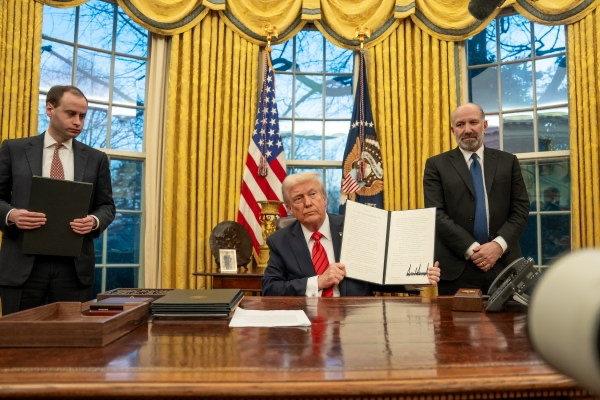
President Donald Trump signed a sweeping executive order that blocks U.S. states from enforcing their own artificial intelligence laws. The move resets the regulatory map for AI across America. It places federal authority above state efforts. Supporters argue this clears the runway for innovation. Critics warn it removes local safeguards at a critical moment for AI adoption.
The order lands as AI spreads across hiring, healthcare, finance, education, and public services. States act first because Congress stalls. The White House now pulls that authority back to Washington.
What’s Happening & Why This Matters
The executive order directs the U.S. Attorney General to challenge existing and future state AI laws. It also tasks the U.S. Department of Commerce with compiling a list of state regulations that the administration views as harmful to national competitiveness. The order threatens to restrict federal funding programs for states that continue to enforce AI rules that are not aligned with federal standards.
President Trump frames the move as a necessity. He argues that AI companies cannot compete with China if they must navigate “50 different approvals from 50 different states.” Speaking from the Oval Office, he says fragmented regulation slows investment and deployment.
Why the White House Acts Now
AI investment surges across the U.S. Technology firms pour billions into models, data centers, and infrastructure. The administration views state laws as a friction in a geopolitical race. China operates under centralized approvals. The U.S. does not.
David Sacks, the White House adviser leading AI and crypto policy, says the administration targets only the “most onerous” state laws. He claims the order does not block child safety protections or basic consumer safeguards.
States Fight Back
Several states have already passed AI laws. California, Colorado, Utah, and Texas introduce rules that limit data collection, require transparency, and demand risk assessments for bias and discrimination. Many other states restrict deepfakes in elections or regulate government use of AI.

California Governor Gavin Newsom responds sharply. He accuses the administration of dismantling protections for residents and prioritizing corporate interests. California recently requires large AI developers to publish risk mitigation plans for their models.
Advocacy groups echo those concerns. Julie Scelfo of Mothers Against Media Addiction says stripping state authority weakens protections where no federal guardrails exist.
Tech Cheers, Cautiously
Technology firms want a single national AI framework. Industry groups argue that a patchwork of state laws increases compliance costs and slows deployment. NetChoice, a tech lobbying group, praises the order and calls for clear nationwide standards.
Legal scholars strike a more measured tone. Michael Goodyear of New York Law School says that one federal law beats dozens of conflicting state laws. He adds a warning. That only works if Congress actually delivers a strong federal framework.
The Stakes
AI already influences who gets hired, approved for loans, flagged for fraud, and prioritized for medical care. Research shows the systems amplify bias tied to race and gender. State lawmakers step in because AI harms already appear at the local level. The executive order pauses that momentum.
The order does not create a federal AI law. It removes state authority first. That gap worries regulators, parents, and civil rights groups.
TF Summary: What’s Next
Washington now controls the AI rulebook. States lose leverage. Companies gain clarity. The real test arrives next. Congress must decide whether to write meaningful national AI standards or leave enforcement thin.
MY FORECAST: Federal lawmakers face pressure from both sides. Industry wants speed. States want safeguards. Without swift congressional action, the U.S. risks replacing a patchwork of rules with a regulatory vacuum.
— Text-to-Speech (TTS) provided by gspeech