


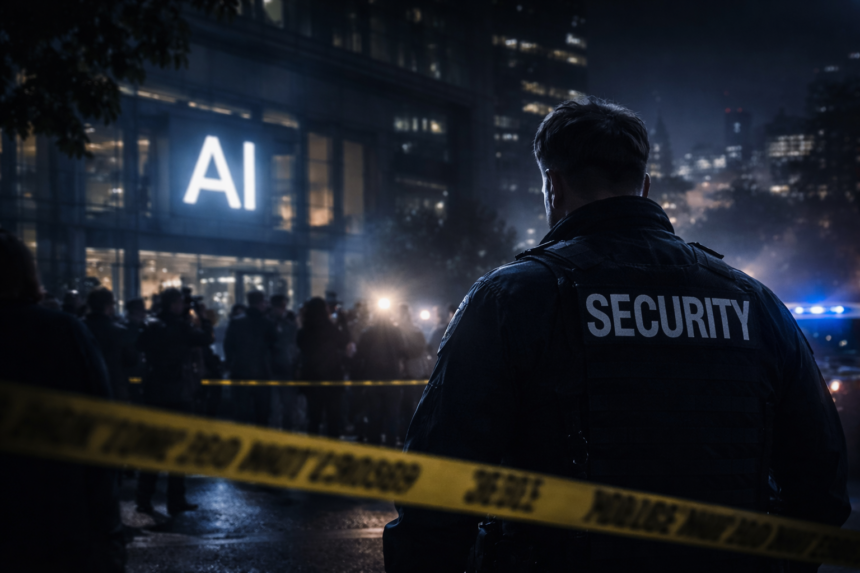
The AI debate has already been loud, smug, and overheated. Now it has crossed into something much uglier.
OpenAI CEO Sam Altman is one of the most visible faces of the AI boom. That visibility has collided with something far darker. In two separate incidents in San Francisco, Altman’s home was allegedly targeted first with a Molotov cocktail and then with gunfire just days later. Police have made arrests in both cases. No injuries were reported. That is the good news. The bad news is broader and more corrosive. The public fight over AI is no longer staying inside essays, protests, policy panels, and angry posts. It is starting to touch real-world violence.
The AI industry already lives in a pressure cooker. Job fears, surveillance fears, climate concerns, safety arguments, anti-tech anger, and extreme rhetoric have all been piling up around a handful of executives and companies. Once that atmosphere spills into attacks on homes and threats against offices, the story stops being only about technology. The story is about radicalization, public trust, executive security, and whether the AI conversation is sliding from heated disagreement into something more dangerous.
What’s Happening & Why This Matters
Two Attacks Changed the Tone
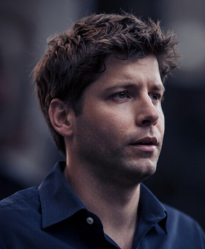
The first alleged attack happened before dawn on 10 April 2026, when police say a suspect threw an incendiary device at Altman’s San Francisco residence, setting fire to an exterior gate before fleeing. Less than an hour later, authorities responded to OpenAI’s headquarters, where a man was allegedly threatening to burn down the building. Police say they recognized the same suspect and arrested him. OpenAI later confirmed that no one was hurt and said the company was assisting law enforcement.
That event would already have been serious. Then came the second incident.
Days later, police say Altman’s home was targeted again, this time by gunfire. Reports say surveillance footage captured a shot fired from a passing vehicle. Officers later detained two suspects, searched their residence, and recovered firearms. Once again, no injuries were reported.
That pattern changes the story. A single attack may be one unstable person crossing a line. Two incidents in quick succession make the atmosphere around AI backlash more combustible. Even if the motives are not identical, the symbolism is hard to ignore. The home of one of the world’s best-known AI executives is a target.
That is not merely a crime story. That is a warning flare.
Altman: A Lightning Rod for the Entire AI Industry
Part of the reason this story carries so much weight is that Sam Altman no longer reads like a normal chief executive in the public imagination.

To supporters, Altman is one of the central builders of the AI era, the executive who helped usher conversational AI into mainstream life. To critics, he is a symbol of concentrated tech power, elite control, labor disruption, and a future being sold faster than society can digest. That kind of symbolic status makes him more than a business leader. It makes him a public vessel for other people’s fear, hope, resentment, and ideological fixation.
That is dangerous ground.
When people stop distinguishing between a person and a movement, or between a company and a whole civilizational threat, the rhetoric around them can curdle fast. Executives are characters in somebody else’s moral drama. They stop being argued with and start being treated like targets.
That does not mean criticism of Altman or OpenAI is illegitimate. Far from it. The company and the industry deserve scrutiny. It does mean that scrutiny crosses a bright red line when it turns into arson, gunfire, or terror-style intimidation.
The uglier truth is that AI is such an emotionally loaded subject that some people seem willing to treat violence as a form of political language.
That should alarm everyone, including people who deeply distrust the current AI industry.
The AI Culture War Temps Are Rising
The attacks did not happen in a vacuum.
AI is already a rare topic that can unite very different kinds of panic. Some people fear mass job loss. Others fear surveillance and state power. Others fear misinformation, energy use, elite capture, or runaway autonomous systems. Some think the industry is moving recklessly. Some regulators are criticized for being asleep. There is also supposition that the public is being manipulated by charismatic executives who speak in world-historical language while asking for patience and trust.

That emotional brew has made the AI debate unusually unstable.
It has produced a weird political mix. Anti-AI activists, labor skeptics, privacy advocates, safety campaigners, environmental critics, and general anti-tech rage all overlap in places, then clash in others. That means the criticism around companies like OpenAI can come from the left, the right, the center, and from people who reject normal political labels altogether.
Most of that is peaceful. Some of it grows theatrical. A tiny share may be tipping into something darker.
The attacks go beyond Altman personally. They suggest the AI culture war is no longer only a media and policy spectacle. It may be moving into the physical world more directly.
Once that happens, every future debate gets harder. Protest gets viewed through a more suspicious lens. Security costs rise. Executives retreat further behind controlled messaging and tighter protection. The distance between the public and the people making powerful systems grows even wider.
That is not healthy for democracy or for accountability.
Tech Leaders Are Physical Targets
Older Silicon Valley hands will recognize the pattern.
Periods of intense technological change often produce bursts of anger aimed at visible leaders. That anger can stay symbolic. It can turn physical when public narratives harden around blame. In previous eras, anger about globalization, automation, surveillance, and platform power often took the form of protests, building occupations, and reputational attacks. The AI era appears to be adding a more threatening edge.
That edge reflects how personal AI has become.

Unlike enterprise software or cloud infrastructure, generative AI directly touches ordinary people. It changes schoolwork, search, writing, design, office work, coding, customer service, and public discourse. AI leaves some users amazed. While others feel economically disposable, manipulated, or cornered. That emotional intensity does not justify violence. It does explain why a few unstable or radicalized people may decide that targeting visible figures is a kind of statement.
That is exactly the logic law enforcement and the public need to reject.
A democracy can survive intense disagreement about AI. A democracy weakens quickly when political or ideological anger turns into attacks on homes.
A Harder Security Future
The practical consequences for OpenAI are obvious.
Security around executives, offices, events, and public appearances will get tighter. The company will likely review residential protection, office access, threat monitoring, and communication protocols. Other AI firms will do the same. The cost of being a visible AI leader just went up.
That shift will not stay limited to OpenAI.
Every major frontier AI company has reason to assume that public backlash can move from protest signs to targeted incidents. That will change how executives travel, how offices are secured, how employees are briefed, and how much firms disclose publicly about locations and routines.
The deeper consequence is less visible. Companies that already struggle with public trust are more insulated, more secretive, and more defensive. From their perspective, the logic is easy: if the atmosphere is getting dangerous, pull inward.
That may be rational. It may also worsen the trust gap.
The public already worries that AI firms are too opaque. Violence against leaders will not make those companies more open. It will make them more guarded.
That is another contributing reason. Acts like these do not just threaten one executive. They can narrow the space for honest public engagement across the whole sector.
Distinguishing Criticism From Violence
This part is essential.
The answer to violence cannot be to treat all criticism of AI as toxic. That would be lazy and dangerous. OpenAI, Altman, and the wider frontier-AI world should still face hard questions about power, safety, jobs, governance, labor effects, copyright, energy use, and truthfulness. Those questions are legitimate. They are urgent.
The right response is sharper than that. Democratic criticism must stay protected. Violence, intimidation, and terror-style attacks must be isolated and condemned without giving companies a free pass on accountability.
That distinction sounds simple. In tense moments, people often blur it.
Tech companies sometimes use threat environments to harden themselves against scrutiny. Activists sometimes underestimate how quickly overheated rhetoric can help radicalize fringe actors. Media systems often amplify the loudest language and flatten the line between fierce opposition and open dehumanization.
The current moment needs more discipline than that.
If the AI debate keeps escalating, then everyone involved has to help keep the boundary clear. Protest is not arson. Criticism is not gunfire. Policy disagreement is not a justification for intimidation. Those are old democratic basics. They apparently need repeating.
TF Summary: What’s Next
The alleged firebombing and shooting at Sam Altman’s home have elevated the AI backlash story into far more dangerous territory. No one was hurt, and police have made arrests. Still, the deeper damage is cultural. The AI fight is already overheated, and the incidents suggest a fringe edge may be moving from rhetoric into violence. That should concern people across the spectrum, including critics of OpenAI and critics of Big Tech more broadly.
MY FORECAST: Security around top AI executives will tighten fast, and public access around major AI firms will narrow with it. That may protect people in the short term, but it will likely deepen the distance between companies and the public. The harder challenge will be preserving fierce democratic criticism of AI while isolating violent extremism from the debate. If that line collapses, the AI era will grow more paranoid, more polarized, and much harder to govern.
— Text-to-Speech (TTS) provided by gspeech | TechFyle